

What is kale?
Kale is a cultivar of the same species as cabbage, broccoli, and Brussels sprouts, distinguished by its loose, non-heading leaves. It's grown widely across temperate climates and is one of the most nutrient-dense leafy greens available fresh, which is part of why it's also popular in dried, powdered form for supplements.
For use in a greens powder, whole kale leaves are typically dehydrated at low temperatures and milled fine, concentrating the naturally occurring vitamins and plant compounds found in the fresh vegetable into a smaller, shelf-stable serving.
What are the benefits of kale?
Kale is well known for its vitamin K content, which plays a role in normal blood clotting and bone health, along with vitamin C and lutein, a carotenoid associated with eye health support. As a cruciferous vegetable, it also contains glucosinolates, compounds studied for supporting the body's natural detoxification enzyme systems.
Because kale is a whole-leaf ingredient, it contributes fiber and a broad nutrient spread rather than a single isolated compound, making it a natural fit alongside other leafy ingredients in a greens formula.
How much kale is in a greens powder?
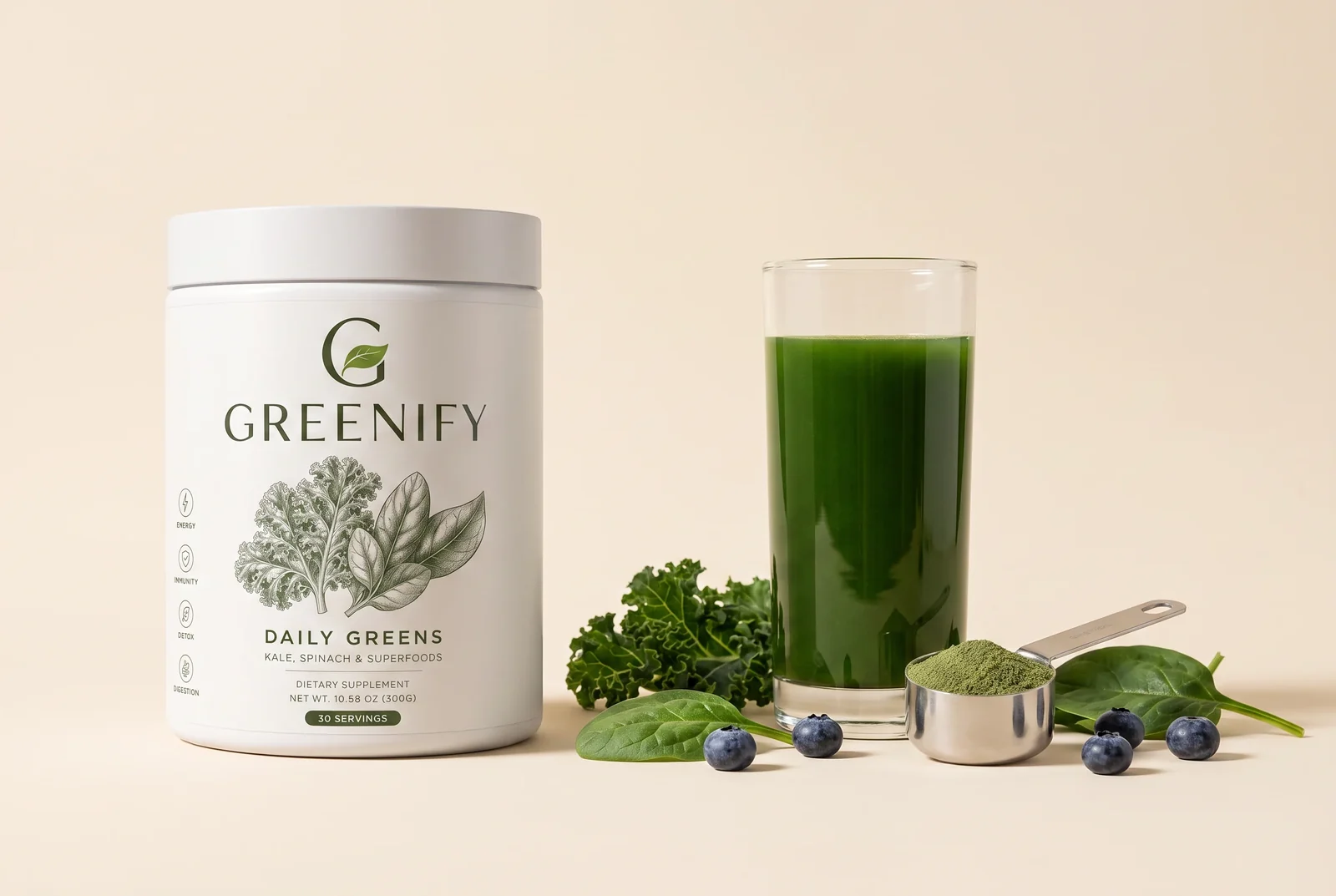
Kale is part of the 2.6 g superfood, antioxidant and mushroom blend in Daily Greens. As with the rest of that blend, the exact gram contribution of kale on its own isn't separated out on the label.
Who should be careful with kale?
Kale's vitamin K content means people on warfarin or similar vitamin K-sensitive anticoagulants should keep their intake of kale-containing products consistent and discuss it with the clinician managing their medication, since sudden changes in vitamin K intake can affect dosing.
People with a diagnosed thyroid condition are sometimes advised to moderate raw cruciferous vegetable intake, since compounds in this plant family can interfere with iodine uptake in very large amounts; in the small amounts found in a blended greens powder, this is generally not considered a concern, but it's worth mentioning to a doctor if you have a known thyroid issue.
Kale questions, answered
- Does kale contain a lot of vitamin K?
- Yes, kale is one of the richer plant sources of vitamin K, which is why people on vitamin K-sensitive blood thinners are advised to keep their intake consistent.
- Is kale powder as nutritious as fresh kale?
- Dried kale powder concentrates many of the same vitamins and plant compounds found in fresh kale, though some heat-sensitive nutrients like vitamin C can diminish somewhat during processing.
- What family of vegetables is kale in?
- Kale belongs to the Brassica family, the same group as broccoli, cabbage, and Brussels sprouts, all known as cruciferous vegetables.
Ingredients it works with
Kale is one of 56 in a single scoop.
Daily Greens prints every blend weight on the label — part of the 2.6 g superfood, antioxidant and mushroom blend.
This page is general information, not medical advice. Statements have not been evaluated by the Food and Drug Administration. This product is not intended to diagnose, treat, cure or prevent any disease. Speak to your clinician before starting a new supplement, especially if you are pregnant, nursing or taking medication.