
Nutrition
The Complete Guide to Greens Powders
Last updated: August 2026
Greens powders are a convenient, concentrated way to fill nutritional gaps in a busy diet — not a replacement for vegetables, and not a cure for anything. Here is everything worth knowing before you buy one.
Greenify Editorial • August 8, 2026 • 12 min read
Written and fact-checked by the Greenify nutrition team against product labels and published nutrition guidance. Our editorial standards
- Greens Powder
- Beginner Guide
- Labels
- Daily Greens
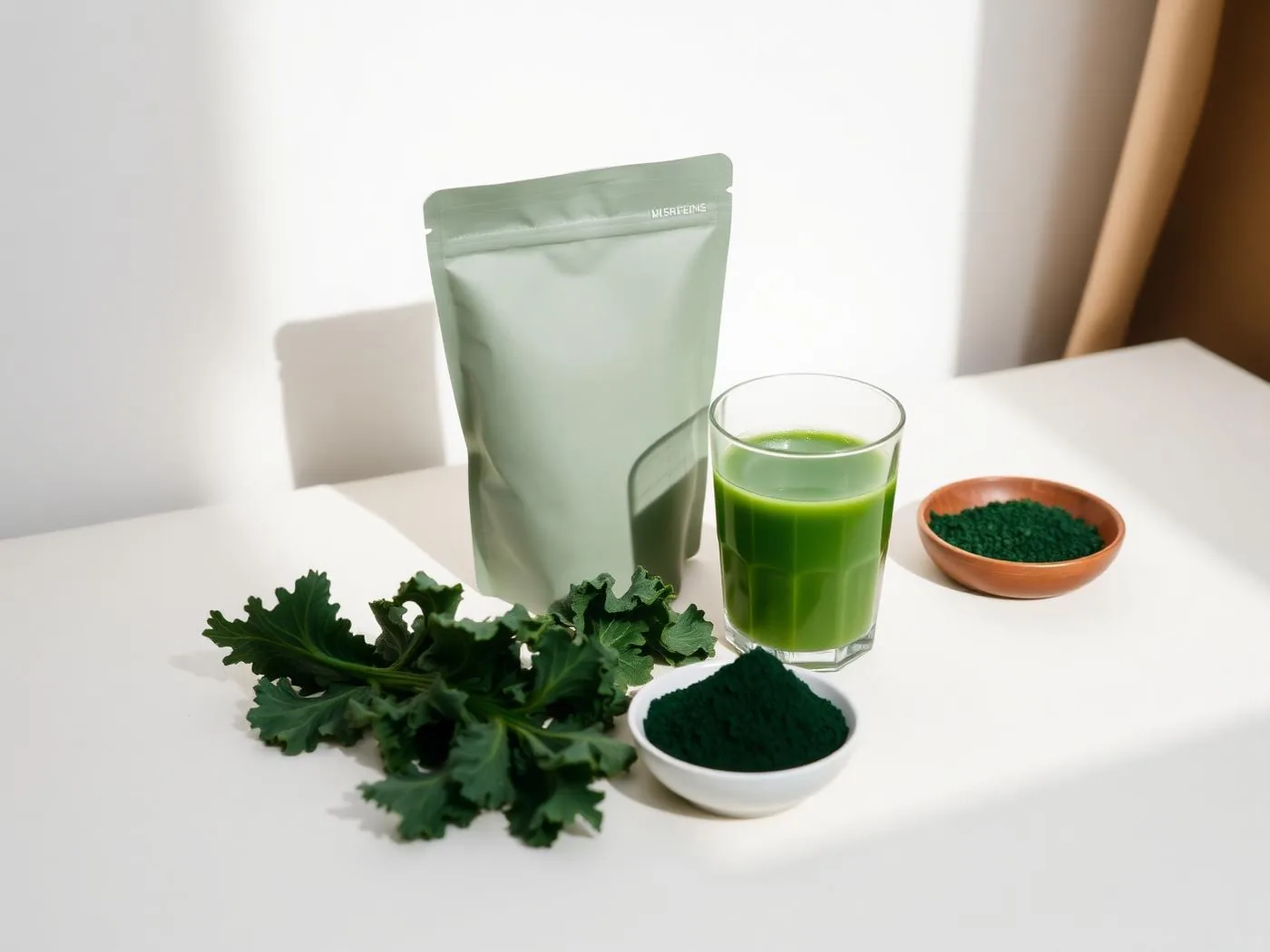
A greens powder is a blend of dehydrated vegetables, fruits, algae, herbs and often probiotics or digestive enzymes, mixed with water and drunk once a day as a supplement to — not a substitute for — whole food. The honest case for one is convenience: most adults fall short of the fruit-and-vegetable intake recommended by bodies like the USDA Dietary Guidelines and the WHO, and a single scoop is an easy way to add some of that variety back in. It will not replace fiber-rich whole produce, reverse a poor diet, or treat any medical condition, and anyone telling you otherwise is overselling it.
What is a greens powder, exactly?
A greens powder is dehydrated and milled fruits, vegetables, algae and herbs, packed into a scoop you mix into water or a smoothie. Most formulas combine a handful of categories: a base of leafy greens and vegetables (spinach, kale, wheatgrass, spirulina), fruit and berry powders for antioxidants and flavor, mushroom extracts, adaptogenic herbs like ashwagandha or ginseng, a source of prebiotic fiber, digestive enzymes, and often a small probiotic blend.
Serving sizes vary a lot across the category, from around 4g to 12g, and that difference matters more than it looks. A bigger scoop isn't automatically a stronger formula — a lot of the extra weight can be inulin fiber or a flavor and sweetener system rather than additional actives. The only way to tell is to read what's actually in each gram.
It's worth being precise about the category name too. "Greens powder," "superfood powder" and "green juice powder" get used almost interchangeably in marketing, but they aren't identical products — a green juice powder usually leans harder on juiced fruit and vegetable concentrates, while a broader greens or superfood powder tends to add herbs, mushrooms and gut-support ingredients on top. See our comparison of green juice powder versus fresh juice for that specific distinction.
Why do people take a greens powder every day?
The most common reason is simple: filling a gap. The CDC and USDA have both flagged low fruit-and-vegetable intake as widespread among adults, and a daily scoop of concentrated plant powders is a low-effort way to add some of that variety back into a routine that doesn't always include a salad.
Beyond the base nutrition angle, people reach for a greens powder for a few overlapping reasons: steadier energy without relying on caffeine, digestive comfort from added fiber and enzymes, general immune support from vitamin C and antioxidant-rich fruit powders, and a one-step way to cover a wide spread of vitamins and minerals without a pill organizer. Our deeper look at energy and immunity claims and our guide to bloating and digestion go through those two use cases in detail.
None of that makes a greens powder necessary. Someone eating varied whole produce every day, sleeping well and managing stress doesn't need one. It's a convenience product for people whose actual diet doesn't match their intended diet — which describes a lot of people, but not everyone.
Start with the label
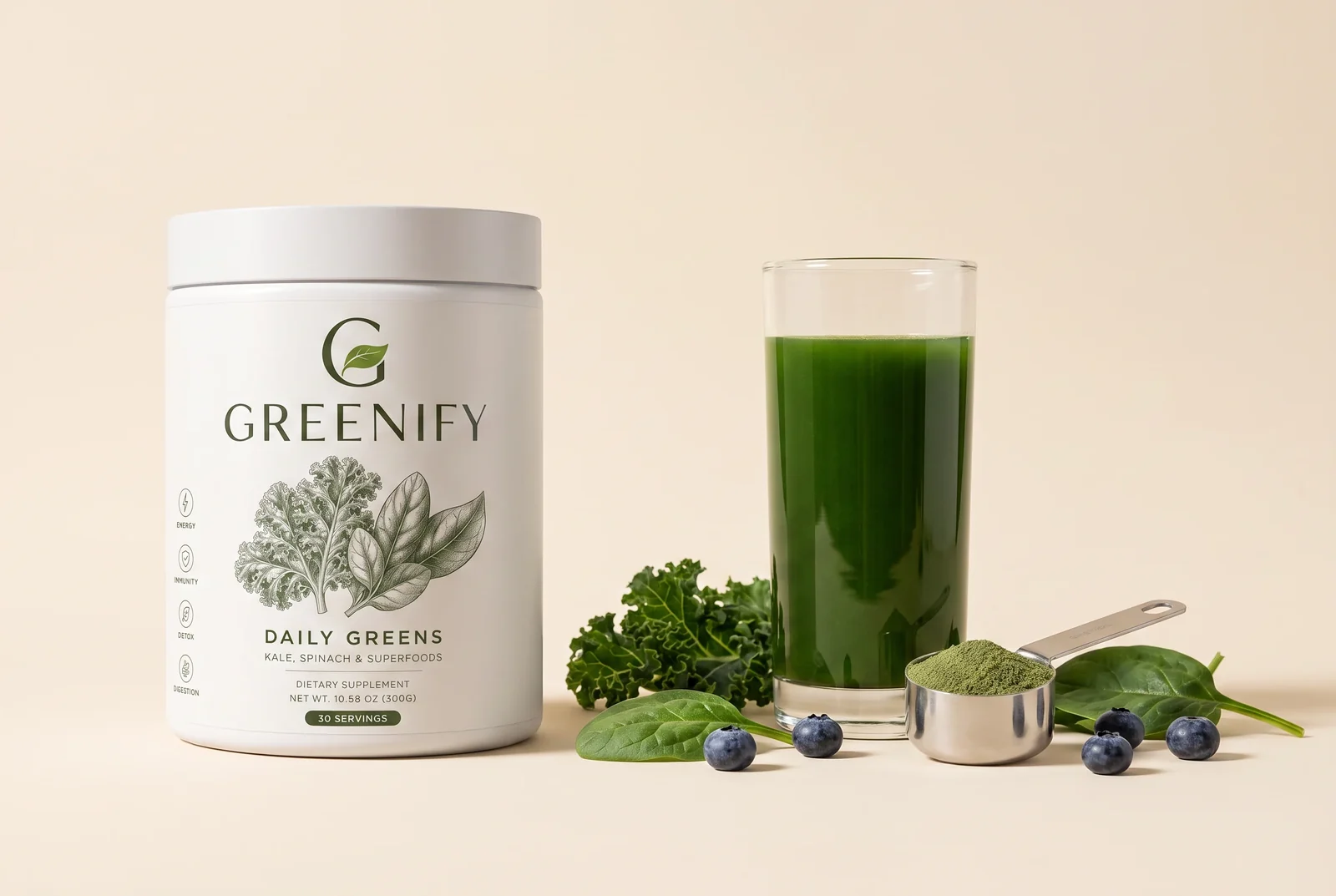
56 ingredients, four disclosed blends, one scoop
Daily Greens prints every blend weight on the tub — 2.6g superfoods, 1.2g herbs and adaptogens, 406mg fiber and enzymes, and 2.5 billion CFU probiotics — from $1.40 a day with a 60-day money-back guarantee.
Are greens powders actually worth the money?
It depends entirely on what you compare them to. Against doing nothing about a produce-light diet, a well-formulated greens powder at $1.50–$2.50 a day is a reasonable, low-effort addition. Against actually eating more vegetables, whole food wins on cost, fiber and satiety every time — a bag of frozen spinach is cheaper than any tub of powder.
The honest framing is that a greens powder is nutritional insurance, not nutritional optimization. It's worth the money for someone who has already decided they aren't going to consistently cook and eat five servings of vegetables a day, and wants a fast, low-friction backstop. It's a weak purchase for someone hoping it will offset a genuinely poor diet or replace medical care. We go through the full cost-and-benefit case, including who should skip it, in our dedicated value guide.
How do I choose a good one?
Start with the label, not the marketing copy. The single biggest quality signal is whether a brand discloses the weight of each blend — a printed 2.6g superfood blend or 406mg fiber-and-enzyme complex tells you far more than a bare ingredient list buried inside a single undisclosed "proprietary blend." Ingredient count by itself is a marketing number; dose is a formulation number.
After that, check four specifics: the serving size (and whether it's mostly filler or mostly actives), the probiotic CFU count if gut support is claimed, whether digestive enzymes are named individually rather than just implied, and the sweetener (stevia and monk fruit are common; added sugar defeats a lot of the point). Our full buying-guide checklist below walks through each of these with a comparison table.
What ingredients actually show up in these formulas, and what do they do?
Adaptogens like ashwagandha, Korean ginseng and eleuthero are herbs used traditionally, and in some modern research, to support the body's response to everyday stress — they are not stimulants and won't give you a caffeine-like jolt. Our explainer on what adaptogens are and aren't goes through the evidence honestly, including where it's still early.
Mushroom extracts (reishi, shiitake, maitake) show up for their beta-glucan content and a general immune-support rationale. Prebiotic fiber, usually chicory root inulin or apple fiber, is there to feed whatever probiotic strains are in the formula, and digestive enzymes like amylase, protease and lipase are included to help break down food more comfortably. None of these ingredients are dosed identically across brands, which circles back to why disclosed blend weights matter — you can't compare adaptogen content across two products if neither prints how much is actually in the scoop. Our full ingredients directory has more detail on each one.
How is a greens powder different from a multivitamin?
A multivitamin is a synthetic (or food-derived) dose of specific vitamins and minerals at defined percentages of your daily value, and nothing else. A greens powder usually includes some of those same vitamins and minerals as a byproduct of whole-food ingredients like camu camu or acerola cherry, plus fiber, plant compounds, and often probiotics or enzymes that a multivitamin doesn't touch at all. They solve overlapping but different problems, and a lot of people reasonably take both. Our full comparison breaks down where each one is the better fit.
What should I know about taste, and does that actually matter?
Taste is not a minor detail — it's the single biggest reason people stop taking a greens powder before it has a chance to do anything. Formulas heavy on wheatgrass and barley grass tend to taste more overtly "green"; formulas that lean on berry and fruit powders, plus a stevia or monk fruit finish, tend to taste closer to a mild fruit drink. If a formula doesn't agree with your palate, no amount of ingredient count fixes that, and switching products is a completely reasonable response. Our taste-focused roundup covers what to expect from the most commonly asked-about formulas.
Do the 'best greens powder' rankings mean anything?
Some do, some are thinly disguised affiliate content. A ranking is only useful if it tells you why a product is ranked where it is — disclosed doses, verified pricing, a clear serving size comparison — rather than just repeating brand marketing copy in list form. If you're shopping by region, note that pricing, shipping and even formulas can differ by country, which is why we keep an Australia-specific roundup separate from the general one. Treat any "best of" list, including ours, as a starting shortlist rather than a final verdict, and check the actual label before buying.
What does the research actually say?
It says less than the marketing implies, and that's worth stating plainly. Most research on greens-powder-style ingredients — individual plant extracts, specific probiotic strains, adaptogenic herbs — comes from small, short-duration trials on individual compounds, not from large studies on a finished multi-ingredient powder as sold. That doesn't mean the ingredients are useless; whole fruits and vegetables have a well-established relationship with health outcomes, which is exactly why public health guidance keeps pushing people to eat more of them. It does mean you should be skeptical of any single greens-powder brand claiming to prevent, treat or cure a specific condition. No legitimate greens powder brand can make that claim, and none should.
This is also the honest caveat worth repeating throughout this guide: a greens powder supplements a diet, it does not replace fresh vegetables or fruit, and it is not a treatment for any disease. If you have a medical condition, take prescription medication, or are pregnant or nursing, talk to a doctor before adding any new supplement, greens powder included.
How does Greenify Daily Greens fit into all of this?
We built Daily Greens around the disclosure principle laid out above: print the doses instead of hiding them behind a single proprietary blend. The 4.4g scoop breaks into four labeled blends — a 2.6g superfood, antioxidant and mushroom blend of 34 whole-food ingredients; 1.2g of nutrient-dense herbs and extracts including ashwagandha, Korean ginseng and eleuthero; 406mg of prebiotic fiber with five individually named digestive enzymes; and a four-strain probiotic blend at 2.5 billion CFU. Fifty-six ingredients in total, sweetened only with stevia leaf extract, with no added sugar.
A single 30-serving tub is $69.95 ($2.33/day), and the cost per day drops on the multi-tub bundles — down to $1.40/day on the largest one. Every order carries a 60-day money-back guarantee, so there's a real way to test whether it agrees with you before committing further.
Frequently asked questions
- What is a greens powder used for?
- It's used as a daily convenience supplement to add concentrated fruit, vegetable, herb and sometimes probiotic content to a diet that doesn't consistently include enough whole produce. It's not a treatment for any condition and doesn't replace eating vegetables.
- Do greens powders actually work?
- They can help fill nutritional gaps for people who don't otherwise eat much fresh produce, since they do contain real vitamins, fiber and plant compounds. Evidence for more specific claims — energy, immunity, gut health — is generally early and comes from small studies on individual ingredients rather than the finished product.
- Can greens powder replace vegetables?
- No. Whole vegetables provide fiber, water content and food structure that a powder can't fully replicate, and no reputable brand claims otherwise. A greens powder is a supplement to a diet, not a substitute for it.
- How much does a greens powder cost per day?
- Across the category, expect somewhere between roughly $1.50 and $3.50 per day depending on the brand, serving size and whether you buy a multi-pack. Greenify Daily Greens runs from $2.33/day on a single tub down to $1.40/day on its largest bundle.
- Is it safe to take a greens powder every day?
- For most healthy adults, yes, when used as directed. Anyone pregnant, nursing, on medication, or managing a medical condition should check with a doctor first, since some formulas include herbs and adaptogens that can interact with certain conditions or drugs.
- What's the difference between a greens powder and a multivitamin?
- A multivitamin delivers specific, defined doses of vitamins and minerals and nothing else. A greens powder delivers vitamins and minerals as a byproduct of whole-food ingredients, plus fiber, plant compounds, and often probiotics or enzymes a multivitamin doesn't include.