
What is spirulina?
Spirulina is a single-celled cyanobacterium, often loosely called an algae, that has been consumed as a food in parts of Africa and Mexico for centuries. It grows in warm alkaline lakes and is now more commonly cultivated in controlled ponds for consistency and safety before being dried into flakes or powder.
Nutritionally, spirulina stands out for its protein content relative to its calorie load, along with iron, B vitamins, and phycocyanin, the pigment-protein complex responsible for its deep blue-green color. This combination is why it shows up in greens powders, smoothies, and whole-food supplements.
What are the benefits of spirulina?
As a food-based source of protein and iron, spirulina can contribute to daily nutrient intake, which is useful for people building out a plant-forward diet. Its phycocyanin content is associated with antioxidant activity in laboratory research, meaning it can help neutralize reactive molecules in the body.
Because it is nutrient-dense in small amounts, spirulina is often used to round out the nutritional profile of a greens blend without adding much volume or flavor intensity, supporting general energy and vitality rather than any single, specific outcome.
How much spirulina is in a greens powder?
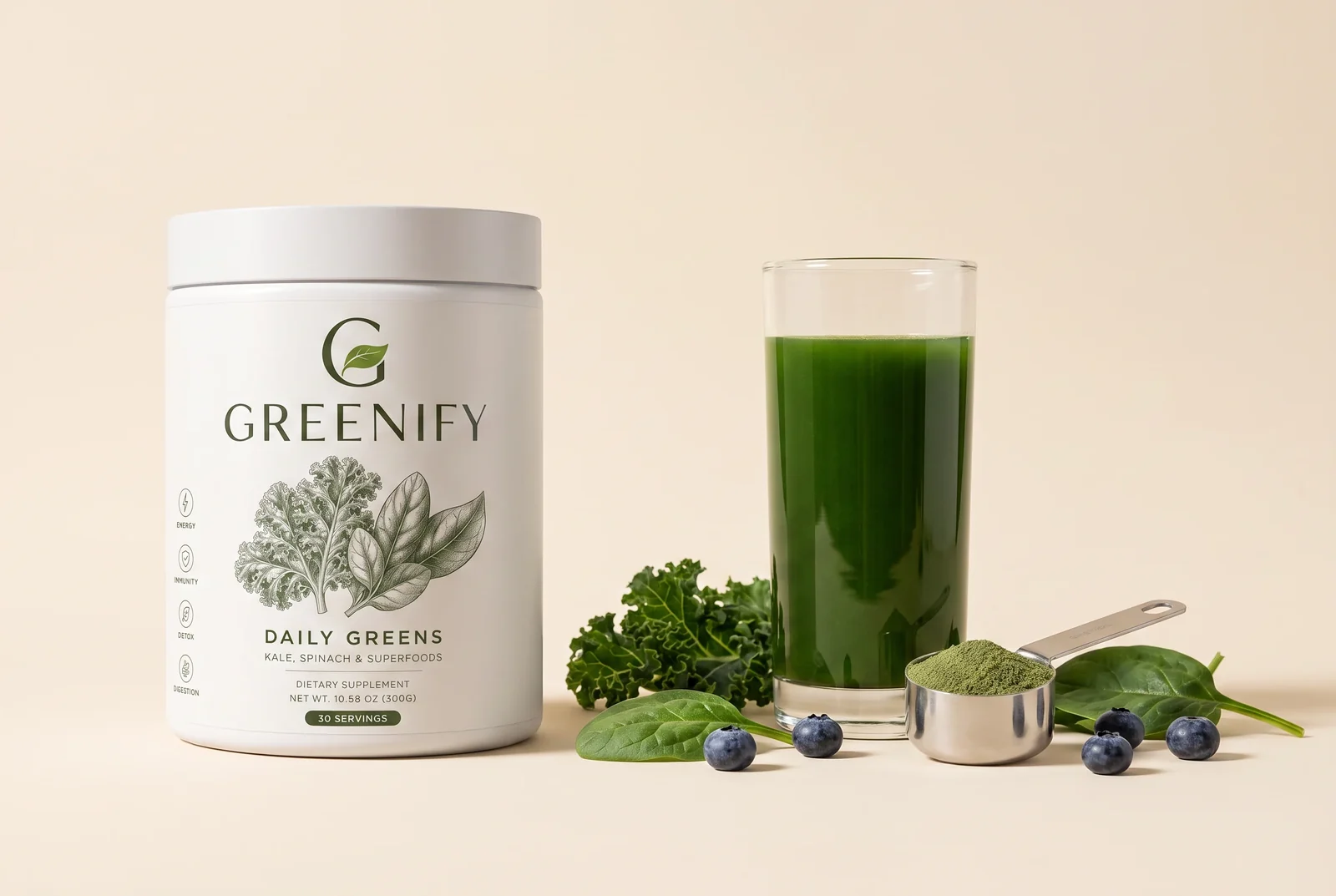
In Daily Greens, spirulina is one ingredient within the 2.6 g superfood, antioxidant and mushroom blend, alongside other greens, fruits, and mushrooms. The label does not break out spirulina's individual weight, which is standard practice for proprietary blends across the greens powder category.
Because it is blended rather than dosed alone, the amount per scoop is smaller than a standalone spirulina supplement, which is worth knowing if you are specifically seeking a high-dose spirulina product rather than a broad multi-ingredient formula.
Who should be careful with spirulina?
People with phenylketonuria should be cautious with spirulina and any protein-containing supplement, since it naturally contains phenylalanine. Spirulina can also occasionally contain contaminants such as heavy metals or microcystins if not properly tested, so sourcing from a manufacturer that verifies purity matters.
People with autoimmune conditions, or those taking immune-modulating medication, should mention spirulina to their clinician before regular use, since it may influence immune activity. As with any new supplement, it's worth introducing gradually and watching for digestive changes.
Spirulina questions, answered
- Is spirulina safe to take daily?
- For most healthy adults, small daily amounts of spirulina from a food source or blended supplement are considered generally well tolerated, though anyone with an autoimmune condition or on immune-modulating medication should check with a clinician first.
- Is spirulina a complete protein?
- Spirulina contains all nine essential amino acids, which is why it's often described as a complete plant protein, though the total protein amount in a blended greens powder serving is modest.
- Why is spirulina blue-green?
- Its color comes from a mix of chlorophyll (green) and phycocyanin (blue), a pigment-protein unique to cyanobacteria that is also studied for its antioxidant properties.
Ingredients it works with
- Wheat GrassCold-processed young grass that supports alkaline balance and daily greens intake.
- Alfalfa LeafA traditional green rich in chlorophyll and trace minerals that supports everyday nutrient coverage.
- Camu CamuOne of the most vitamin C dense fruits on earth — a cornerstone of the 148% DV vitamin C per scoop.
Spirulina is one of 56 in a single scoop.
Daily Greens prints every blend weight on the label — part of the 2.6 g superfood, antioxidant and mushroom blend.
This page is general information, not medical advice. Statements have not been evaluated by the Food and Drug Administration. This product is not intended to diagnose, treat, cure or prevent any disease. Speak to your clinician before starting a new supplement, especially if you are pregnant, nursing or taking medication.