Beauty
Collagen 101: Bovine, Marine and Chicken Collagen Explained
Last updated: April 2026
Not all collagen is the same protein. The type determines the tissue — and vitamin C determines whether your body can build any of it.
Greenify Editorial • April 22, 2026 • 5 min read
Written and fact-checked by the Greenify nutrition team against product labels and published nutrition guidance. Our editorial standards
- Collagen
- Skin
- Peptides
- Beautify
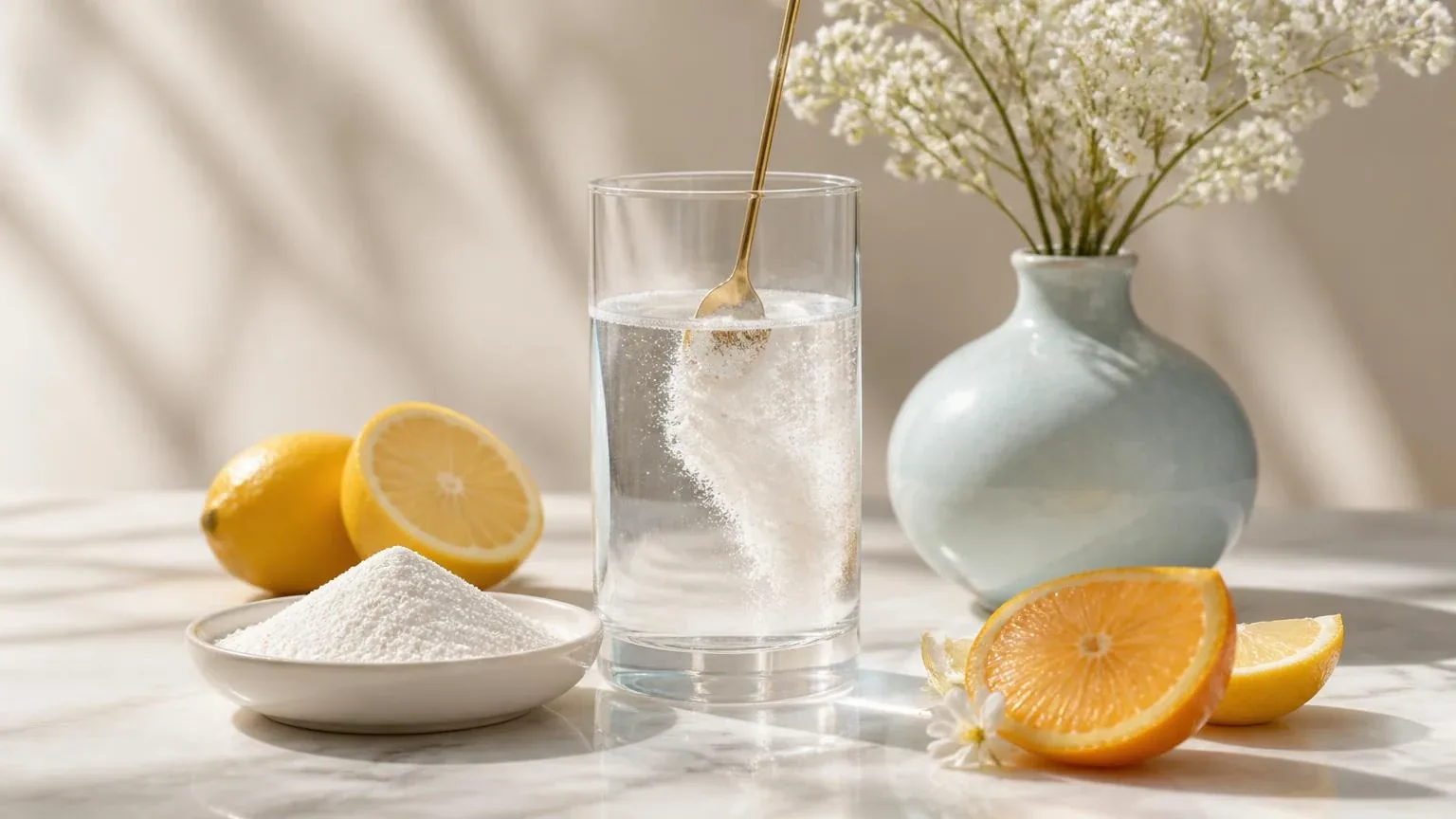
Bovine, marine, chicken, eggshell — collagen labels read like a butcher's list, and the source is not a marketing detail. It determines which collagen types you are getting, and the types determine which tissues the peptides support. Here is the plain version, plus the single nutrient rule that decides whether your body can use any of it.
The types worth knowing
Collagen is not one molecule. It is a family of structural proteins — twenty-eight types have been catalogued — and the type determines which tissue it builds. Five of them account for essentially everything a supplement label will mention.
Type I is the most abundant protein in the human body and the structural backbone of skin, tendon and bone. Type III sits alongside it in skin, blood vessels and organ walls, and the two are usually discussed as a pair because that is how they occur. Together they are behind almost every skin, hair and nail claim you will read.
Type II is the collagen of cartilage, which is why joint formulas lean on it and why it is typically sourced from chicken sternum. Types V and X appear in smaller amounts — V in hair, cell surfaces and placental tissue, X in cartilage and new bone formation. A formula covering I, II, III, V and X is covering the structural tissues most people care about.
Why hydrolysed matters
Intact collagen is a large triple-helix protein and a poor candidate for absorption. Hydrolysis — controlled enzymatic cleaving — breaks it into short peptides, typically two to ten kilodaltons, that survive digestion far better. Some di- and tripeptides, notably prolyl-hydroxyproline, have been detected intact in blood plasma after ingestion.
That matters because of what your body does next. You do not eat collagen and deposit it in your skin; you digest it into amino acids and peptides and your fibroblasts decide what to build. The current working hypothesis is that certain collagen peptides act partly as raw material and partly as a signal that stimulates fibroblast activity.
Source affects the type profile. Bovine collagen is rich in types I and III. Marine collagen — from fish skin and scales — is predominantly type I with a small peptide size. Chicken collagen is the usual type II source, and eggshell membrane contributes types I, V and X. Beautify draws from bovine, marine (tilapia and crimson snapper), chicken and eggshell membrane specifically so that one unflavored scoop spans all five.
One practical note on sourcing: marine collagen is a fish product, so it is unsuitable for anyone with a fish allergy and for pescatarian-only diets it is the one type that works. There is no plant collagen — collagen is by definition an animal protein. Products marketed as vegan collagen are collagen builders: vitamin C, amino acids and botanicals intended to support your own synthesis, which is a legitimate approach as long as the label is honest about which it is.
Cover all five types
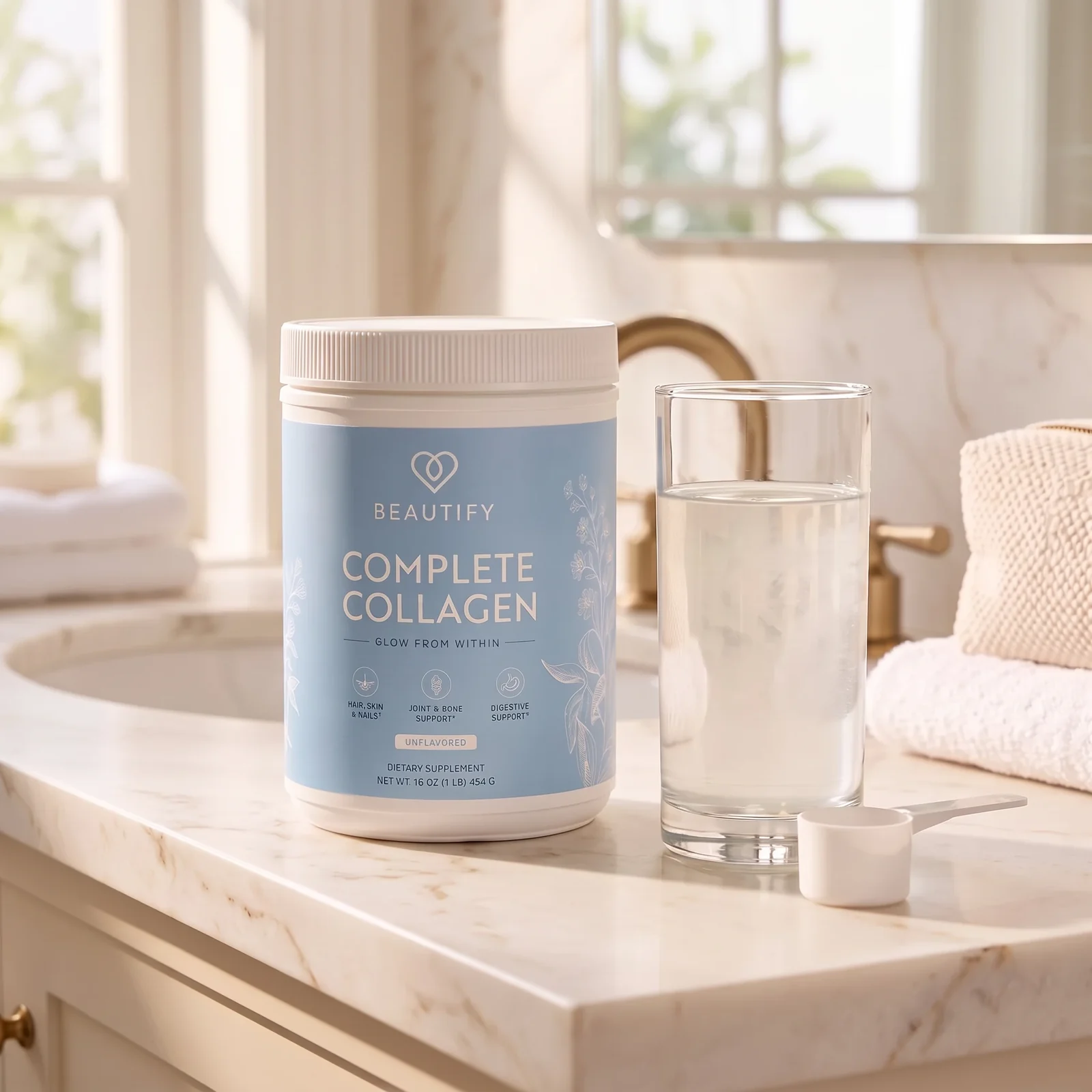
Beautify Complete Collagen, unflavored
Hydrolysed peptides from bovine, marine, chicken and eggshell membrane sources covering types I, II, III, V and X — designed to dissolve clean into coffee or water.
The vitamin C rule
Your body cannot build collagen without vitamin C. It is a required cofactor for prolyl and lysyl hydroxylase, the enzymes that hydroxylate proline and lysine residues and let the triple helix become stable. This is not a wellness talking point — it is why scurvy presents as connective tissue falling apart.
Practically, that makes pairing collagen with a vitamin C source the cheapest upgrade available. Citrus, berries, peppers, or a greens powder that already contains vitamin C-bearing fruits will do it. There is no need to time it to the minute; taking them in the same part of the day is sufficient.
Protein intake overall matters too. Collagen peptides are an incomplete protein — low in tryptophan — so they supplement a diet, they do not replace adequate total protein. If you are under-eating protein generally, fix that first and the collagen will have something to work with.
Timelines and honest expectations
Tissue turnover sets the clock, and it is slower than the marketing. Skin renews on roughly a twenty-eight-day cycle, with dermal changes accumulating over eight to twelve weeks. Nails grow out over about six months. Hair runs on a three-to-six-month cycle. Judging collagen after two weeks tells you nothing.
The best-supported outcomes in the literature are modest and specific — measures of skin hydration and elasticity, nail brittleness, and joint comfort in active populations. Nobody should promise you a different face. Dietary supplements are not permitted to claim they treat or cure anything, and a brand that implies otherwise is telling you something about the brand.
Take it consistently, take it with vitamin C, give it a full quarter, and photograph your starting point so you are comparing to evidence rather than memory. Ten to twenty grams daily is the range most trials use; unflavored powder in coffee or water is the format most people actually keep up.
Timing is genuinely flexible despite what you may have read. There is no evidence that collagen must be taken on an empty stomach, at night, or away from other protein; the commonly repeated rules on this point are invented. Hot liquids are fine too — hydrolysed peptides are already cleaved, and coffee temperature does not undo that. Pick the moment you will not skip.
The takeaway
Source determines type: bovine is rich in types I and III, marine is predominantly type I with small peptides, chicken supplies type II, and eggshell membrane adds V and X. Match the source to the tissue you care about — skin, hair and nails lean on I and III, cartilage on II.
Buy hydrolysed peptides, pair them with a vitamin C source, take ten to twenty grams daily, and give it a full three months before you decide. Beautify spans all four sources in one unflavored scoop so the type profile is covered without stacking three tubs.