
Nutrition
How to Choose a Daily Greens Supplement: What to Look For
Last updated: August 2026
Choosing a good greens powder comes down to reading five parts of the label carefully: disclosed blend weights, serving size, probiotic CFU, named enzymes, and cost per day rather than per tub.
Greenify Editorial • August 8, 2026 • 9 min read
Written and fact-checked by the Greenify nutrition team against product labels and published nutrition guidance. Our editorial standards
- Buying Guide
- Labels
- Doses
- Greens Powder
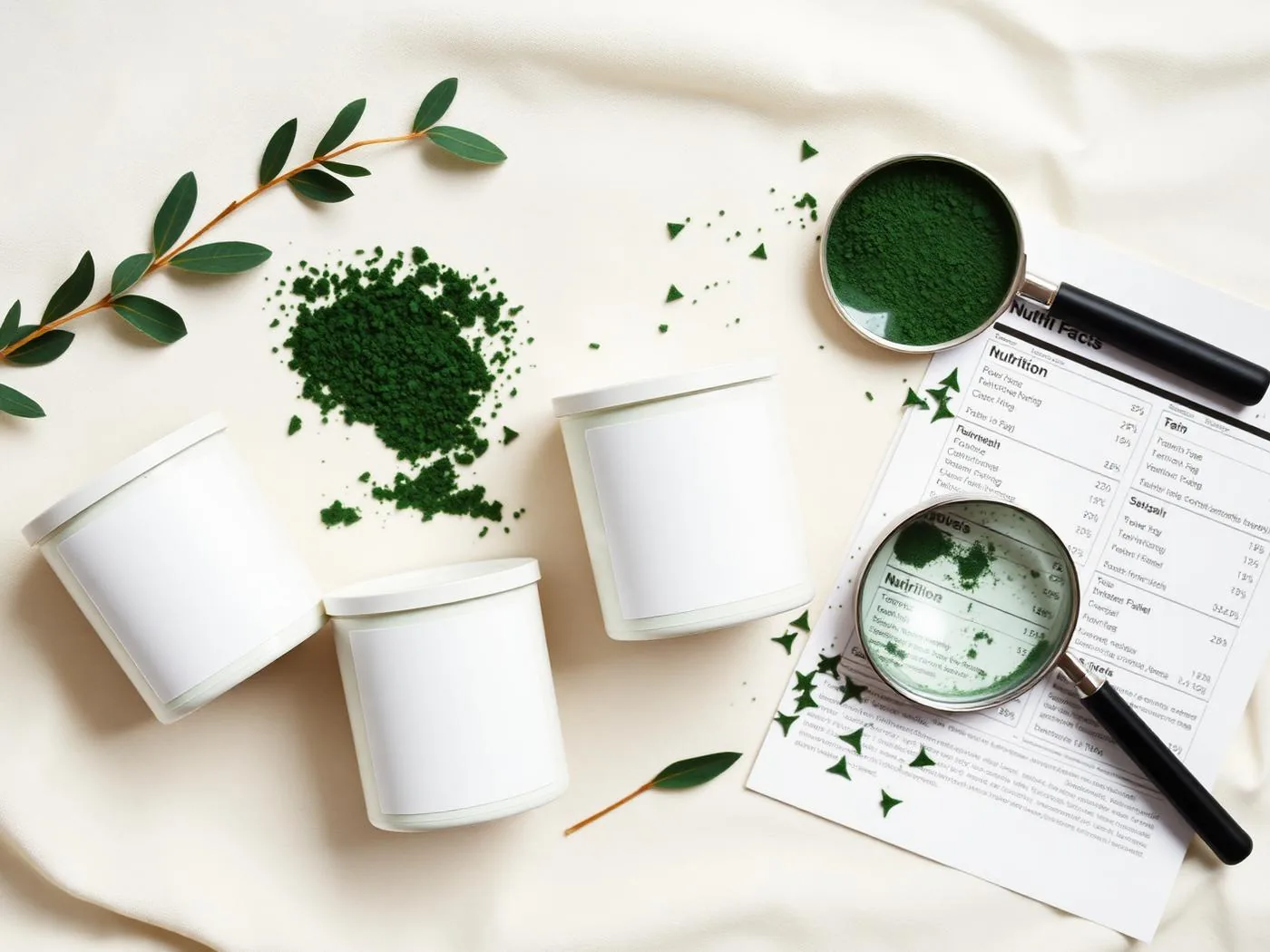
The single best predictor of a well-formulated greens powder is whether the label discloses how much of each ingredient blend you're actually getting, rather than hiding everything behind one undisclosed proprietary mix. Beyond that, the label will tell you almost everything that matters: serving size, probiotic count, sweetener, and true cost per day. Marketing copy, ingredient counts and glossy photography tell you almost nothing.
What's the single most important thing to check on the label?
Whether the blend weights are disclosed. Under supplement labeling rules, a brand can legally list ingredients inside a "proprietary blend" and only print the blend's total weight, with ingredients ordered by amount but no individual doses shown. That's completely legal, but it means you have no way to know whether an ingredient you're buying the product for — say, ashwagandha or a specific probiotic strain — is present in a meaningful amount or in a trace amount.
A label that instead breaks its formula into labeled blends with printed gram or milligram weights — for example, a 2.6g superfood blend, a 1.2g herb blend, and a 406mg fiber-and-enzyme complex — gives you something to actually reason about. It won't tell you the milligram amount of every single ingredient inside a multi-ingredient blend, but it narrows the guesswork considerably and signals a brand willing to be checked.
Does a longer ingredient list mean a better product?
Not necessarily. Ingredient count is a marketing metric, not a formulation metric. A formula with 75 ingredients packed into a fixed total gram weight has, by simple division, given many of those ingredients a very small share of the scoop. A shorter list at meaningful, disclosed doses can outperform a longer list with untraceable amounts.
The better question is: are the ingredients you actually care about near the top of their blend (ingredients are listed in descending order by weight), and is the blend they're in disclosed at all? That tells you more than the total count on the front of the tub.
Check the panel yourself
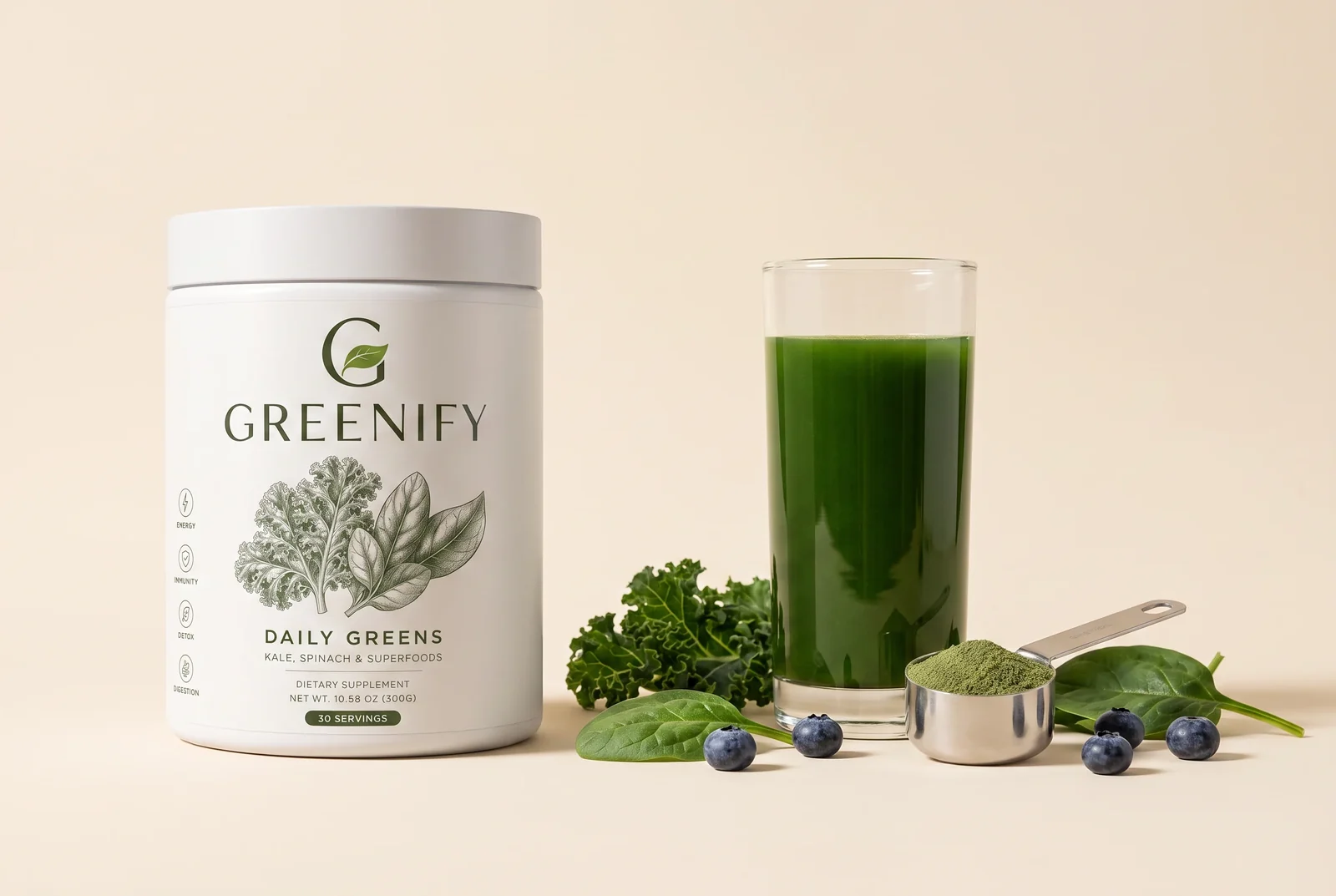
Every blend weight, printed and disclosed
Daily Greens passes its own checklist: 2.6g superfoods, 1.2g herbs and adaptogens, 406mg fiber and enzymes, 2.5 billion CFU probiotics, stevia only — from $1.40 a day.
What serving size should I expect, and does bigger mean better?
Serving sizes across the category run from around 4g up to 12g. A bigger scoop is not automatically a stronger formula — a lot of the added weight in a large serving can be inulin fiber, a flavor system, or fruit powder used mainly for taste. A smaller, more concentrated scoop isn't automatically weak either. The only way to know is to check what makes up the bulk of the blend, not just the total number on the label.
If you struggle with strong flavors or large volumes of powder to dissolve, a smaller serving size is also simply easier to build into a daily habit — and a habit you actually keep is worth more than a marginally larger scoop you eventually stop taking.
What should I look for if I care about gut health specifically?
Three things, all of which should be stated explicitly rather than implied: a probiotic CFU count declared per serving (ideally guaranteed through the expiration date rather than only at time of manufacture), individually named digestive enzymes (amylase, protease, lipase and similar — not just a vague "enzyme blend"), and a named prebiotic fiber source such as chicory root inulin or apple fiber to feed those probiotic strains. If a product markets itself on gut health but is missing all three, treat that claim skeptically.
What's the checklist I should actually run through before buying?
Here's the shortlist worth working through on any product page before you add it to cart. None of these require special knowledge — they're all things printed on the label or the checkout page.
| Check | What to look for | Why it matters |
|---|---|---|
| Blend disclosure | Printed gram/mg weight per blend, not one undisclosed proprietary blend | Lets you compare actual doses, not just ingredient names |
| Serving size | Stated in grams; check what makes up the bulk | Bigger isn't automatically better — check what fills the scoop |
| Probiotic CFU | A specific number stated per serving | A vague "probiotic blend" with no CFU count tells you nothing |
| Digestive enzymes | Named individually (amylase, protease, lipase, etc.) | Confirms a real enzyme complex rather than a marketing line |
| Sweetener | Stevia, monk fruit, or no added sugar | Avoids undercutting the health pitch with added sugar |
| Cost per day | Total price ÷ number of servings, at the tier you'd actually buy | The only fair way to compare products with different tub sizes |
| Guarantee | A real money-back window, ideally 30+ days | Taste and personal tolerance can't be judged without trying it |
How do I compare the true cost between two products?
Always divide total price by number of servings in that specific package, at the tier you would actually buy — not the cheapest advertised tier if you wouldn't realistically commit to that quantity. Watch for subscription-only pricing, where the lowest advertised per-day cost only applies if you sign up for recurring auto-ship; if you'd rather buy outright, compare the one-time price instead. Multi-tub bundles usually lower the per-day cost meaningfully compared to a single tub, so it's worth checking whether a brand offers one before assuming a competitor is cheaper.
Should sweetener and taste factor into the decision?
Yes, more than most buyers expect going in. A greens powder you don't enjoy drinking is a greens powder you stop taking within a few weeks, which makes even the best-formulated product worthless in practice. Check the sweetener (stevia leaf extract and monk fruit are common, both non-nutritive; some products use added sugar, which works against the health pitch) and, where possible, read what actual customers say about the taste rather than relying on the product photography.
What does Greenify Daily Greens look like against this checklist?
Running Daily Greens through the checklist above: all four blends are disclosed by weight (2.6g superfood blend, 1.2g herb and adaptogen blend, 406mg fiber-and-enzyme complex, and a probiotic blend at 2.5 billion CFU across four named strains). The scoop is a modest 4.4g. Five digestive enzymes are individually named. The only sweetener is stevia leaf extract, with no added sugar. Cost per day runs from $2.33 on a single tub down to $1.40 on the largest bundle, and every order carries a 60-day money-back guarantee.
Frequently asked questions
- What should I look for when buying a greens powder?
- Disclosed blend weights, a reasonable serving size, a stated probiotic CFU count, individually named digestive enzymes, a non-sugar sweetener, and the true cost per day rather than the tub's sticker price.
- Is a higher ingredient count always better?
- No. Ingredient count is a marketing figure; the doses inside each blend matter more. A shorter list of disclosed, meaningful doses can be a better formulation than a longer list of undisclosed amounts.
- What's a normal serving size for a greens powder?
- Typically 4g to 12g. Larger isn't automatically better — check whether the extra weight is active ingredients or mostly fiber and flavoring.
- How much probiotic CFU should a greens powder have?
- There's no single correct number, but the label should state a specific figure per serving rather than an unquantified "probiotic blend." Products in the category commonly range from roughly 1 billion to 10 billion CFU.
- Why does cost per day matter more than the price of the tub?
- Because tub sizes and serving counts vary widely, a lower sticker price can still work out more expensive per day than a pricier multi-pack. Dividing total cost by servings is the only fair comparison.
- Should I choose a greens powder based on customer reviews?
- Reviews are useful for taste and tolerance, which are genuinely personal and hard to judge from a label. They're less useful for judging formulation quality — for that, read the actual ingredient panel.