
Nutrition
Do Greens Powders Replace Vegetables?
Last updated: August 2026
The short answer is no. A greens powder is a concentrated plant supplement, not a substitute for produce — but that does not make it pointless. Here is what it does and does not do.
Greenify Editorial • August 9, 2026 • 8 min read
Written and fact-checked by the Greenify nutrition team against product labels and published nutrition guidance. Our editorial standards
- Greens Powder
- Vegetables
- Fiber
- Nutrition
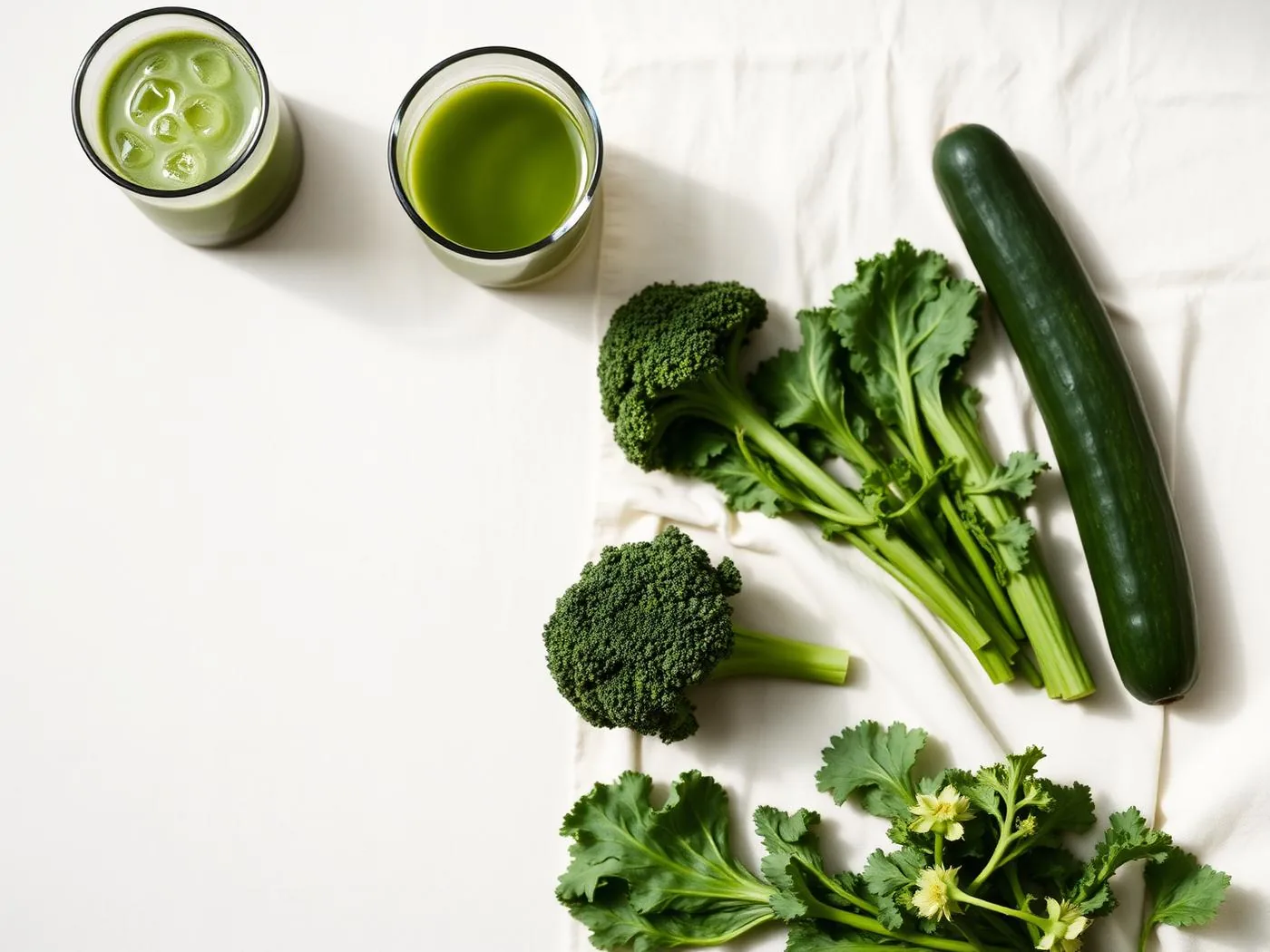
No, greens powders do not replace vegetables, and any brand that tells you otherwise is selling you something. A scoop of greens powder is a concentrated, dehydrated plant supplement measured in grams; a serving of vegetables is measured in tens or hundreds of grams and brings bulk, water, intact fiber and a food matrix that a powder cannot reproduce. What a greens powder can do is add plant variety and specific nutrients to a diet that is short on both, conveniently enough that people actually keep doing it. That is a real benefit, and it is a smaller claim than 'replaces your five a day'.
Do greens powders replace vegetables?
No. A greens powder supplies concentrated nutrients from dehydrated plants, but it cannot supply the fiber volume, water content, satiety or intact food matrix of whole vegetables. Most servings weigh 4 to 12 grams in total; a single cup of cooked broccoli weighs around 150 grams. No processing step closes that gap.
The clearest way to see it is fiber. Most greens powders deliver roughly one to three grams of fiber per serving. General dietary guidance for adults sits in the region of 25 to 38 grams a day, and most people fall well short of it. A scoop moves that number by a few percentage points at best — useful, but not a replacement for the beans, whole grains and vegetables that would move it properly.
There is also chewing, volume and fullness. Eating a plate of vegetables displaces other food, slows a meal down and fills you up. A drink does none of those things, which is why 'I take a greens powder instead of eating vegetables' tends to leave both the fiber and the appetite side of the equation unchanged.
What do greens powders actually provide?
Concentrated micronutrients are the first genuine contribution. Dehydration removes water, so gram for gram a powder is dense in vitamins and minerals compared with fresh produce, and most formulas also add isolated vitamins and minerals with declared daily values you can read off the panel.
Plant variety is the second, and arguably the more interesting one. A single scoop can contain dozens of different plants — leafy greens, sea vegetables, berries, mushrooms, herbs — which is more botanical variety than many people eat in a week. Variety of plant sources is associated with a more diverse gut microbiome, and it is genuinely hard to achieve from cooking alone on a busy schedule.
Third, many formulas carry things vegetables do not: live probiotic cultures with a stated CFU count, named digestive enzymes, and prebiotic fiber from a specific source. Those are supplement ingredients, not vegetable ingredients, and they are a legitimate reason to take a powder even if you eat well.
Fourth, and least glamorous: consistency. A drink you make in twenty seconds each morning gets taken. Vegetables you intended to cook on Thursday sometimes do not. For a lot of people the honest comparison is not powder versus a perfect diet, it is powder versus nothing.
| Greens powder (one serving) | Whole vegetables (several servings) | |
|---|---|---|
| Fiber | Roughly 1–3g | Typically 10g or more across a day's servings |
| Volume and satiety | Minimal — a drink | Substantial; displaces other food |
| Water content | Negligible in the powder itself | High — most vegetables are mostly water |
| Plant variety per serving | Often 20–75 different plants | Whatever is on the plate, usually 2–5 |
| Micronutrient density per gram | High — water removed | Lower per gram, higher per serving |
| Probiotics and enzymes | Common in formulas that state them | Only in fermented foods |
| Cost per day | $0.83–$3.30 | Varies; usually cheaper per gram of fiber |
An addition, not a replacement
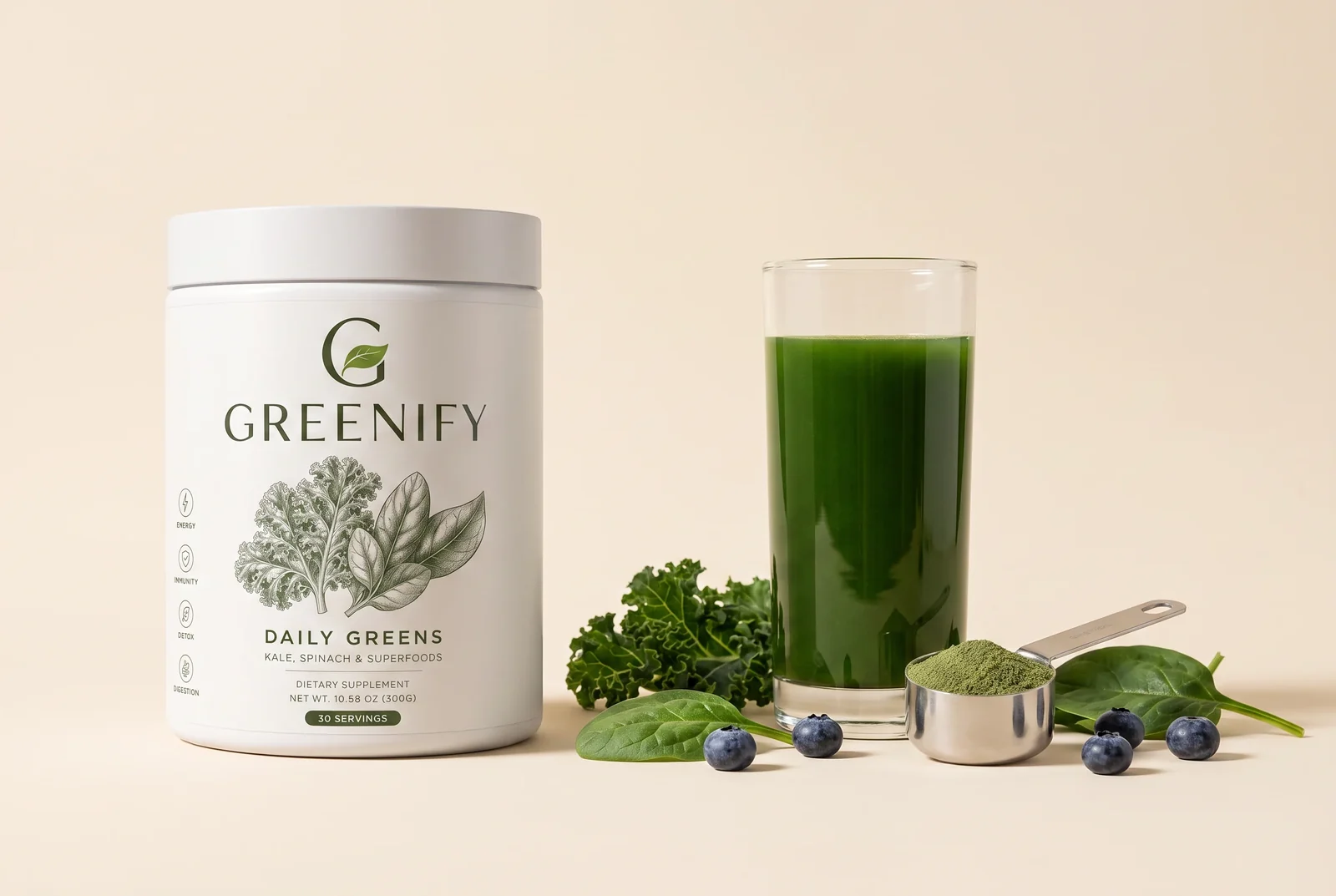
56 plants in a 4.4g scoop — alongside your vegetables
Daily Greens is built for the days your diet is thin: 56 ingredients across four disclosed blends, with 2.5 billion CFU, five named enzymes and prebiotic fiber. It is not a substitute for produce, and we do not claim it is.
What is lost when vegetables become powder?
Water is the obvious loss, and mostly a harmless one. What matters more is bulk fiber: much of the fiber in vegetables is structural, and while it survives dehydration chemically, you simply are not eating enough grams of powder for it to add up.
Some nutrients are heat- and light-sensitive. Vitamin C and certain polyphenols degrade during processing and storage, which is one reason formulas often add isolated vitamin C rather than relying on the plant material alone. That is a sensible formulation choice, not a scandal, but it does mean the panel's vitamin C is not necessarily 'from the kale'.
The food matrix is the subtlest loss. Nutrients in whole food arrive alongside fats, fibers and other compounds that affect how they are absorbed and used, and that context is only partly reproducible in a blend. This is an area where honest uncertainty is the right position: powders demonstrably deliver nutrients, and it is not established that they deliver the same benefits as the equivalent whole foods.
How to use a greens powder alongside real food
Treat it as a floor, not a ceiling. On a day when you eat well, the scoop is a small addition. On a day when lunch was a sandwich at your desk and dinner came out of a packet, it is the only plant variety you got. That asymmetry is where the value sits.
Keep eating fiber from food. If you take one thing from this article, make it this: no greens powder gets you near a day's fiber target, so beans, lentils, whole grains, fruit and actual vegetables still have to do that work. A powder is not a reason to eat fewer of them.
Use it where it removes friction. Blend it into a smoothie with fruit and a source of fat, drink it with breakfast, or take it at a fixed time so it becomes automatic. The powder that works is the one you take daily for months, not the impressive one that stalls in a cupboard.
Who benefits most from a greens powder?
People who eat few vegetables benefit most, and the benefit is largest when the starting point is lowest. If your current intake is one or two servings a day, adding concentrated plant nutrients and prebiotic fiber closes a genuine deficit.
People with restricted diets or unpredictable schedules are the second group — shift workers, frequent travellers, anyone whose access to fresh produce is inconsistent for weeks at a time. A shelf-stable scoop is a reasonable insurance policy for those stretches.
People already eating six or more servings of vegetables a day benefit least from the nutrient side, and should think of a powder mainly as a delivery vehicle for the things vegetables do not carry: named probiotic strains, digestive enzymes, specific adaptogens. If none of those interest you, spending the money on more produce is the better call, and we would rather say so.
Frequently asked questions
- Do greens powders replace vegetables?
- No. A greens powder supplies concentrated nutrients and plant variety but cannot replace the fiber volume, water, satiety and food matrix of whole vegetables. It works best alongside produce, not instead of it.
- How many servings of vegetables is one scoop of greens powder?
- There is no reliable conversion, and claims like 'equals six servings of vegetables' are marketing rather than measurement. A scoop weighs 4 to 12 grams against roughly 80 to 150 grams for a vegetable serving.
- Do greens powders have fiber?
- Most supply roughly 1 to 3 grams per serving, often including prebiotic fiber such as inulin. That is a small fraction of the 25 to 38 grams a day generally recommended for adults.
- Is it worth taking a greens powder if I already eat vegetables?
- The nutrient benefit is smaller if your diet is already varied. The remaining reasons are the things vegetables do not carry — named probiotic strains, digestive enzymes and specific adaptogens — so buy on those or skip it.
- Can a greens powder count towards five a day?
- Official guidance in most countries counts whole and juiced produce, not dehydrated supplement powders, so it is safer to treat a greens powder as an addition rather than as one of your servings.