
Nutrition
What Are Adaptogens and Why Are They in Your Greens?
Last updated: January 2026
"Adaptogen" gets used loosely on labels. Here's the actual definition, the three found in Daily Greens, and how to think about dosing them.
Greenify Editorial • January 14, 2026 • 5 min read
Written and fact-checked by the Greenify nutrition team against product labels and published nutrition guidance. Our editorial standards
- Adaptogens
- Stress
- Herbs
- Daily Greens
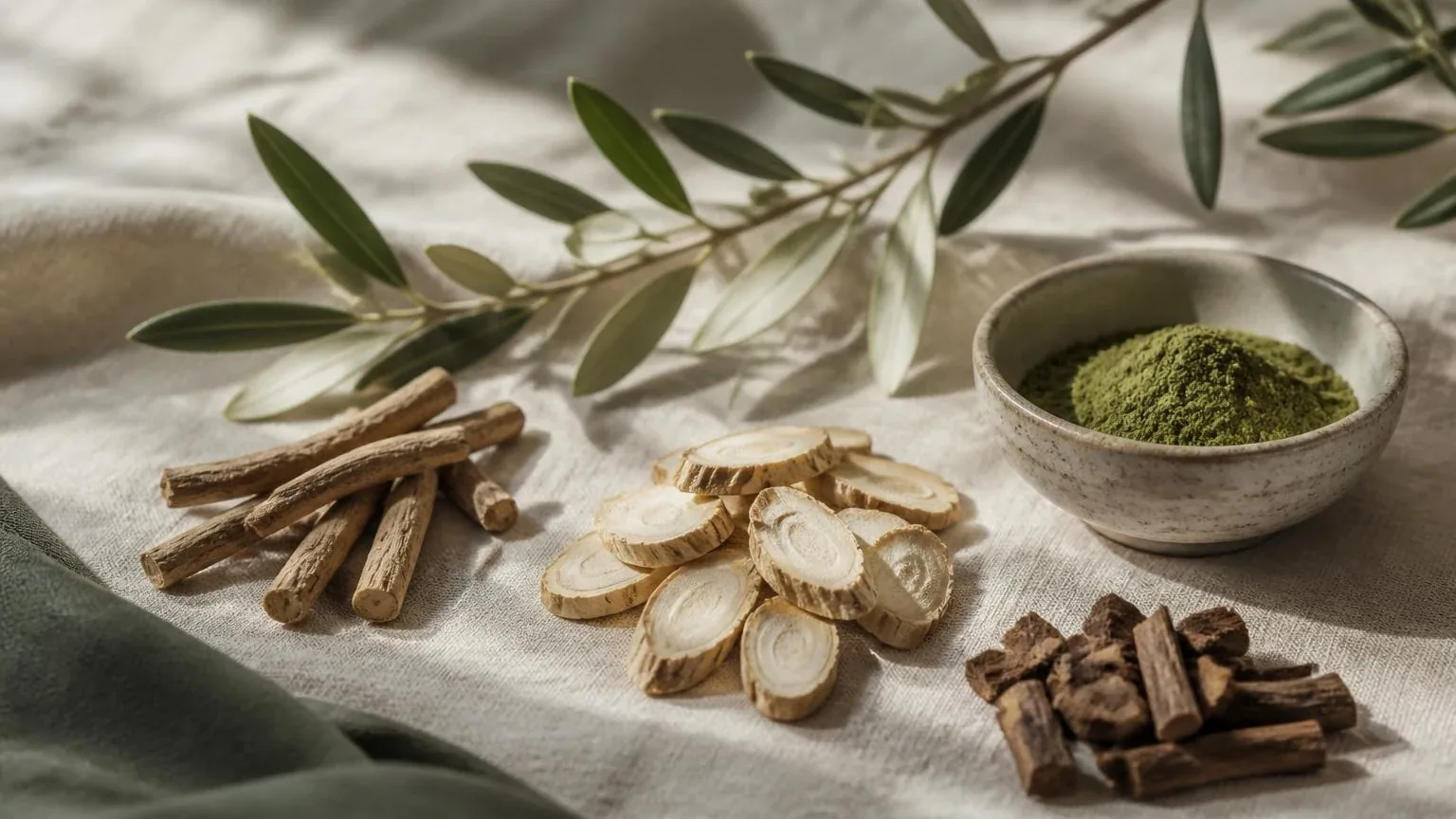
Pick up almost any greens powder and you will find the word adaptogen somewhere on the panel. It is one of the least precise words in wellness — and one of the most useful, once you know what it is actually describing. Here is the working definition, the three adaptogens inside a scoop of Daily Greens, and how to take them so they have a fair chance of doing something.
The working definition
The word adaptogen was coined in the mid-twentieth century by Soviet pharmacologists studying plants that seemed to help people tolerate physical and mental strain. Their definition had three parts, and it is still the most useful one on offer. An adaptogen should be non-toxic at normal servings. It should act broadly on the body's general resilience to stressors rather than on one narrow pathway. And it should be normalising — nudging systems back toward baseline rather than pushing them relentlessly in one direction.
That third criterion is what separates an adaptogen from a stimulant, and it is the part most marketing copy quietly drops. Caffeine pushes. It raises alertness whether or not you need more alertness, and it does so today, within twenty minutes, at a dose you can feel. An adaptogen is traditionally used to steady: the effect is described in terms of feeling less rattled by a hard week, not more wired in the next hour.
It is worth being honest about the evidence. Adaptogens are among the better-studied botanical categories, but most trials are small, short and heterogeneous in the extracts they use. Traditional use across Ayurvedic, East Asian and Eastern European herbalism is substantial and consistent; modern clinical certainty is not yet. Treat them as a well-established traditional category with promising, incomplete research behind it — not as pharmaceuticals in plant form.
The three in Daily Greens
Ashwagandha (Withania somnifera) is the most studied of the group. It has been used in Ayurvedic practice for centuries, traditionally as a rasayana — a rejuvenating tonic — with a reputation for calm rather than stimulation. Modern research has focused mainly on perceived stress and sleep quality, and most protocols run root extracts daily for eight to twelve weeks. It is the adaptogen people most often describe as taking the edge off.
Korean ginseng (Panax ginseng) is the classic energy adaptogen of East Asian herbalism, valued for vitality and mental sharpness. Panax is the botanical genus that gives us the word panacea, which tells you how it was historically regarded. It tends to feel more activating than ashwagandha, which is why it belongs in a morning formula rather than an evening one.
Eleuthero (Eleutherococcus senticosus) is sometimes labelled Siberian ginseng, which is misleading — it is botanically unrelated to Panax. It was popularised by mid-century Soviet research into physical endurance and working capacity, and it remains the endurance-leaning member of the trio. Daily Greens includes all three inside its disclosed 1.2g herbs and extracts blend, so you can see what you are getting rather than guessing at a proprietary total.
Put it into practice
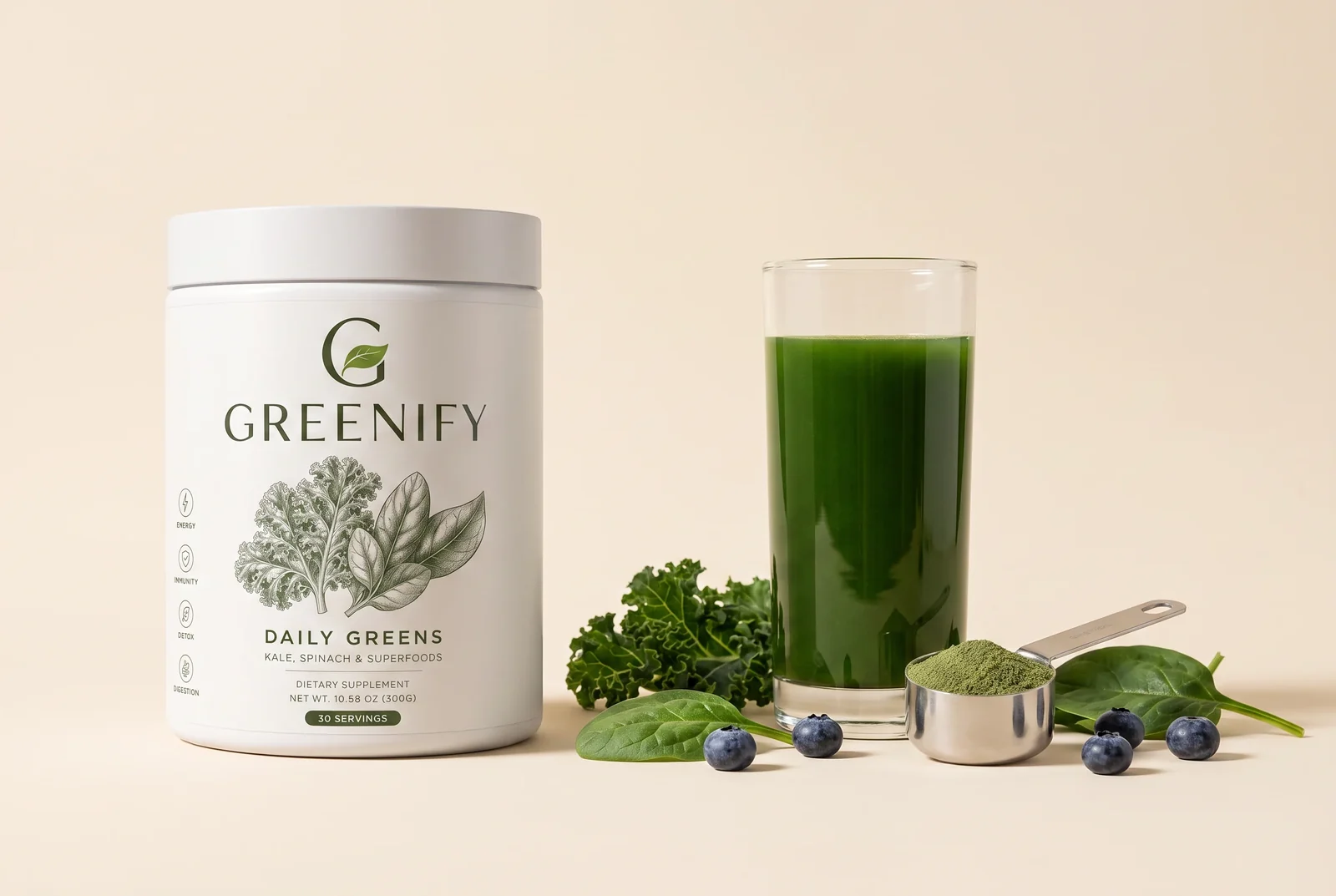
All three adaptogens, in one morning scoop
Daily Greens carries ashwagandha, Korean ginseng and eleuthero inside a disclosed 1.2g herbs and extracts blend — alongside 30+ superfoods, prebiotic fiber, five digestive enzymes and live cultures.
How to actually take them
Adaptogens are a daily-habit ingredient. Almost all traditional use and almost all modern research protocols run for weeks, not hours. A single scoop is not supposed to land like an espresso, and if a product promises that it is probably relying on caffeine to do the work. Give any adaptogen four to eight weeks of consistent daily use before deciding whether it does anything for you.
Timing is simpler than the internet suggests: pick a time you will not forget and keep it. Morning suits most people, partly out of habit and partly because ginseng can feel activating late in the day. Taking them with food is fine and often gentler on an empty stomach. Splitting a serving is fine too.
More is not better. Adaptogens have a long history of use at modest, food-adjacent doses, and megadosing a single extract is a modern invention with no traditional precedent. A sensible botanical blend at a disclosed weight, taken daily, is a better strategy than stacking three separate high-dose extracts and hoping.
Who should be cautious
Adaptogens are botanically active, which is the whole point, and that means they can interact. If you take prescription medication — particularly thyroid medication, immunosuppressants, sedatives, blood thinners or diabetes medication — talk to your physician or pharmacist before starting. Ashwagandha in particular has documented interactions worth checking.
Skip them if you are pregnant or nursing unless your clinician says otherwise. People with autoimmune thyroid conditions frequently ask about ashwagandha specifically; that is a conversation for a doctor who knows your labs, not a supplement label. And if you are already on a stimulant-heavy regimen, adding ginseng may simply add to the jitter.
The plain summary: adaptogens are a low-drama, long-horizon ingredient category with real traditional pedigree and a growing evidence base. They reward patience and consistency, and they punish nobody who skips them. If you want them, get them from a formula that tells you how much you are taking.
The takeaway
Adaptogens are not stimulants and not sedatives. They are herbs traditionally used to support the body's response to everyday stress, and the sensible way to judge them is over weeks of consistent use rather than in the hour after your first scoop.
Daily Greens includes ashwagandha, Korean ginseng and eleuthero at disclosed amounts inside its 1.2g herb and extract blend, alongside 34 whole-food superfoods. Take it at the same time each day, give it six to eight weeks, and check with your doctor first if you are pregnant, nursing, on medication or managing a thyroid condition.