
Gut Health
Best Superfood Powder for Gut Health: What to Prioritise
Last updated: August 2026
The best superfood powder for gut health isn't the one with the most ingredients — it's the one with disclosed probiotic CFU, named strains, prebiotic fiber and digestive enzymes.
Greenify Editorial • August 8, 2026 • 10 min read
Written and fact-checked by the Greenify nutrition team against product labels and published nutrition guidance. Our editorial standards
- Gut Health
- Probiotics
- Prebiotics
- Enzymes
The best superfood powder for gut health is one that discloses its probiotic CFU count and strains, pairs live cultures with a named prebiotic fiber, and includes digestive enzymes rather than relying on greens content alone. A long ingredient list of leafy vegetables and fruit powders supports general nutrition, but it isn't the same thing as a gut-focused formula. If digestion is the priority, look at the fine print on the probiotic, fiber and enzyme lines before you look at anything else.
What actually matters in a gut-health superfood powder?
Four things matter more than anything else on the label: how many live organisms are guaranteed per serving (CFU count), whether the specific bacterial strains are named rather than lumped into a vague "probiotic blend," whether there's a prebiotic fiber to feed those bacteria, and whether digestive enzymes are included to help break food down in the first place.
A powder can list fifty superfoods and still do very little for digestion specifically if none of those four elements are present or disclosed. Greens, fruits and vegetables support general nutrition and provide some fiber and polyphenols, which is genuinely useful, but it's a different mechanism than a targeted probiotic and enzyme complex.
Does CFU count matter more than strain diversity?
Both matter, but a high CFU count of a single strain and a moderate CFU count spread across several complementary strains are solving slightly different problems, and neither number alone tells the whole story. What matters most is that the CFU count is guaranteed through the product's expiry date — not just at the time of manufacture — since probiotic potency naturally declines in storage.
Strain names matter because different species and strains are associated with different roles in the gut, from supporting regularity to comfort after meals. A label that just says "probiotic blend, 5 billion CFU" without naming strains gives you less to evaluate than one that lists them individually.
Built for digestion specifically
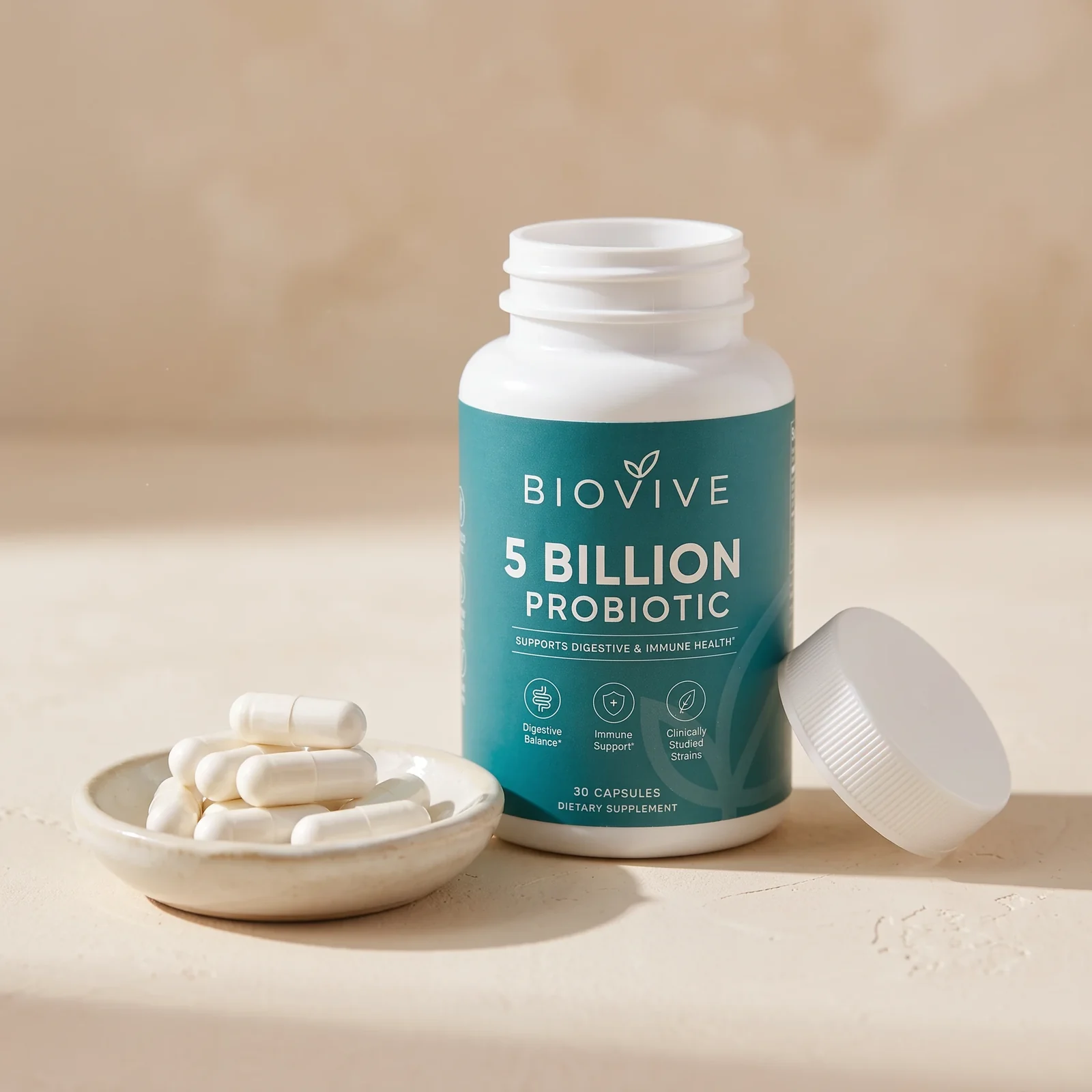
5.75 billion CFU across 7 named strains
One veggie capsule a day with goMCT powder — formulated for digestive balance and bloating comfort, not a side note in a longer ingredient list.
Do prebiotics matter as much as probiotics?
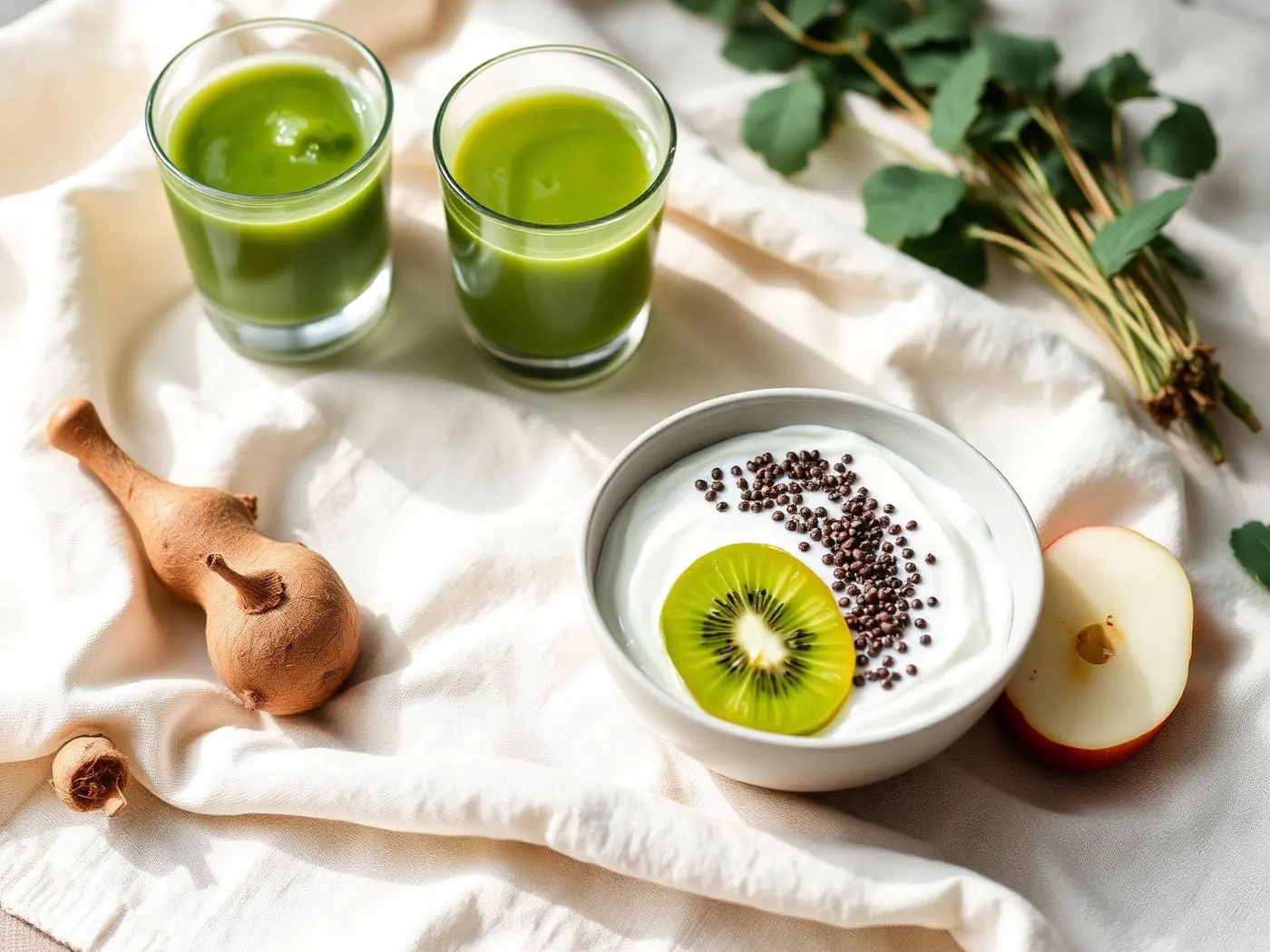
Prebiotic fiber is what probiotic bacteria eat, so pairing the two is generally considered more useful than probiotics on their own. Ingredients like chicory root inulin and apple fiber are common, well-tolerated prebiotic sources found in gut-focused formulas.
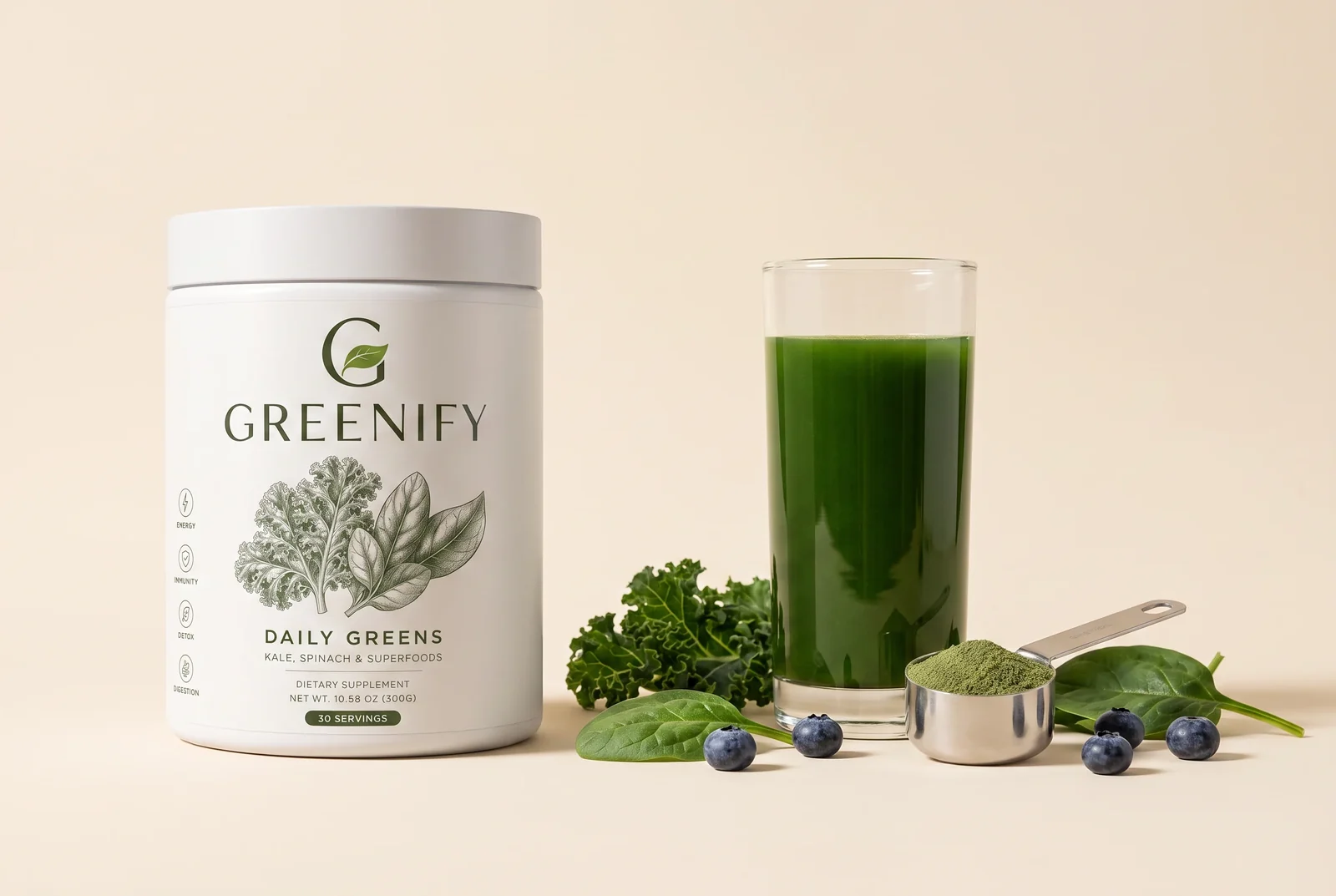
This is one reason a formula built around both — rather than probiotics alone — can offer a more complete approach to digestive support. Daily Greens, for example, carries its prebiotic fiber and enzyme complex (406mg of apple fiber, chicory root inulin, and five named enzymes) as a separate blend from its 2.5 billion CFU, 4-strain probiotic blend, so the fiber and the bacteria are both accounted for in the same scoop.
What do digestive enzymes actually add?
Digestive enzymes help break down macronutrients before they reach the point where bacteria ferment what's left, which is part of why some people notice less bloating when enzymes are present. Common ones to look for include amylase (carbohydrates), protease (protein), lipase (fat), and cellulase or glucoamylase for harder-to-digest plant fibers.
Enzymes and probiotics address different stages of digestion — enzymes work on food, bacteria work on the gut environment — so a formula that includes both is covering more ground than one that includes only one or the other.
Should I choose a greens powder or a dedicated probiotic supplement?
It depends on what you're solving for. A daily greens powder like Daily Greens is built for broad nutrition — vitamins, minerals, adaptogens and antioxidants — with gut support as one part of a wider formula. A dedicated probiotic like BioVive 5 Billion Probiotic is built specifically around live cultures: 5.75 billion CFU across 7 strains plus goMCT powder, in a single once-daily veggie capsule, with digestion and bloating comfort as the primary focus rather than one section of a longer ingredient panel.
Some people take a greens powder for overall nutrition and a dedicated probiotic capsule alongside it when digestion specifically is the priority — the two aren't mutually exclusive, since one is a food-based nutrition product and the other is a concentrated live-culture supplement.
How long before a gut-health supplement makes a difference?
Digestive changes from dietary fiber and probiotics are generally gradual rather than immediate, and individual response varies quite a bit based on existing diet, gut microbiome and consistency of use. Most people who notice a difference report it building over several weeks of daily use rather than after a single serving.
It's worth remembering that supplements are meant to support digestion as part of a broader diet and lifestyle — they're not a treatment for a diagnosed digestive condition, and persistent or severe symptoms should be evaluated by a doctor rather than managed with supplements alone.
Frequently asked questions
- What is the best type of probiotic for gut health?
- There's no single "best" strain for everyone — different strains are associated with different roles, from regularity to bloating comfort, so a multi-strain formula with named strains and a guaranteed CFU count is generally a safer bet than a single-strain product with vague labeling.
- How many CFU should a good probiotic have?
- Formulas on the market range widely, commonly from around 1 billion to 50 billion CFU per serving. A higher number isn't automatically better — strain identity, whether the CFU is guaranteed through expiry, and whether prebiotic fiber is included all matter alongside the raw count.
- Can a greens powder replace a probiotic supplement?
- It depends on the formula. Some greens powders include a meaningful probiotic and prebiotic component, like Daily Greens' 2.5 billion CFU blend, while others include none at all. If digestion is your main concern, check the label rather than assuming any greens powder covers it.
- Do digestive enzymes help with bloating?
- Enzymes support the breakdown of carbohydrates, protein and fat before they reach the large intestine, which some people find reduces bloating after meals. Response varies by individual, and enzymes aren't a treatment for an underlying digestive condition.
- Should I take probiotics and prebiotics together?
- Generally yes — prebiotic fiber feeds probiotic bacteria, so pairing them is considered more effective than taking probiotics alone by most formulators in this category.
- How long does it take for a probiotic to improve digestion?
- Most people who notice a difference describe it building gradually over a few weeks of consistent daily use rather than immediately. If symptoms are severe or persistent, see a doctor rather than waiting on a supplement.