Comparisons
Best Greens Powders 2026: 8 Popular Options Compared by Price, Doses & Transparency
Last updated: August 2026
Eight popular greens powders, judged on the five things that actually differ: disclosed doses, probiotics and enzymes, cost per day, sweeteners and guarantee.
Greenify Editorial • August 2, 2026 • 11 min read
Written and fact-checked by the Greenify nutrition team against product labels and published nutrition guidance. Our editorial standards
- Comparison
- Buying Guide
- Labels
- Daily Greens
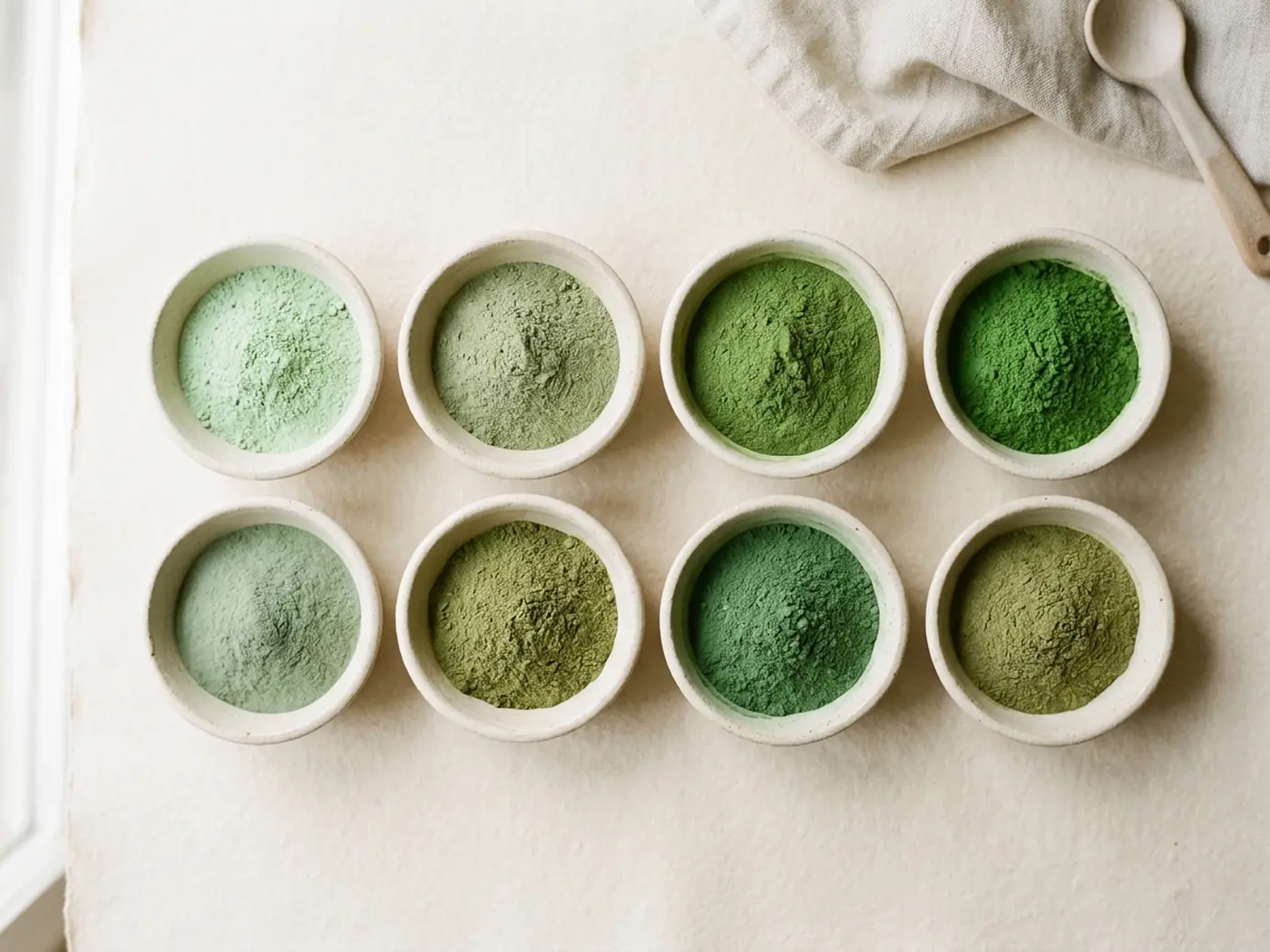
This is our working list of the best greens powders as of August 2026, judged on price, doses and disclosure rather than on marketing. Almost every greens powder on the market makes the same promise in the same font: more vegetables than you eat, in one scoop, in ten seconds. The promise is not the problem. The problem is that the front of the tub is where brands compete and the back of the tub is where they differ, and the back of the tub is written in a format designed to be skimmed rather than read. This guide is a greens powder comparison built the other way round — it starts with how to read a supplement facts panel, then lays out eight popular options side by side on the five variables that genuinely change what you get, then gives each one an honest best-for verdict. We make one of the eight, so we have flagged every place a competitor beats us rather than leaving you to find out later. All figures are as of August 2026.
How do you evaluate a greens powder?
Start with dose disclosure, because it determines whether any other question can be answered. US supplement labels allow a brand to group ingredients into a proprietary blend, print the total weight of that blend, list its contents in descending order by weight, and stop there. That is legal, common and often genuinely intended to protect a formula. It also means that a 5g blend containing twenty ingredients might be 4g of one cheap green and traces of the other nineteen, and the panel will not tell you which. A disclosed-dose label prints the weight of each blend — or each ingredient — so you can do arithmetic instead of guessing.
This is why ingredient count is the weakest signal on the tub and the one most heavily advertised. A scoop is a fixed weight. Seventy-five ingredients inside that fixed weight necessarily means smaller amounts of each than twenty ingredients inside the same weight. Breadth has real value — trace minerals and polyphenol variety are worth having — but breadth and dose pull against each other, and a brand that leads with the count is asking you to read only the flattering half of that trade-off.
Second, look at whether the formula handles digestion as a system or as a marketing line. Three things belong together: prebiotic fiber (the substrate), digestive enzymes (which help break food down) and probiotics (the live cultures themselves). Probiotic quantity is stated as CFU — colony forming units — and higher is not automatically better, because strain identity, delivery and viability at end of shelf life all matter. But CFU is at least a printed number, so it is comparable. Enzymes should be named individually — amylase, protease, lipase, glucoamylase, cellulase — rather than gestured at as a digestive complex.
Third, work out cost per day rather than price per tub. Divide the total price by the number of servings, and do it at every tier the brand advertises: single tub, multi-pack, subscription. A powder is a habit purchase, so the number that matters is the one you will pay 365 times. Watch for two distortions here. A brand's headline price often assumes an auto-ship subscription, and a brand's cheapest tier often requires buying several months up front. Both are legitimate; both need to be compared like for like.
Fourth, check the sweetener and the flavour system. Greens are bitter, so almost everything is sweetened. Stevia and monk fruit are the two common non-nutritive choices; some formulas add sugar, natural flavours, or fruit powders that do double duty as sweetener and antioxidant source. There is no universally correct answer — some people dislike the aftertaste of stevia, others avoid sugar alcohols entirely — but this is the single most common reason a greens powder gets abandoned in week three, which makes it a practical variable rather than a purist one.
Fifth, read the guarantee and the purchase terms. A greens powder cannot be judged in a week; a 30-day window on a 30-serving tub barely covers one round. Longer windows are better, and a company willing to take back an opened tub is making a more meaningful statement than one that only accepts unopened returns. Note whether the best price requires a subscription, and how easy that subscription is to pause.
One last piece of hygiene: manufacturing standards and third-party testing. Look for production in a facility working to recognised standards, and for banned-substance testing if you compete in a tested sport. This is table stakes rather than a differentiator among the better-known brands, but it is worth confirming rather than assuming.
Which greens powder is cheapest per serving?
The short answer, at the tiers publicly advertised as of August 2026: Amazing Grass is consistently the least expensive of this group, Greenify Daily Greens is the cheapest of the fuller multi-blend formulas once you buy a multi-pack, and AG1 is the most expensive on a per-day basis. The longer answer is that cheapest is only meaningful alongside what the scoop contains, which is why the table below carries price and composition together rather than ranking on price alone.
Read the table as a shortlist tool. Where a figure is not something we can verify from a current, publicly available label, we have said so rather than filling the cell with an estimate — an invented number in a comparison table is worse than an empty one, because it looks authoritative.
| Product | Price / serving | Servings | Probiotic CFU | Enzymes | Dose disclosure | Guarantee |
|---|---|---|---|---|---|---|
| Greenify Daily Greens | $1.40–$2.33 | 30 per tub (up to 150 per bundle) | 2.5 billion, four strains | 5 named (amylase, protease, lipase, glucoamylase, cellulase) | All four blend weights printed | 60 days |
| AG1 | ~$2.60–$3.30 | 30 per pouch | 10 billion | Yes | Mostly proprietary blends across ~75 ingredients | 90 days |
| Organifi Green Juice | ~$2.30–$2.70 | 30 | None stated | None stated | Two proprietary blends (Alkaline Greens 5.1g, Superfood 1.45g); 600mg ashwagandha printed | 60 days |
| Bloom Greens & Superfoods | ~$1.04 | 30 | Included; not individually disclosed | Included, blend total only | Mostly proprietary blends, no individual doses | Check current policy |
| Live it Up (Super Greens) | ~$1.33 subscription (~$49.99 / 30 one-time) | 30 | Check current label | Check current label | Transparent nutrition information published | Check current policy |
| Huel Daily Greens | ~$1.50 | 30 | Included; check current label for CFU | Check current label | 91 ingredients; check current panel for individual amounts | Check current policy |
| Amazing Grass Green Superfood | ~$0.90 (~$27 / 30 retail) | 30 | Not the formula's focus | Not the formula's focus | Check current panel | Varies by retailer |
| Jocko Greens | ~$1.67 ($1.50 subscription) | 30 | 9 billion | Check current label | Individual ingredient amounts disclosed | Check current policy |
The disclosed-dose option
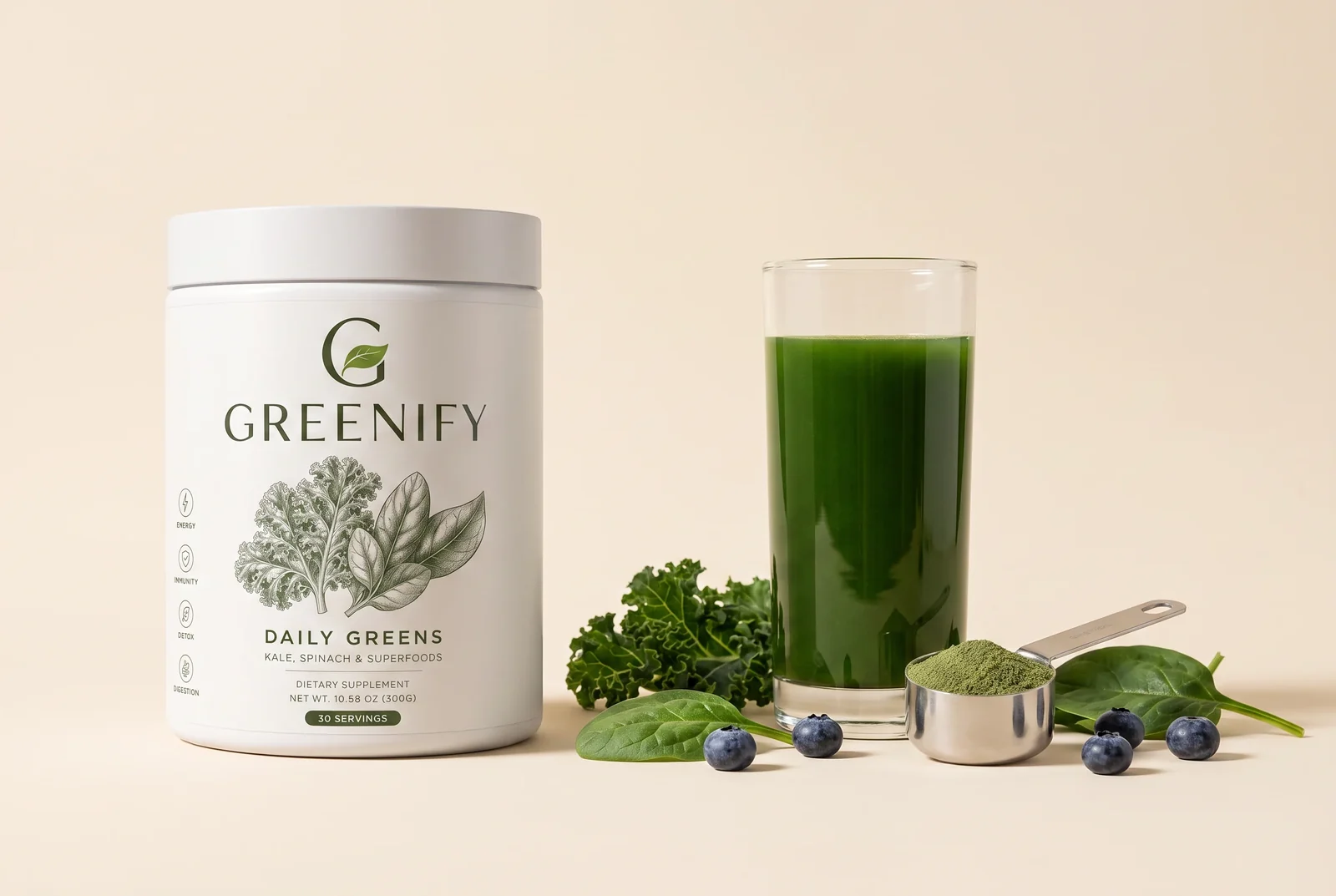
Every blend weight printed on the tub
56 ingredients across four disclosed blends, 2.5 billion CFU, five named enzymes and stevia as the only sweetener — from $1.40 a day, no subscription, 60 days to change your mind.
Which greens powders disclose their doses?
Of the formulas in this group, the pattern as of August 2026 is that full or near-full disclosure is the exception. Greenify Daily Greens prints the weight of all four blends: 2.6g superfood blend, 1.2g herbs and extracts, 406mg prebiotic fiber and the probiotic blend at 2.5 billion CFU. Organifi prints its two blend totals and, unusually, breaks out its 600mg ashwagandha dose individually. AG1 states its 10 billion CFU probiotic figure and its vitamin and mineral amounts, while most of its roughly 75 ingredients sit inside proprietary blends.
Partial disclosure is not dishonesty, and it is worth being precise about what it does and does not cost you. It costs you the ability to compare like for like, to reason about overlap when you stack products, and to check whether a headline botanical is present at a meaningful amount or as a label decoration. It does not tell you the formula is weak — plenty of proprietary formulas are well built. It just means you are trusting the brand rather than reading the panel, and how much trust you extend is a personal call rather than a technical one.
The practical habit: before you buy any greens powder, find its supplement facts panel — not the ingredient list on the marketing page — and ask three questions. How many grams is the scoop? How much of that weight is accounted for by blends whose contents I cannot quantify? And is the one ingredient I am actually buying this for named with a number beside it? If you can answer all three, you have done more diligence than most buyers in the category.
The eight, profiled honestly
Greenify Daily Greens — best for disclosed doses at a mid price. Fifty-six ingredients across four printed blends, 2.5 billion CFU over four strains, five named enzymes, stevia as the only sweetener, $1.40–$2.33 a day depending on pack size, 60-day guarantee, no subscription required. Where it loses: our CFU count is well below AG1's, our ingredient count is smaller, and our guarantee is 30 days shorter than theirs. We think printed doses and half the daily cost are the better trade; you may weigh it differently.
AG1 — best for breadth and operational polish. Roughly 75 ingredients, 10 billion CFU, third-party banned-substance testing, a 90-day guarantee and the smoothest subscription experience in the category. It essentially created the modern all-in-one greens segment. Where it loses: it is the most expensive option per day here, its best price assumes auto-ship, and most of the formula sits inside proprietary blends, so the breadth is asserted rather than quantified.
Organifi Green Juice — best for taste and a real ashwagandha dose. An organic-certified, mild, lighter formula built on two blends totalling about 6.5g, with 600mg of ashwagandha broken out individually and roughly $2.30–$2.70 a day for 30 servings. Where it loses: no probiotics, digestive enzymes or prebiotic fiber are stated, so if you expected the greens powder to cover your gut routine, it will not.
Bloom Greens & Superfoods — best flavors on a budget. Bloom's advantage in this group is palatability and range: it is the option most often bought by people who could not stick with an earthier powder, at a supermarket-adjacent price point. Confirm the current panel for blend weights, CFU and enzymes before buying, as its lineup and formulations have changed more than most.
Live it Up (formerly Ensō) — best for the simplest clean formula. The pitch is a short, legible ingredient list rather than maximal breadth, which suits people who want fewer moving parts and a formula they can read in one pass. If you want live cultures, enzymes and a wide micronutrient panel in the same scoop, check whether this one carries them before assuming.
Huel Daily Greens — most ingredients. Huel's approach across its whole range is nutritional completeness, and its greens product follows that logic with an unusually long ingredient list. That is a genuine strength if breadth is your priority. Apply the same caution as with any long list: breadth inside a fixed scoop weight means smaller amounts of each ingredient, so look for what is quantified.
Amazing Grass Green Superfood — cheapest. It is the long-standing budget benchmark of the category, widely stocked, and it does the basic job of getting greens into a glass at a price nothing else here matches. Expect a simpler formula for the money — it is not trying to be an all-in-one — and check the panel if probiotics or enzymes matter to you.
Jocko Greens — best for athletes. Positioned squarely at a training audience, with the formulation and flavour choices aimed at people who already have a supplement routine and want greens to sit alongside it rather than replace it. If you compete in a tested sport, confirm the current third-party testing status directly with the brand, since certification status can change between production runs.
Popular comparisons: which brands should I compare against each other?
Not every decision runs through us, and plenty of shoppers are choosing between two of the brands above rather than between one of them and Daily Greens. These ten comparisons are written the same way as the rest of this hub — honest winners per category, Greenify confined to a labelled disclosure section at the end — so you can use them even if you never buy from us.
The most contested pairings are the budget-versus-breadth ones. Bloom against AG1 is roughly a dollar a serving against $79 a month; Huel Daily Greens against AG1 is the same kitchen-sink philosophy at very different prices; Jocko against AG1 is the rare case where a smaller brand wins the transparency category outright. AG1 against Organifi and Bloom against Organifi are both really arguments about whether organic sourcing and a shorter list beat a longer one, and Bloom against Amazing Grass is the budget face-off where fourteen cents a serving separates flavor range from organic certification.
Three more comparisons cross format and category lines rather than comparing like with like. AG1 against Ka'Chava is a greens drink against a meal shake, which is a question about whether you are replacing meals or supplementing them. AG1 against Balance of Nature is a scoop against six capsules, where the deciding factor is usually which format you will keep up with. AG1 against Live it Up and against 1st Phorm's Opti-Greens 50 are the two clearest tests of whether breadth is worth a premium — one at a third of the price, the other at almost the same price.
Field of Greens sits slightly apart from the rest of this list because it does not compete on printed doses at all — it sells USDA-organic, whole-food sourcing and a doctor-formulated story instead. That makes it the most interesting brand to read alongside the others: against AG1 it is a lean organic canister versus a 75-ingredient all-in-one, against Organifi it is one organic philosophy against another, and against Bloom it is premium sourcing against roughly half the price. If you are weighing it up, the full review and the alternatives round-up below are the places to start.
- Field of Greens review — what's in it and what it costs
- Greenify vs Field of Greens
- Field of Greens vs AG1
- Field of Greens vs Organifi
- Field of Greens vs Bloom Greens
- Field of Greens alternatives with printed doses
- Bloom vs AG1 — an honest comparison
- AG1 vs Organifi Green Juice
- Bloom vs Organifi
- Huel Daily Greens vs AG1
- Jocko Greens vs AG1
- AG1 vs Ka'Chava — greens drink vs meal shake
- AG1 vs Live it Up Super Greens
- Bloom vs Amazing Grass — the budget face-off
- AG1 vs 1st Phorm Opti-Greens 50
- AG1 vs Balance of Nature — powder vs capsules
How we compared, and what a table cannot settle
Every figure above is a specification, and specifications are the easy part of this decision. Cost per day is total price divided by servings at each brand's own advertised tiers. CFU, enzyme counts and blend weights are taken from current supplement facts panels rather than marketing copy. Guarantee lengths are the publicly stated windows. Where we could not source a number from a current label, we left the cell marked rather than estimating it.
What none of that captures is whether a formula agrees with your stomach, whether you like the taste enough to still be drinking it in week eight, and whether the specific gaps in your own diet are the ones a given blend happens to fill. Those three things decide whether a greens powder was worth the money, and none of them appear in a table. The sensible process is to shortlist two products on specifications, buy the one whose taste and terms you prefer, and give it a consistent eight weeks before judging it.
We would also rather you bought a cheaper powder you finish than a premium one you abandon. A $30 tub taken daily does more for you than a $99 pouch that stalls in March. If cost is the binding constraint, buy on cost and stop reading comparison articles — including this one.
And treat every specification here as perishable. Greens powders get reformulated, prices move, bundles appear and disappear, and probiotic strains get swapped between production runs. This page is dated deliberately: it reflects publicly available information as of August 2026, and the label in your hand at the moment of purchase is the only authority that matters.
Frequently asked questions
- Which greens powder is cheapest per serving?
- Of the eight compared here as of August 2026, Amazing Grass Green Superfood is consistently the least expensive. Among the fuller multi-blend formulas, Greenify Daily Greens is the lowest at $1.40 per serving on its 150-serving bundle and $2.33 on a single 30-serving tub, versus roughly $2.60–$3.30 per serving for AG1.
- Which greens powders disclose their doses?
- Full disclosure is uncommon. Greenify Daily Greens prints all four blend weights — 2.6g superfood, 1.2g herbs and extracts, 406mg prebiotic fiber and a 2.5 billion CFU probiotic blend. Organifi prints its two blend totals plus a 600mg ashwagandha dose. AG1 states its 10 billion CFU figure and its vitamin and mineral amounts, while most of its roughly 75 ingredients sit inside proprietary blends.
- Does a higher ingredient count mean a better greens powder?
- Not by itself. A scoop is a fixed weight, so more ingredients inside that weight means a smaller amount of each. Breadth has real value for trace minerals and polyphenol variety, but it trades against dose. A formula that prints its blend weights lets you judge that trade-off; a proprietary blend does not.
- How long should I try a greens powder before deciding?
- Give it a consistent eight weeks. Greens powders are cumulative rather than stimulant, so a few days tells you about taste and tolerance but nothing else. Check the guarantee window before you buy — 60 to 90 days is common — and make sure it is long enough to cover a fair trial of the tub you are buying.