Nutrition
Green Juice Powder vs Fresh Juice: Which Is Actually Better?
Last updated: August 2026
Fresh juice and green juice powder solve different problems. One is closer to the original vegetable; the other is cheaper, shelf-stable and includes fiber that juicing removes.
Greenify Editorial • August 8, 2026 • 9 min read
Written and fact-checked by the Greenify nutrition team against product labels and published nutrition guidance. Our editorial standards
- Green Juice
- Comparison
- Fiber
- Daily Greens
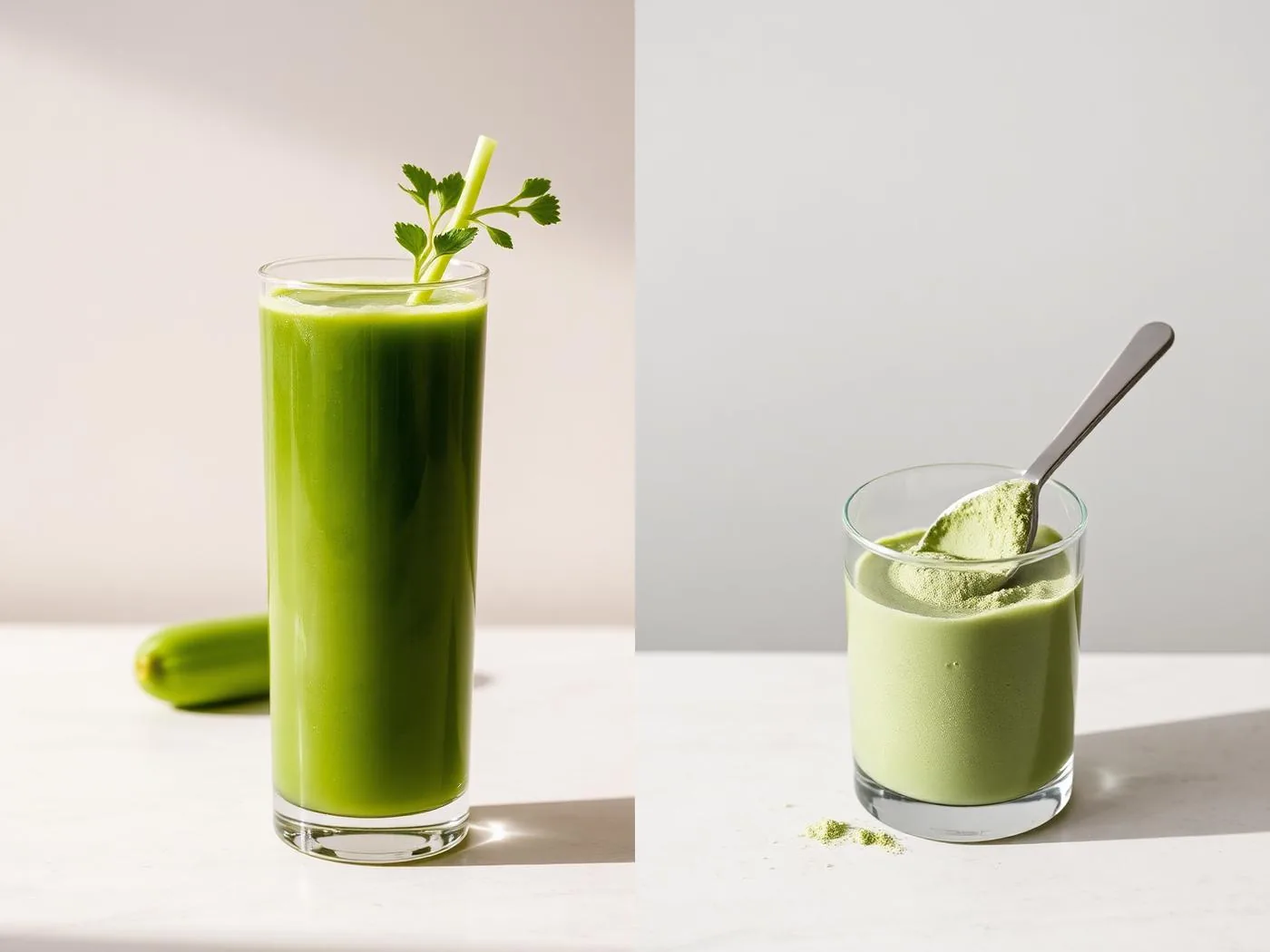
Green juice powder is not a replacement for fresh juice — it is a different product built around a different trade-off. Powder is shelf-stable, includes the fiber that a juicer strains out, and costs a fraction of daily cold-pressed juice, while fresh juice delivers nutrients closer to their whole-food state but loses potency within hours and is far more expensive to sustain. Neither replaces eating whole vegetables. The right choice depends on whether you value cost and convenience or freshness and taste.
Is powdered green juice as good as fresh?
It depends what "as good" is measuring. If the question is nutrient density per gram of raw vegetable, fresh juice starts closer to its whole-food source and hasn't gone through drying and processing. If the question is what actually ends up in your glass on a Tuesday morning, powder often wins by default: it takes fifteen seconds, doesn't require a juicer or clean-up, and doesn't spoil if you skip a day.
Dehydration and spray-drying do affect some heat- and oxygen-sensitive nutrients, and no powder claims to be nutritionally identical to a fresh vegetable. What a well-formulated powder can offer instead is consistency: the same dose of the same ingredients every day, which a lot of people find easier to sustain than sourcing and juicing fresh produce daily.
Does fresh juice lose nutrients over time?
Yes — fresh-pressed juice is at its most nutrient-rich the moment it's made, and it begins oxidizing as soon as it's exposed to air, light and heat. Vitamin C in particular is sensitive to oxidation, and the vivid color of a fresh green juice visibly dulls within a day even under refrigeration. Cold-pressed juice sold in stores addresses some of this with high-pressure processing, but it still has a use-by window measured in days, not months.
A greens powder, by contrast, is dried and sealed specifically to be shelf-stable. It won't match the taste of juice made an hour ago, but what's on the label at the time you buy it is close to what's still there when you finish the tub, assuming it's stored properly — sealed, cool and out of direct sunlight.
Skip the juicer
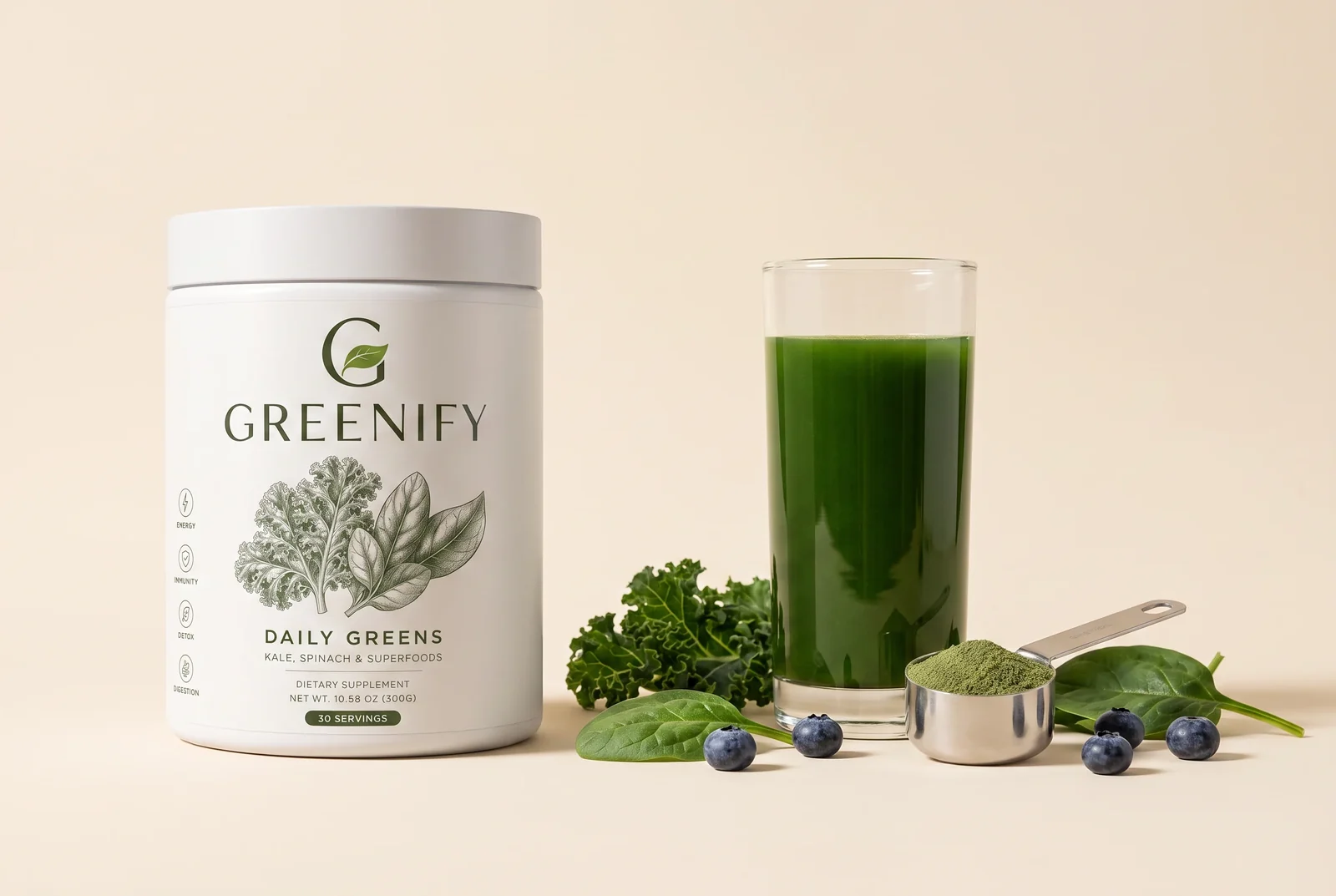
Daily Greens keeps the fiber juicing removes
A 406mg prebiotic fiber and enzyme blend alongside 34 whole-food superfoods — one scoop, $2.33/day, no produce shopping or cleanup.
Where does the fiber go when you juice?
Juicing separates the liquid from the pulp, and most of a vegetable's insoluble fiber leaves with the pulp. That's the core trade-off of fresh juice: you get a concentrated hit of vitamins, minerals and plant compounds, but you lose the fiber that normally slows sugar absorption and feeds gut bacteria.
A greens powder can go either direction depending on how it's made. Some are essentially dried juice and share the same fiber gap. Others, like Daily Greens, deliberately build a separate fiber and enzyme component back in — a 406mg blend of apple fiber and chicory root inulin alongside five named digestive enzymes (amylase, protease, glucoamylase, lipase and cellulase) — specifically because the whole-vegetable powders in the main blend don't fully replace what juicing removes.
How much does a daily green juice habit cost compared to powder?
A single cold-pressed green juice from a juice bar commonly runs several dollars, and making your own fresh at home still means buying pounds of produce plus a juicer to press it — plus the vegetables you throw away as pulp. A daily habit adds up quickly whichever route you take.
Greenify Daily Greens is $69.95 for a 30-serving tub, or $2.33 per day, dropping to $1.40 per day on the largest bundle. That's a fixed, predictable cost with no produce shopping, no juicer maintenance and no waste.
Powder vs fresh juice vs whole vegetables
Here's how the three options compare on the factors that actually change day-to-day behavior.
| Green Juice Powder | Fresh Juice | Whole Vegetables | |
|---|---|---|---|
| Cost per day | ~$1.40–$2.33 (Daily Greens) | $4–$10+ (juice bar or home-pressed) | Varies, generally lowest per serving |
| Fiber retained | Depends on formula — Daily Greens adds a dedicated prebiotic fiber blend | Mostly removed during juicing | Fully retained |
| Convenience | Scoop, mix, done in under a minute | Requires juicing, cleanup or a same-day purchase | Requires shopping, prep and cooking |
| Shelf life | Months when sealed and stored properly | Hours to a few days, even refrigerated | Days to a couple of weeks depending on produce |
| Nutrient stability over time | Stable once sealed; some loss from processing occurs upfront | Declines steadily from the moment it's pressed | Declines gradually after harvest |
Should I drink green juice powder every day?
A daily scoop is how most greens powders, including Daily Greens, are designed to be used — consistency is what makes any nutrition habit meaningful, powder or otherwise. It's meant to sit alongside meals that include whole vegetables and fruit, not instead of them.
If you already eat vegetables at most meals and juice fresh produce a few times a week, a powder is a convenient backup for busy days rather than a wholesale replacement. If your actual vegetable intake on an average day is low, a powder is a more realistic daily habit to sustain than a juicer most people abandon within a few months.
The bottom line
Fresh juice wins on being closest to the whole vegetable at the moment it's made. Powder wins on cost, shelf life, consistency and — when the formula includes a real fiber and enzyme blend — on giving back something juicing removes. Whole vegetables beat both on fiber and overall food matrix, and neither juice nor powder is meant to replace them.
The practical answer for most people is to treat green juice powder as the low-friction daily habit, fresh juice as an occasional treat, and vegetables at meals as the non-negotiable baseline.
Frequently asked questions
- Is green juice powder as healthy as fresh juice?
- It's a different kind of healthy rather than a strictly better or worse version. Fresh juice is closer to the raw vegetable at the moment it's pressed; powder is shelf-stable, cheaper to sustain daily, and — in formulas that include a dedicated fiber blend — can retain more fiber than juice does.
- Does green juice powder have less nutrients than fresh juice?
- Drying and processing can reduce some heat- or oxygen-sensitive nutrients compared to juice consumed immediately after pressing. However, fresh juice also loses nutrients quickly through oxidation, so the gap narrows the longer the juice sits before you drink it.
- Can I replace my morning juice with a greens powder?
- Many people do, mainly for cost and convenience. It's a reasonable swap as long as you're not relying on either one as your only source of vegetables.
- Why does green juice powder still have sugar or carbs if the fiber is removed during processing?
- Most greens powders aren't made purely from pressed juice — they're made from whole dried vegetables, fruits and, in formulas like Daily Greens, a separate added fiber blend, which is why the fiber content can differ significantly between brands.
- Is it cheaper to juice at home than to buy a greens powder?
- Usually not once you account for the cost of fresh produce, the pulp that gets discarded, and a juicer's upfront cost and cleaning time. A $69.95 tub of Daily Greens works out to $2.33 a day for 30 servings.
- Does cold-pressed juice from the store last longer than juice you make yourself?
- Commercially cold-pressed juice often uses high-pressure processing to extend shelf life slightly, but it's still a perishable, refrigerated product with a use-by date measured in days, unlike a sealed greens powder tub.