
Comparisons
AG1 vs Ka'Chava (2026): Greens Drink vs Meal Shake
Last updated: August 2026
These two products get cross-shopped constantly and they are not competitors. One is a micronutrient habit; the other is food. A fair look at both, and how to tell which you need.
Greenify Editorial • August 2, 2026 • 9 min read
Written and fact-checked by the Greenify nutrition team against product labels and published nutrition guidance. Our editorial standards
- Comparison
- AG1
- Ka'Chava
- Meal replacement
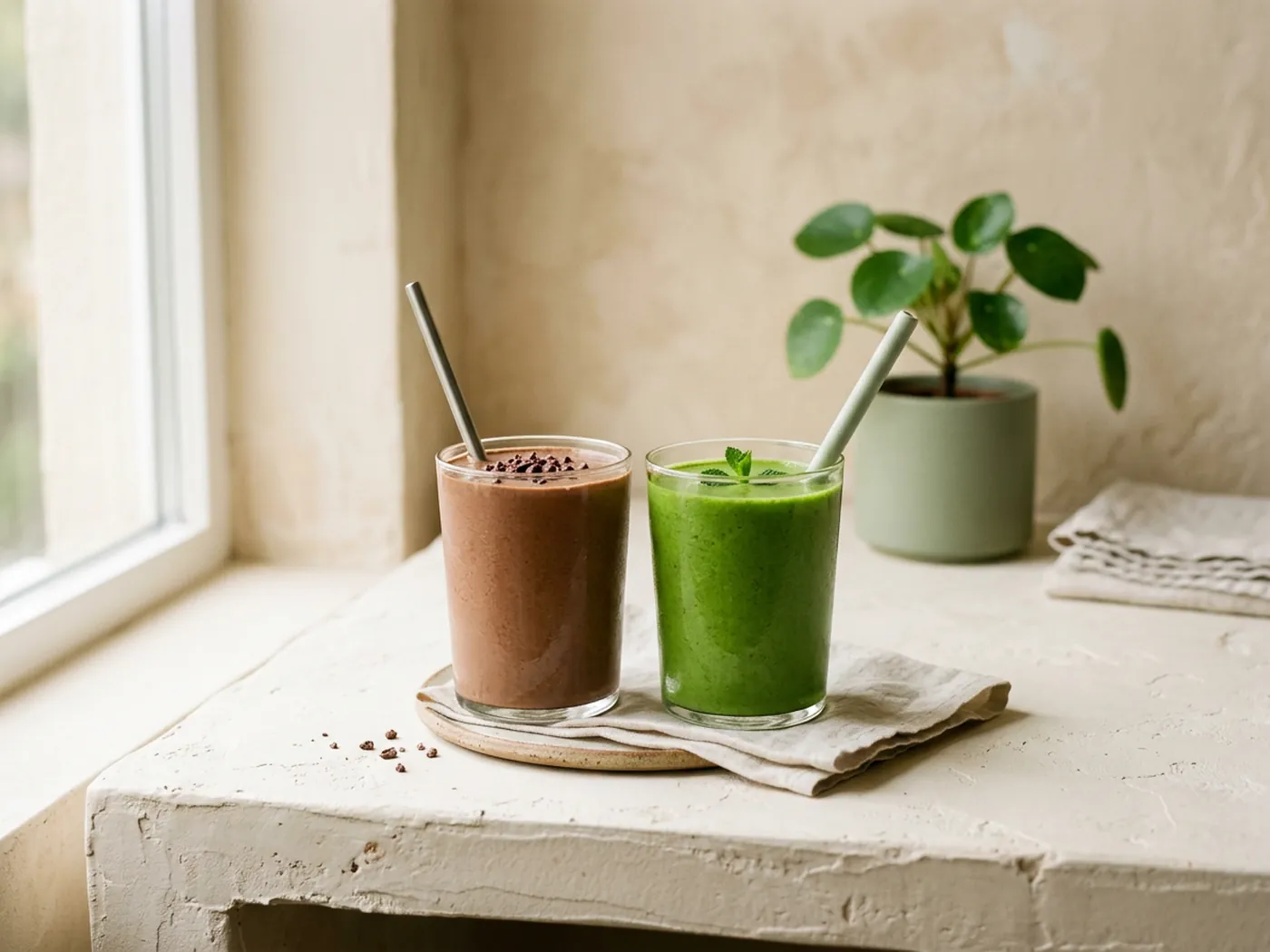
AG1 vs Ka'Chava is a comparison across two product classes, not two greens powders. AG1 and Ka'Chava end up on the same shortlist more often than almost any other pair in this category, and the comparison is genuinely confusing because they belong to different product classes. AG1 is a greens and micronutrient drink: 30 servings, one scoop in water, $79 a month on subscription or $99 one-time. Ka'Chava is a meal-replacement shake with protein and a long superfood list, sold as 15 servings for $69.95 — about $4.66 a serving, or $3.99 on subscription. Comparing them on price alone produces a nonsense answer, because one of them is replacing a meal you would otherwise buy. This comparison works through price, transparency, formula purpose, breadth, taste and terms as of August 2026, and gives an honest recommendation based on what you are trying to replace.
Why do people compare AG1 and Ka'Chava?
Both products are advertised in the same places, to the same audience, with overlapping language: superfoods, wellness, one scoop a day, a long ingredient list on the back. If your exposure to either brand is a podcast read or a social ad, they can sound like two versions of the same thing — a big premium powder that covers your nutritional bases.
They are not. Ka'Chava is a meal replacement, which means it is formulated to supply calories and protein in a quantity that can plausibly stand in for eating something. AG1 is a supplement drink, which means it supplies micronutrients, greens and a probiotic in a scoop that contains almost no calories and is designed to sit alongside your meals rather than in place of one.
That distinction decides the entire comparison, and it also explains the price gap. Ka'Chava's $4.66 a serving looks brutal beside a protein powder and reasonable beside lunch. AG1's $2.63 a serving looks expensive beside a multivitamin and normal beside a specialty coffee. Neither is being priced dishonestly; they are priced against different alternatives.
AG1 vs Ka'Chava: how do they compare on paper?
Here is what we can verify from public pricing and label copy as of August 2026. Where a brand does not publish a figure, we leave it unstated rather than estimating it.
| AG1 | Ka'Chava | |
|---|---|---|
| Category | Greens and micronutrient drink | Meal-replacement shake |
| Price | $79/month subscription, $99 one-time | $69.95 per bag, $3.99/serving on subscription |
| Servings per container | 30 | 15 |
| Cost per serving | ~$2.63 subscription, ~$3.30 one-time | ~$4.66 one-time, ~$3.99 subscription |
| Protein | Not a protein product | Yes — protein is core to the formula |
| Ingredient count | 75 ingredients | 85+ superfoods |
| Dose transparency | Mostly proprietary blends | Long superfood list; individual doses not the headline |
| Probiotics | 10 billion CFU (Next Gen formula) | Not the product's headline claim — check current label |
| Replaces a meal? | No | Designed to |
| Guarantee | 90-day money-back | Check current brand terms |
Which is cheaper per serving?
Winner: AG1, on the raw arithmetic. $2.63 a serving on subscription against $4.66 for a one-time Ka'Chava bag is not a close number, and the serving-count difference is the part shoppers miss most often. Ka'Chava's $69.95 bag holds 15 servings, so a daily habit costs roughly $140 a month at the one-time price, or about $120 at the $3.99 subscription rate. AG1 at $79 is materially less.
But this is the category where a straight price comparison is least informative. If a Ka'Chava shake replaces a $12 lunch or a rushed pastry-and-coffee breakfast, its true cost is negative against the thing it displaced. If it is an addition to three meals you already eat, it is simply an expensive shake. Only you know which of those you are buying.
AG1's price behaves differently: it is an addition by design, so its $79 is always net new spending. That is the fair way to frame the gap — AG1 is cheaper per serving and always an extra cost, while Ka'Chava is more expensive per serving and can offset a food cost.

Which one tells you what is actually in the scoop?
Winner: neither, and both should do better. AG1 places most of its 75 ingredients inside proprietary blends, so you can read the list and the totals but not how much of any single item is present. Ka'Chava markets 85+ superfoods, and the same limitation applies to the long tail of that list — a superfood named on a panel is not the same as a superfood present in a meaningful amount.
The stakes differ slightly by category. For a meal replacement, the numbers that matter most — calories, protein, fiber, added sugar — are on the nutrition panel and are legally required, so the parts of Ka'Chava you would actually judge a meal on are disclosed. For a greens drink, the numbers that matter most are exactly the ones AG1 keeps inside its blends.
Credit where it is due: AG1 publishes more supporting documentation than most of the category and states its 10 billion CFU figure plainly. Ka'Chava's macros are visible on the label as any food's would be. Neither brand lets you check the botanical extras, so treat long superfood counts on both sides as marketing until a weight is printed next to them.
Which formula fits the job better?
Winner: it depends entirely on the job, and that is the useful answer rather than a dodge. If you eat three reasonable meals and want more vegetables, greens, vitamins and a probiotic in your day, a meal shake is the wrong tool — you would be adding calories and protein you did not need in order to get micronutrients you could have had in a 4g scoop. AG1 wins that scenario clearly.
If your actual problem is that breakfast is coffee and lunch is whatever is nearest, a greens drink does not fix it. No greens powder contains meaningful protein or calories, so it cannot stabilise a missed meal, and drinking one on an empty stomach at 11am is not nutrition, it is a supplement. Ka'Chava is built for exactly this gap and wins that scenario outright.
The trap is buying either product to solve the other's problem. A greens powder will not stop you being hungry, and a meal shake taken alongside three full meals is 200-plus additional calories a day that you did not plan for. Diagnose the gap first, then buy.
Which one actually tastes better?
Winner: Ka'Chava, in the sense that it has an easier brief. We do not run blind panels, so treat this as reasoning rather than a score. A chocolate or vanilla meal shake with protein and cocoa in it starts from a flavor profile people already like, and it is served thick, cold and often blended with fruit or milk, all of which help.
AG1 has the harder job: it has to make a large number of greens, herbs and mushroom extracts drinkable in cold water at almost no calories, with one core pineapple-vanilla profile and no alternative flavor if you dislike it. Opinions on it are genuinely split, and a single-flavor product you are meant to drink 365 times a year is a real limitation.
The practical version of the taste question is adherence, and it cuts differently here than in most comparisons. A meal shake you enjoy is easy to keep drinking. A greens drink you tolerate is easy to abandon — which is worth weighing before you commit to a subscription.
Which has the better guarantee and subscription terms?
Winner: AG1. A 90-day money-back guarantee is the longest published window among the major greens brands, and it fits how these products are used — you cannot judge a daily habit in a week. Ka'Chava's return terms should be checked directly on its current policy page before you buy; we are not going to state a window we cannot verify.
Both brands lead with subscription pricing, and both charge more for a single purchase: AG1 is $99 rather than $79, and Ka'Chava is $69.95 rather than the $3.99-per-serving subscription rate. If you dislike managing auto-ship, price both at their one-time rates and compare those numbers instead.
One Ka'Chava-specific point worth flagging: with 15 servings a bag, a daily user is on a two-week replenishment cycle, so subscription timing matters more than it does for a 30-serving product. That is a small admin cost that never appears on a label.
So which should you buy?
Buy Ka'Chava if you are replacing meals. Buy a greens powder if you are supplementing them. That is the whole comparison, and no amount of ingredient-count arithmetic changes it — one of these products contains protein and calories and the other deliberately does not.
If you are still torn, the honest tiebreaker is your week rather than the labels. Look at how many meals you actually skipped or rushed in the last seven days. If the answer is three or more, a shake with protein in it will do more for you than a micronutrient scoop. If the answer is zero, a meal replacement is an expensive way to buy vegetables.
It is also worth saying that nothing stops both from being wrong. A $79 greens subscription and a $140-a-month shake habit are both large ongoing costs, and neither is a prerequisite for eating well. If cost is your binding constraint, buy the cheaper habit you will keep — and where we would push back on both brands is the same place we push back on ours: ask for printed doses, not ingredient counts.
Publisher disclosure
Full disclosure: we make one too
This article is published by Greenify, and we make a greens powder — Daily Greens. We kept it out of the comparison above on purpose, because a review that quietly steers every category toward the publisher's own product is not a review. Everything above stands on its own: if the honest answer for you is one of the two brands compared, buy that one.
Here is our case, stated plainly so you can check it against the label. Daily Greens prints the weight of each of its four blends on the panel rather than hiding them in one proprietary total, so you can see how a 4.4g scoop is allocated instead of guessing. That scoop carries 56 ingredients, 2.5 billion CFU across four named probiotic strains, five digestive enzymes and three adaptogens — a narrower ingredient count than the kitchen-sink formulas, at weights you can read. It runs $1.40–$2.33 per day depending on the pack you choose, there is no subscription to cancel, and it is covered by a 60-day money-back guarantee. Our probiotic count is lower than several products above, and if maximum CFU is your priority you should buy on that.
| Greenify Daily Greens | |
|---|---|
| Price per day | $1.40–$2.33, no subscription required |
| Ingredients | 56, in four blends with printed weights |
| Dose transparency | Each blend weight disclosed (2.6g superfood, 1.2g herbs, 406mg fiber) |
| Probiotics | 2.5 billion CFU, four named strains |
| Enzymes | Five digestive enzymes |
| Adaptogens | Ashwagandha, Korean ginseng, eleuthero |
| Scoop size | 4.4g |
| Guarantee | 60-day money-back |
Published by Greenify
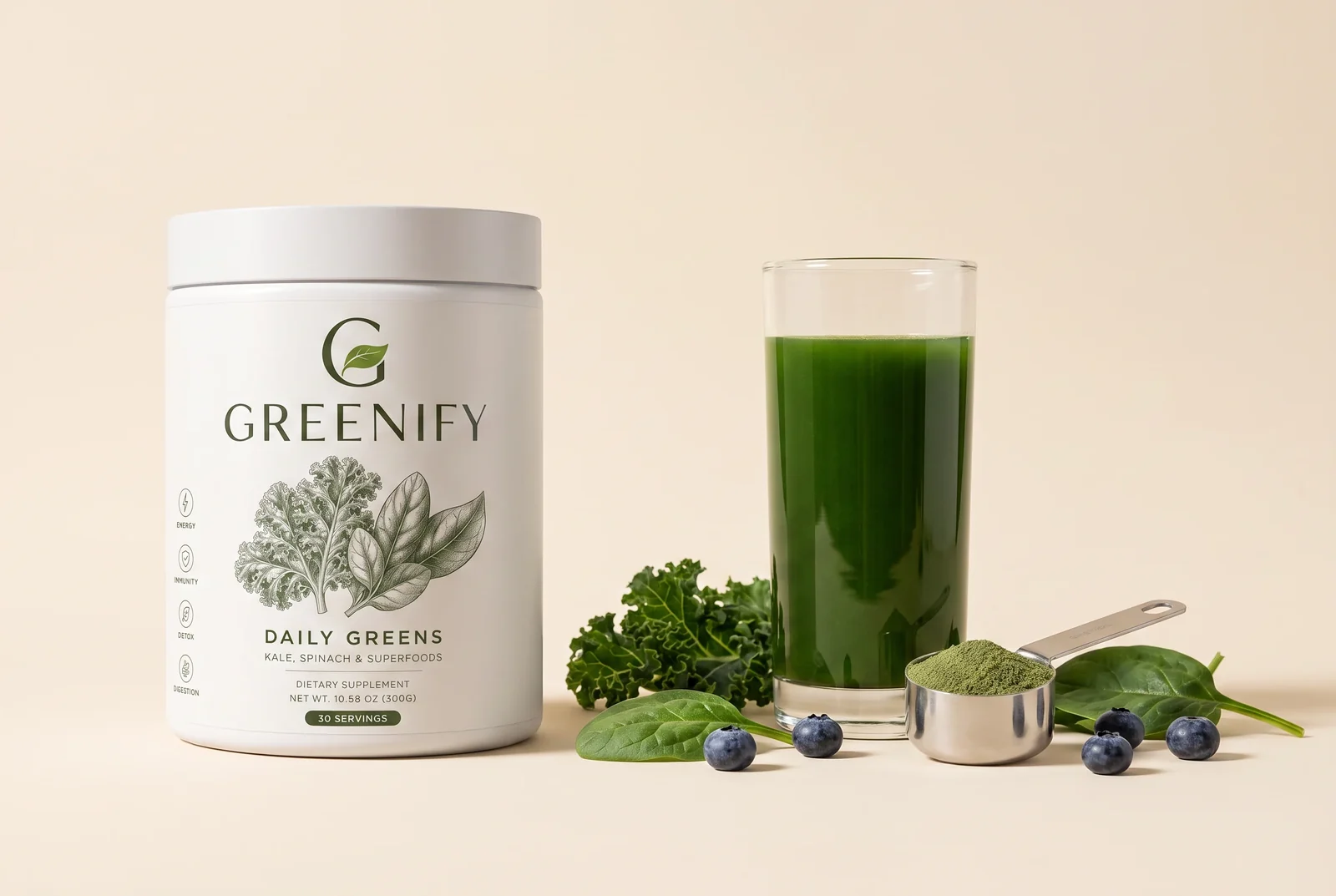
A 4.4g scoop with the blend weights printed on it
56 ingredients, 2.5B CFU across four named strains, five enzymes and three adaptogens — $1.40–$2.33 a day, no subscription, 60-day money-back guarantee.
Frequently asked questions
- Is Ka'Chava the same as AG1?
- No. As of August 2026 Ka'Chava is a meal-replacement shake with protein, sold as 15 servings for $69.95, while AG1 is a greens and micronutrient drink with 75 ingredients and 10 billion CFU, sold as 30 servings for $79 a month on subscription or $99 one-time. They solve different problems and are not substitutes for each other.
- Can Ka'Chava replace a meal?
- It is formulated to, which is the main way it differs from a greens powder: it supplies protein and calories rather than only micronutrients. Whether it replaces a meal well for you depends on your own calorie and protein needs, so read the nutrition panel and treat it as food rather than as a supplement.
- Which is more expensive per serving?
- Ka'Chava, at about $4.66 a serving one-time or $3.99 on subscription, against roughly $2.63 for AG1 on subscription and $3.30 one-time. Note the serving counts: Ka'Chava's bag holds 15 servings and AG1's tub holds 30.
- Can you take both?
- People do, since one is a meal stand-in and the other is a micronutrient drink, but the combined cost is well over $200 a month at one-time prices and the overlap in superfood ingredients is substantial. If budget matters, pick the one that addresses your actual gap.