
Comparisons
Field of Greens Review (2026): What's In It, What It Costs, Who It Suits
Last updated: August 2026
Field of Greens skips the printed-dose approach most of this category uses and leans on a doctor-formulated, USDA-organic story instead. Here's what that actually gets you.
Greenify Editorial • August 8, 2026 • 9 min read
Written and fact-checked by the Greenify nutrition team against product labels and published nutrition guidance. Our editorial standards
- Field of Greens
- Review
- Greens powder
- Brickhouse Nutrition

A Field of Greens review has to start with what the brand is actually selling, because it is not positioned the way most greens powders are. Field of Greens is a USDA-organic, whole-food fruit-and-vegetable powder made by Brickhouse Nutrition, sold in canisters of roughly 30 servings and marketed around organic sourcing and a doctor-formulated origin story rather than a printed per-ingredient dose sheet or a headline probiotic count. That is a meaningfully different pitch from the AG1s and Blooms of the world, and it changes what you should actually be judging it on. This review works through what is in it, what it costs per serving, whether the evidence behind it stacks up, and who it does and doesn't suit — all as of August 2026, with anything the brand hasn't published left clearly marked as such.
What is Field of Greens?
Field of Greens is a dietary supplement made by Brickhouse Nutrition, sold as a powder you mix into water or a smoothie once a day. Its central claim is USDA-organic certification across its fruit and vegetable ingredients, and its marketing leans heavily on the fact that it was formulated with input from a doctor — a framing you'll see repeated across the brand's site and packaging.
That positioning puts it in a slightly different lane from the broader 'all-in-one greens powder' category that AG1, Bloom and Organifi occupy. Those brands typically stack a superfood blend, a probiotic blend, digestive enzymes and adaptogens into one scoop and print (or partially print) the breakdown. Field of Greens is built around a more concentrated list of organic fruits and vegetables, and it does not headline a probiotic strain count or an enzyme panel the way that category increasingly does.
The canister size is roughly 30 servings, sold direct through the brand's own site and via major retailers. As with any supplement, exact ingredient percentages, serving size in grams and current formulation should be checked against the label on the canister you actually receive, since brands do update formulas without always announcing it loudly.
What is actually in Field of Greens?
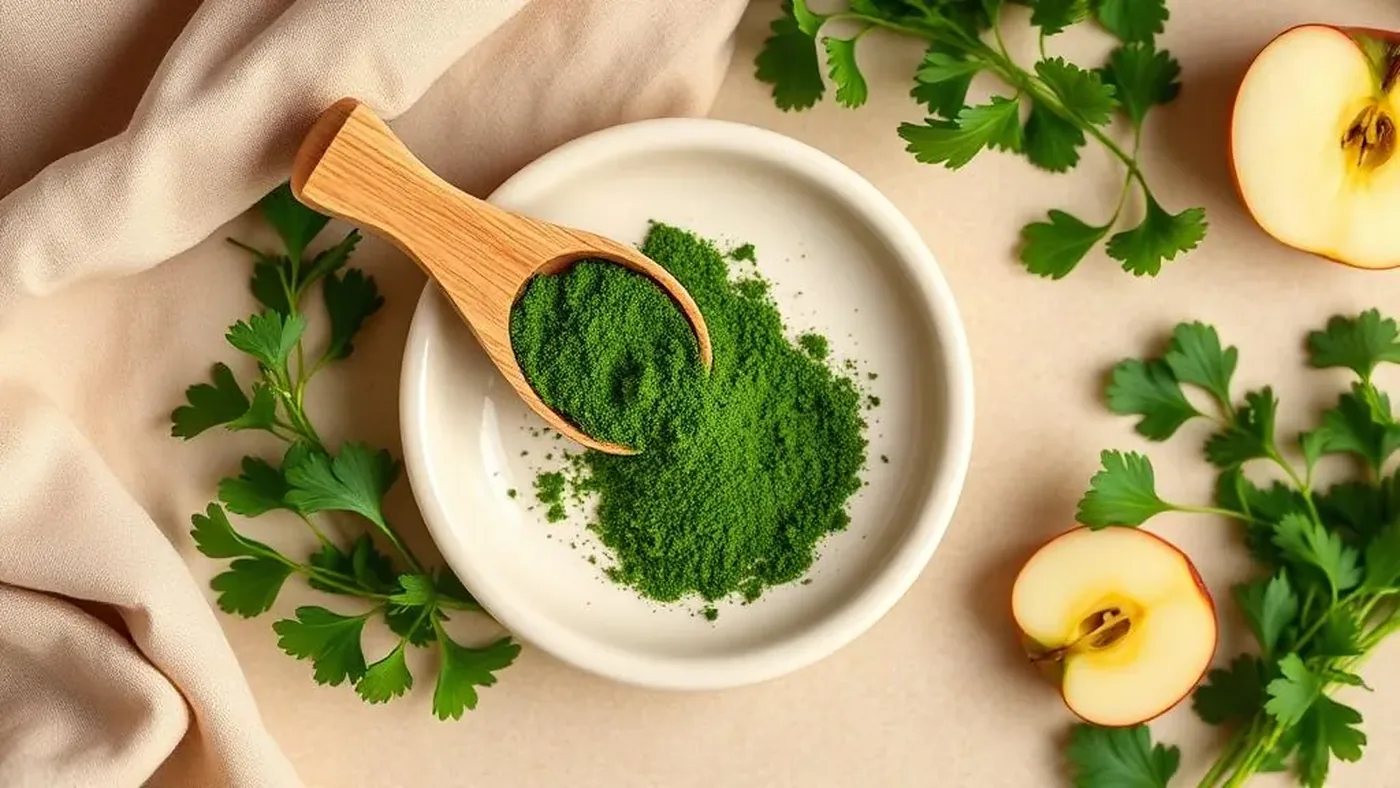
Field of Greens' public-facing marketing centres on a list of organic fruits and vegetables — think beets, spinach, kale, blueberries and similar whole-food produce — rather than a multi-blend structure with named extracts and adaptogens. The brand markets this as a strength: a simpler, food-first formula rather than a long list of botanical extracts and proprietary compounds.
Where the label gets thinner is on the numbers most comparison shoppers actually want. The brand does not headline a probiotic CFU count, a digestive-enzyme panel, or per-ingredient milligram weights the way some competitors in this category do. That is a legitimate formulation choice — not every whole-food powder needs a live-culture component — but it does mean you're buying largely on trust in the organic-sourcing story rather than on a dose sheet you can independently evaluate.
If you want to know precisely how many milligrams of any single ingredient you're getting, or whether the formula includes a probiotic or enzyme blend at all, that information is not published in a way we can confidently restate here — check the current canister label directly before buying, since supplement panels can and do change between production runs.
This is the single biggest practical difference between Field of Greens and a printed-dose competitor: one approach asks you to trust the sourcing claim, the other asks you to read the numbers yourself. Neither is automatically better; they are different bets on what convinces a buyer.
How much does Field of Greens cost per serving?
Published pricing, as of August 2026, is around $79.95 for a one-time canister purchase, with a lower per-canister price available on the brand's subscription option — treat both figures as approximate and check the brand's current pricing page, since supplement pricing shifts often and promotional pricing is common in this category.
At roughly 30 servings per canister and an approximate $79.95 one-time price, that works out to somewhere in the region of $2.60–$2.70 a day before any subscription discount, which places it toward the premium end of the greens-powder category rather than the budget end. Subscription pricing, where offered, typically brings that per-day figure down, but the exact discount is not something we can state with confidence without pulling the live checkout page on the day you buy.
It's worth comparing that per-day cost against what you're actually getting for it. A premium price is easier to justify when it buys printed doses, a probiotic count, or a long guarantee window; here it is largely buying the organic certification and the doctor-formulated framing, so whether that trade makes sense depends on how much you personally weight organic sourcing versus dose transparency.
Does Field of Greens work?
We are not going to make a medical claim here, and neither should any greens powder — the honest, structure/function-level answer is that a whole-food fruit-and-vegetable powder can be a reasonable way to add variety and organic produce to a diet that is otherwise short on both. That is a nutritional-habit claim, not a treatment claim, and it's the ceiling for what any product in this category can honestly promise.
What it cannot do — and what no greens powder can do — is substitute for a varied diet, replace a specific nutrient deficiency you should be discussing with a clinician, or produce a dramatic, fast, individually guaranteed result. If a testimonial or ad implies otherwise, that's marketing language outrunning the evidence, not something specific to this brand.
The more useful question for most buyers is narrower: does the formula, as published, look like a reasonable one-scoop way to round out a diet? For Field of Greens, the answer leans toward yes for the specific job of 'more organic fruit and vegetable intake in a convenient form' — and leans toward 'unclear' for anything more targeted, like gut health or immune support, given the lack of a disclosed probiotic or enzyme panel to evaluate.
Is Field of Greens legit?
Yes, in the sense that matters most: Brickhouse Nutrition is an established supplement company, Field of Greens is a real, widely sold product available through the brand's own site and mainstream retailers, and USDA organic certification is a real, third-party-audited standard rather than a marketing word a brand can simply claim. If USDA organic certification is displayed on the label, that specific claim is independently verifiable and not something a brand can print without meeting the standard.
The 'doctor-formulated' framing is worth a slightly more careful read, as it is with any supplement brand that uses it. It typically means a physician was involved in the formulation process at some stage, which is a legitimate credential to mention — but it is not the same as a clinical trial on the finished product, and it should not be read as a medical endorsement of specific health outcomes. That distinction applies to virtually every 'doctor-formulated' supplement on the market, not just this one.
Legitimacy as a company is a different question from whether the price and formula suit your particular priorities, which is really what most people mean when they ask 'is this legit' about a product they've seen advertised. On that narrower question, our honest read is: it's a real, organic-certified product sold at a premium price without the dose transparency some competitors now offer — legitimate, but worth comparing against what else your money buys in this category.
Who should buy Field of Greens — and who shouldn't?
Field of Greens suits someone who specifically wants a certified-organic, whole-food fruit-and-vegetable powder and is comfortable paying a premium for that certification without needing a printed dose sheet, a probiotic count or a digestive-enzyme panel to make the decision. If 'USDA organic' is a hard requirement for you and you trust the doctor-formulated story, this is a reasonable pick within that narrow brief.
It's a weaker fit if what you actually want is to compare formulas on hard numbers — milligrams per ingredient, CFU counts, named enzyme strains — because that information is not published in the way a growing share of the category now offers. It's also a weaker fit on pure price-per-serving if budget is the binding constraint, since roughly $2.60–$2.70 a day sits well above several competitors with more disclosed formulas.
If you've been buying it for a specific outcome — better digestion, more energy, weight management — it's worth being honest that a fruit-and-vegetable powder is not formulated or evidenced to deliver any of those as a guaranteed effect, and that's true of the entire greens-powder category, not a knock specific to this brand.
How does it compare to other greens powders?
Set against the wider category, Field of Greens' distinguishing feature is the organic certification and the whole-food, fruit-and-vegetable framing rather than a multi-blend structure. Competitors like AG1, Bloom and Organifi typically publish a probiotic CFU count and, in some cases, digestive enzymes and adaptogens as named line items, which gives a comparison shopper more to evaluate directly.
On price, Field of Greens' approximate $2.60–$2.70 per day sits in similar territory to several premium competitors, without necessarily delivering the same dose transparency in return. That is the trade-off worth weighing most carefully: you are paying a premium-category price primarily for the organic-sourcing claim, not for a disclosed, itemised formula.
The table below lines up what's publicly known about Field of Greens against the kind of figures a printed-dose competitor discloses — treat the Field of Greens column as approximate pending the brand publishing more granular label detail.
| Field of Greens | Greenify Daily Greens | |
|---|---|---|
| Category | USDA-organic whole-food fruit & vegetable powder | Multi-blend greens, herbs, fiber & probiotic powder |
| Price (approx.) | ~$79.95 one-time, lower on subscription — check current pricing | $69.95 one-time (30 servings), $1.40–$2.33/day on bundles |
| Servings per canister | ~30 | 30 |
| Organic certification | USDA organic | Not the headline claim — check current label |
| Dose transparency | Not published — check the current label | Each blend weight printed (2.6g superfood, 1.2g herbs, 406mg fiber) |
| Probiotics | Not published — check the current label | 2.5 billion CFU, four named strains |
| Digestive enzymes | Not published — check the current label | Five, named individually |
| Subscription required? | No — one-time or subscription options | No — bundles, no auto-ship |
Publisher disclosure
Full disclosure: we make one too
This article is published by Greenify, and we make a greens powder — Daily Greens. We have tried to keep this review honest rather than steering you toward our own product, and the analysis above stands on its own regardless of what follows here.
For context, here is how ours differs. Daily Greens prints the weight of each of its four blends on the panel — a 2.6g superfood blend, 1.2g of herbs and adaptogens, and 406mg of prebiotic fiber inside a 4.4g scoop — rather than presenting a single whole-food fruit-and-vegetable powder without individual dose disclosure. It carries 56 ingredients, 2.5 billion CFU across four named probiotic strains, five digestive enzymes and three adaptogens (ashwagandha, Korean ginseng, eleuthero). It runs $1.40–$2.33 a day depending on the pack, with no subscription requirement and a 60-day money-back guarantee. Field of Greens leans on organic, doctor-formulated sourcing rather than a probiotic or enzyme headline, and if that whole-food, fruit-and-vegetable framing is what you are after, it is a legitimate reason to prefer it over ours.
| Greenify Daily Greens | |
|---|---|
| Price per day | $1.40–$2.33, no subscription required |
| Ingredients | 56, in four blends with printed weights |
| Dose transparency | Each blend weight disclosed (2.6g superfood, 1.2g herbs, 406mg fiber) |
| Probiotics | 2.5 billion CFU, four named strains |
| Enzymes | Five digestive enzymes |
| Adaptogens | Ashwagandha, Korean ginseng, eleuthero |
| Scoop size | 4.4g |
| Guarantee | 60-day money-back |
Published by Greenify
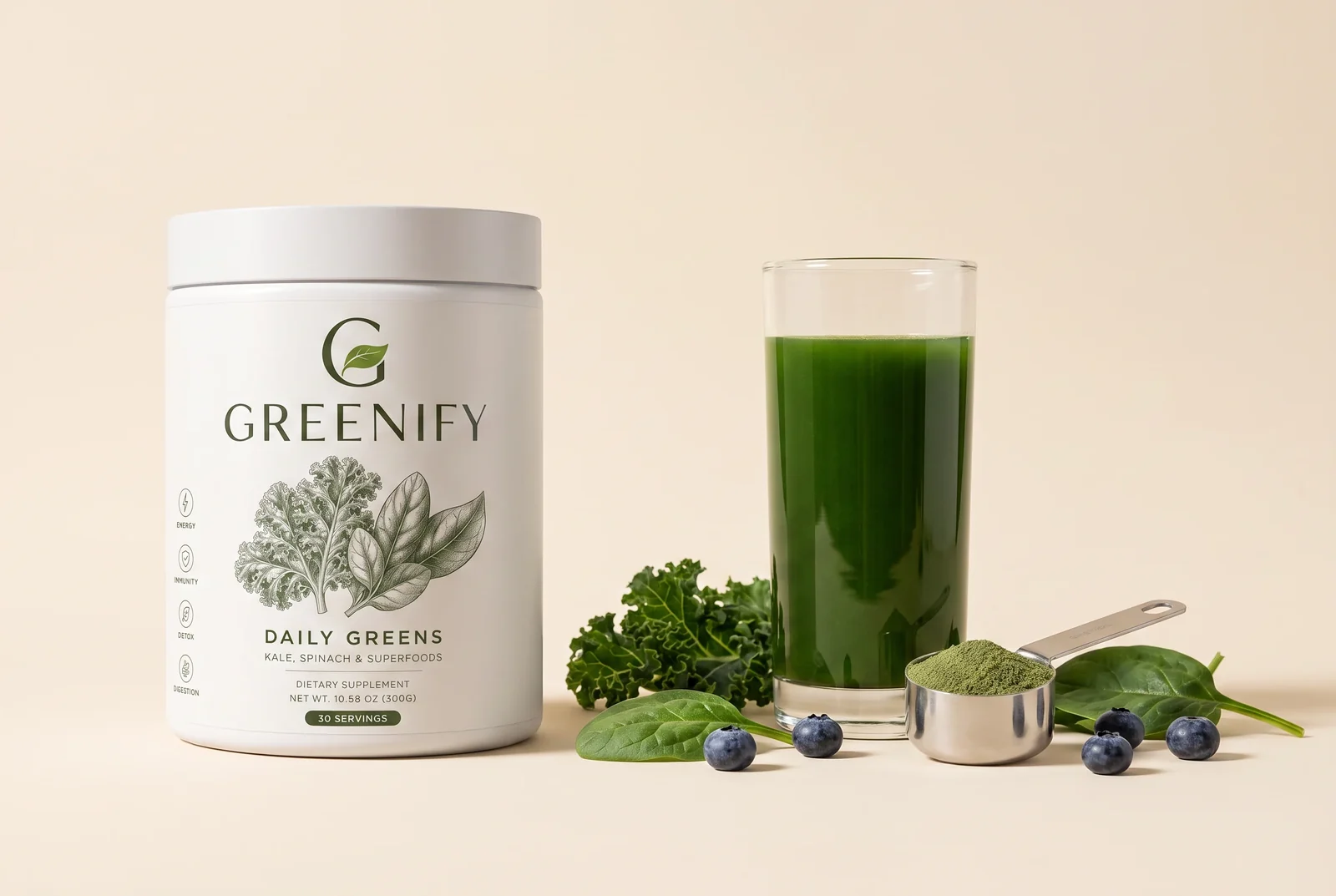
A 4.4g scoop with the blend weights printed on it
56 ingredients, 2.5B CFU across four named strains, five enzymes and three adaptogens — $1.40–$2.33 a day, no subscription, 60-day money-back guarantee.
Frequently asked questions
- What is Field of Greens?
- Field of Greens is a USDA-organic, whole-food fruit-and-vegetable powder made by Brickhouse Nutrition, sold in canisters of roughly 30 servings and marketed around organic sourcing and a doctor-formulated origin story.
- Is Field of Greens good for you?
- It can be a reasonable way to add organic fruit and vegetable variety to a diet that's otherwise short on both, in the same structure/function sense any greens powder can claim. It is not a treatment for any condition and should not replace a varied diet or medical advice.
- Is Field of Greens worth it?
- That depends on what you're weighing it against. It's worth it if USDA organic certification and a doctor-formulated story are your priorities and you're comfortable without a printed dose sheet; it's a harder sell if you want to compare formulas on disclosed milligram weights or probiotic counts, since those are not published for this product as of August 2026.
- How much does Field of Greens cost?
- Published pricing as of August 2026 is around $79.95 for a one-time canister purchase, with a lower price available on subscription — check the brand's current pricing page, as promotional and subscription pricing changes.
- What is in Field of Greens?
- A blend of USDA-organic fruits and vegetables such as beets, spinach, kale and berries, marketed as a whole-food formula. The brand does not publish per-ingredient milligram weights, a probiotic CFU count or a digestive-enzyme panel in the way some competitors do — check the current canister label for the exact list.
- Does Field of Greens help with weight loss?
- No greens powder — Field of Greens included — is a weight-loss product. There is no credible evidence that a fruit-and-vegetable powder causes fat loss on its own, and any claim implying otherwise is marketing outrunning the science. At most it can support an already sensible diet by adding produce variety; it is not a substitute for the calorie balance and habits that actually drive weight change.