

Gut Health
Greens Powder for Bloating: What Helps, What Makes It Worse
Last updated: August 2026
Greens powder can cause bloating in the first week or two — usually from fiber and inulin, not a sign something's wrong. Here's how to tell the difference and ramp up properly.
Greenify Editorial • August 8, 2026 • 9 min read
Written and fact-checked by the Greenify nutrition team against product labels and published nutrition guidance. Our editorial standards
- Bloating
- Digestion
- Enzymes
- Fiber
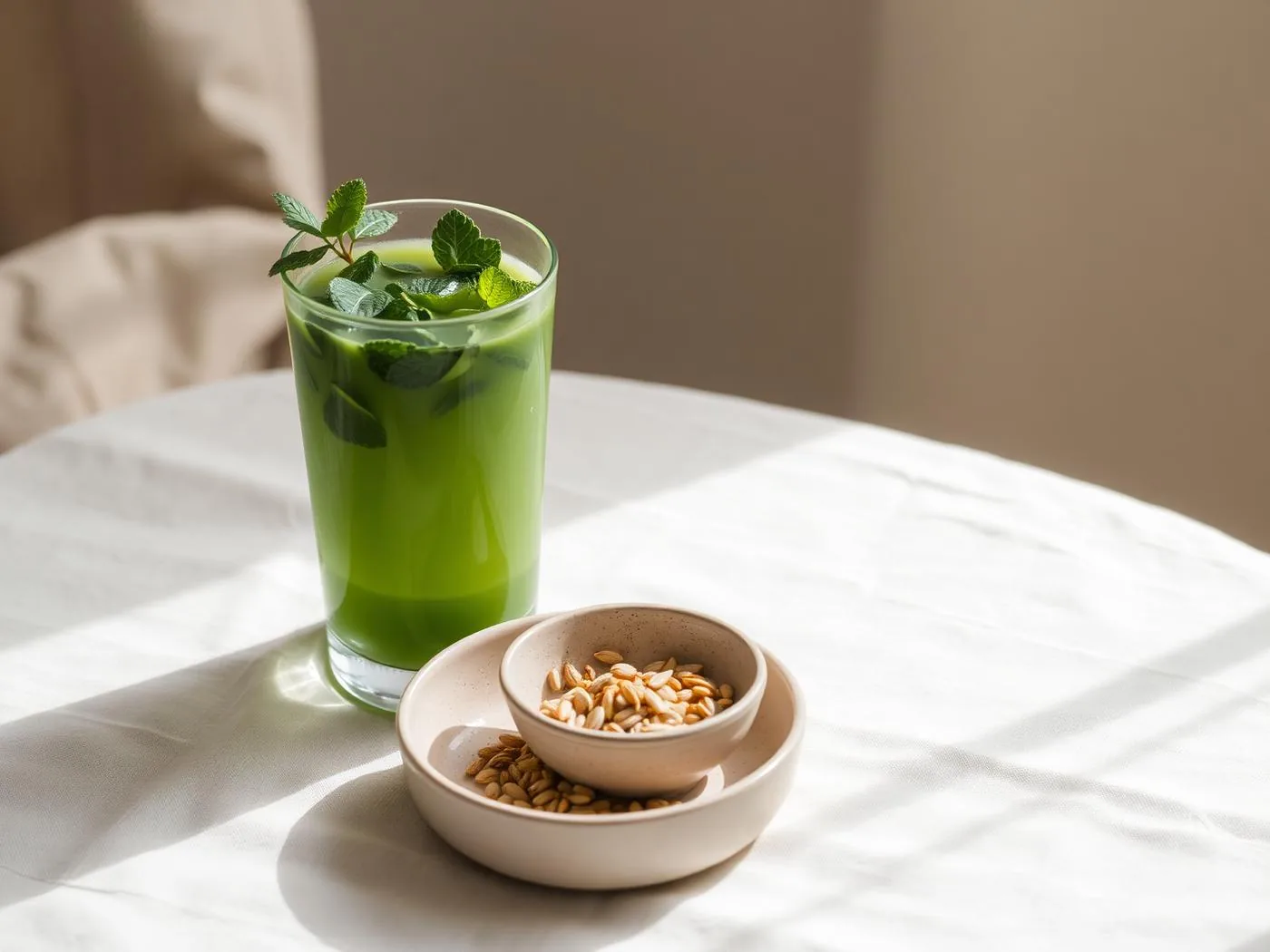
Greens powder can genuinely cause bloating, especially in the first one to two weeks, and it's usually the fiber, inulin and concentrated plant compounds doing exactly what they're supposed to do — just faster than your gut is used to. The fix in most cases is starting with a smaller amount, taking it with food, and increasing gradually rather than stopping. But bloating that's severe, painful or doesn't improve after a few weeks is a signal to see a doctor rather than push through it.
Does greens powder cause bloating?
It can, particularly in the first week or two of a new habit, and the most common cause is a fast increase in dietary fiber and fermentable fibers like inulin that your gut bacteria aren't yet used to processing. This is a known, common response to increasing fiber intake quickly from any source — beans, bran cereal or a greens powder — not a sign that the product doesn't agree with you long-term.
A smaller number of people notice ongoing discomfort rather than a temporary adjustment, which is more often linked to a specific ingredient sensitivity — certain FODMAP-containing foods, a particular herb, or an artificial sweetener in a lower-quality formula. Isolating the cause takes a bit of process of elimination.
Why does fiber and inulin cause bloating at first?
Inulin, chicory root fiber and other prebiotic fibers are fermented by gut bacteria, and fermentation produces gas as a normal byproduct. When you introduce a meaningful amount of these fibers all at once, the bacteria that process them haven't built up in number yet, and the sudden fermentation load can cause noticeable gas and distension for some people.
This settles down for most people as the gut microbiome adapts to the new fiber source, typically over one to two weeks of consistent, moderate intake — which is why abruptly stopping and restarting tends to reset that adjustment period rather than skip it.
Built for digestive comfort
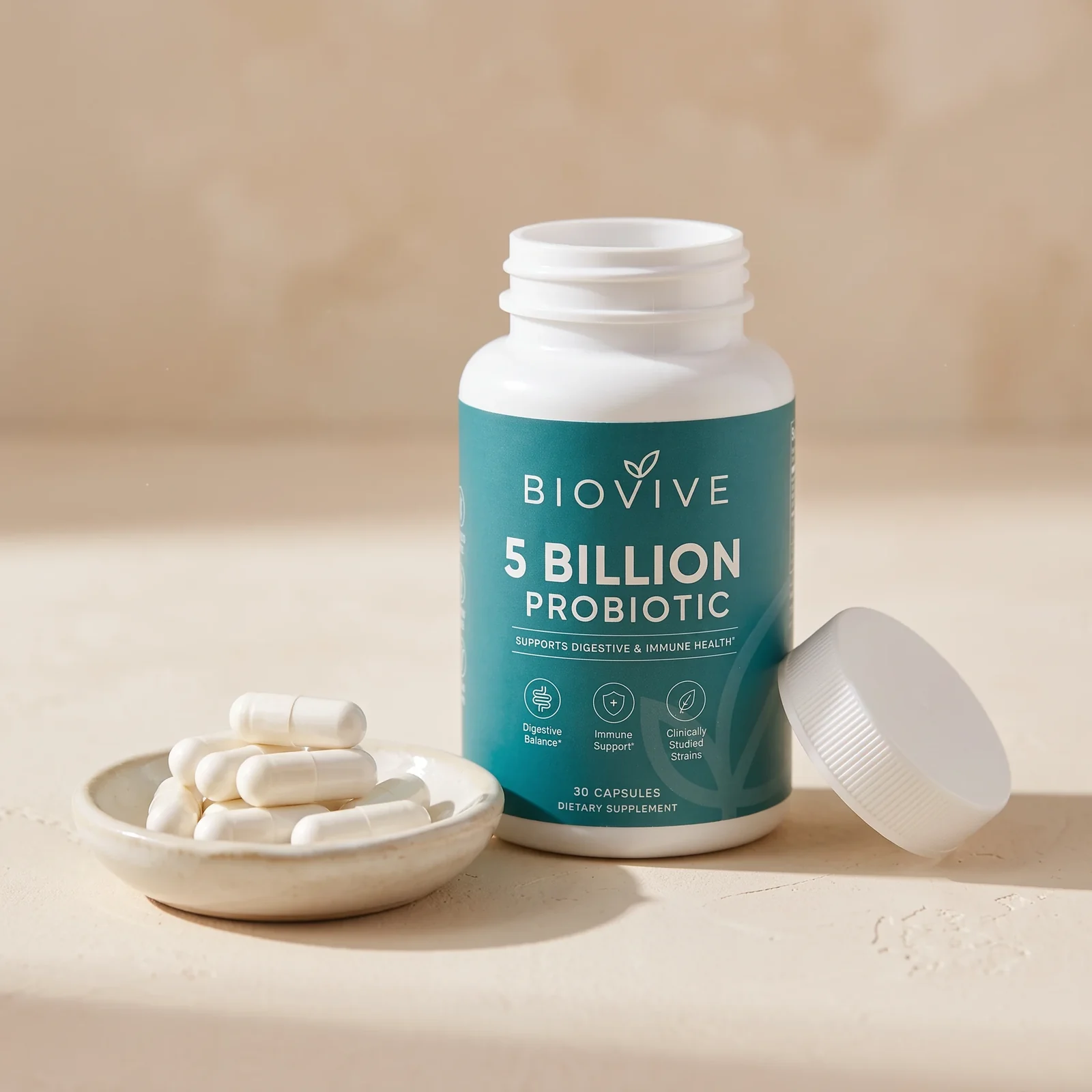
7 strains, 5.75 billion CFU, one capsule a day
Formulated with goMCT powder to support digestion and a calmer, less-bloated gut — pair it with a gradual greens powder ramp-up for the smoothest adjustment.
How do I start a greens powder without getting bloated?
Start with half the recommended scoop for the first three to five days, then move to a full scoop once your body has had time to adjust. This gives your gut bacteria a smaller, gentler introduction to the added fiber rather than a sudden full dose.
Take it with food rather than on an empty stomach, and mix it into a full glass of water — 8 to 16 ounces — rather than a small amount of liquid. Both of these slow down how concentrated the fiber and plant compounds are when they hit your stomach, which tends to reduce discomfort.
If you're especially sensitive to new supplements, spacing your greens powder away from other fiber-heavy meals on the same day, at least at first, can also help you isolate how your body responds to it specifically.
Can digestive enzymes make bloating better or worse?
Digestive enzymes are generally included to help, not hurt — enzymes like amylase, protease, lipase, glucoamylase and cellulase assist in breaking down carbohydrates, protein, fat and plant fiber before they reach the large intestine, which for many people reduces the fermentable load available to gut bacteria and can ease bloating over time.
That said, any new supplement — enzymes included — can cause a short adjustment period for a small number of people, which is a separate issue from the fiber-driven bloating described above. If discomfort continues well past the first couple of weeks, that's worth discussing with a doctor rather than assuming it will resolve on its own.
Which greens powder ingredients are more likely to cause gas?
Beyond fiber and inulin, cruciferous vegetables like broccoli, cabbage, kale and Brussels sprouts — common in most greens blends — contain compounds that are more fermentable than average and are a well-known source of gas even when eaten whole, not just in powdered form. This is expected and not a defect in the product.
Sugar alcohols like sorbitol or xylitol, sometimes used as sweeteners in lower-quality formulas, are far more likely to cause bloating and digestive upset than stevia leaf extract, which is why checking the sweetener line matters if bloating is a specific concern for you.
When should I stop and see a doctor instead of pushing through?
Mild, temporary bloating in the first couple of weeks that gradually improves is generally not a cause for concern. Bloating that's severe, painful, accompanied by other symptoms, or that doesn't improve after several weeks of consistent, moderate use is different, and a supplement isn't the right tool to push through that with.
Greens powders and probiotics are formulated to support digestion as part of a normal diet — they aren't designed to treat a digestive condition, and persistent symptoms deserve a proper evaluation rather than trial and error with supplements.
Frequently asked questions
- Is it normal to feel bloated after starting a greens powder?
- Yes, mild bloating in the first one to two weeks is a common response to the added fiber and inulin, and it typically settles as your gut bacteria adjust. It's not usually a sign the product is wrong for you.
- How long does greens powder bloating last?
- For most people, initial bloating eases within one to two weeks of consistent, moderate use. If it persists well beyond that or gets worse, it's worth reassessing the specific formula or speaking with a doctor.
- Should I stop taking greens powder if it makes me bloated?
- Not necessarily — try reducing to a half scoop for a few days, taking it with food and more water, before deciding it doesn't work for you. If discomfort is severe or doesn't improve after a few weeks, stop and consult a doctor.
- Do probiotics help or cause bloating?
- Both, depending on timing. Probiotics can cause temporary gas as your gut adjusts to new bacteria, but over time a balanced probiotic and prebiotic routine is generally associated with more comfortable digestion for most people.
- Which greens powder ingredients are most likely to cause gas?
- Prebiotic fibers like inulin, cruciferous vegetables such as broccoli and cabbage, and sugar alcohol sweeteners are the most common culprits. Formulas sweetened with stevia rather than sugar alcohols tend to be better tolerated.
- Can I take greens powder on an empty stomach if I'm prone to bloating?
- It's generally better to take it with food and a full glass of water if you're prone to bloating, since this dilutes the fiber and slows how quickly it reaches your gut, compared to taking a concentrated scoop on an empty stomach.