
Comparisons
Jocko Greens vs AG1 (2026): An Honest Comparison
Last updated: August 2026
Jocko discloses its individual doses and costs $30 less a month. AG1 has the broader formula and the longer guarantee. An honest category-by-category read.
Greenify Editorial • August 2, 2026 • 8 min read
Written and fact-checked by the Greenify nutrition team against product labels and published nutrition guidance. Our editorial standards
- Comparison
- Jocko Greens
- AG1
- Labels
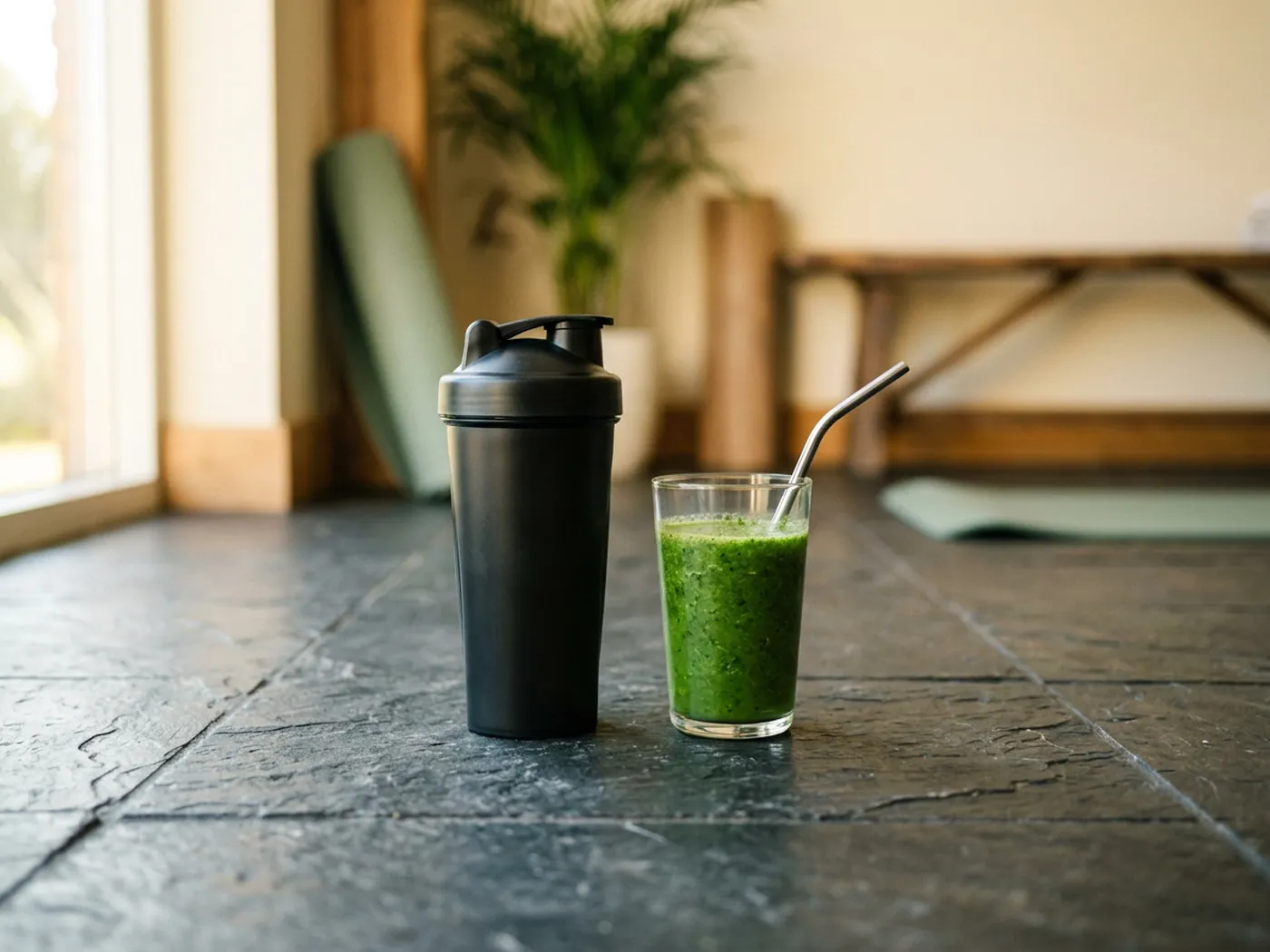
Jocko Greens vs AG1 pits printed doses and a lower price against sheer ingredient breadth. Jocko Greens and AG1 are usually compared for one reason: Jocko does the thing almost nobody else in this category does, and it does it for less money. It prints individual ingredient doses on the label rather than hiding them in proprietary blends, it lists 9 billion CFU of probiotics, it sweetens with monk fruit, and it sells 30 servings for $49.99. AG1 answers with breadth — 75 ingredients, 10 billion CFU, a vitamin and mineral base, extensive documentation and a 90-day guarantee — at $79 a month on subscription or $99 one-time. This is the honest comparison across price, dose transparency, probiotics and enzymes, formula breadth, taste and guarantee terms, using publicly available information as of August 2026.
Why do people compare Jocko Greens and AG1?
AG1 set the template for the premium daily greens scoop, so almost every newer product is measured against it. Jocko Greens is one of the few that responds with a specific, checkable argument rather than a cheaper version of the same pitch: it publishes individual ingredient doses. That single decision changes the nature of the comparison, because it lets a buyer verify part of what they are paying for instead of trusting a blend total.
The second reason is price. At $49.99 for 30 servings — about $1.67 a serving — Jocko sits roughly $30 a month below AG1's subscription price and about $49 below its one-time price. Cheaper and more transparent is a strong combination, and it is why this comparison shows up in searches from people who already own AG1.
The tension is that transparency and breadth are not the same virtue. AG1's 75 ingredients cover more territory than Jocko's label does, including a vitamin and mineral base, and its 10 billion CFU edges Jocko's 9 billion. A shopper here is choosing between a formula they can audit and a formula that attempts more.
Jocko Greens vs AG1: how do they compare on paper?
The verified public figures as of August 2026, with unpublished details left unfilled.
| Jocko Greens | AG1 | |
|---|---|---|
| Price | $49.99 for 30 servings | $79/month subscription or $99 one-time, 30 servings |
| Cost per serving | ~$1.67 | ~$2.63 subscription, ~$3.30 one-time |
| Dose transparency | Individual ingredient doses disclosed | Mostly proprietary blends, few individual doses |
| Ingredient count | Shorter, fully-dosed list | 75 ingredients |
| Probiotics | 9 billion CFU | 10 billion CFU (Next Gen formula) |
| Enzymes | Included — see current label for the panel | Enzyme blend included |
| Sweetener | Monk fruit | See current label |
| Guarantee | Money-back guarantee — check current terms | 90-day money-back guarantee |
| Subscription | Subscribe-and-save offered | Subscription is the headline price |
Which is cheaper per serving?
Winner: Jocko Greens. At $49.99 for 30 servings it works out to roughly $1.67 a serving against AG1's $2.63 on subscription — around $29 a month, or about $350 a year. Compared with AG1's $99 one-time price the annual gap is closer to $590. For products taken daily and indefinitely, that is the kind of difference that decides whether someone keeps the habit.
It is also worth noting how Jocko sells it. A flat $49.99 for a canister is a simpler proposition than a subscription-led price with a higher one-time alternative, and simplicity has real value to buyers who dislike managing recurring charges.
AG1's cost defence is scope: a vitamin and mineral base, 75 ingredients, third-party banned-substance testing and a longer guarantee inside one price. If you would otherwise buy a multivitamin alongside your greens, some of the premium is absorbing a second purchase. That argument is legitimate; it is just weaker when the doses inside the blends are not published.

Which one tells you what is actually in the scoop?
Winner: Jocko Greens, and this is not a close category — it is the clearest thing in the whole comparison. Jocko discloses individual ingredient doses. You can read how much of each ingredient is in a serving, compare it to what you have seen elsewhere, and decide for yourself whether it is a meaningful amount. Very few products in this market let you do that.
AG1 keeps most of its 75 ingredients inside proprietary blends. It deserves credit for publishing its 10 billion CFU figure, a vitamin and mineral panel, third-party testing for banned substances and more supporting documentation than most rivals — those are real transparency practices at the manufacturing level. But they are a different kind of transparency from printing doses, and on the dose question AG1 loses to Jocko outright.
Why it matters: undisclosed doses make the fairy-dusting question unanswerable. A label can name an impressive botanical and include a trace of it, and nothing on a proprietary panel distinguishes that from a full serving. When a competitor prints its numbers and a market leader does not, the market leader has chosen not to.
Which has better probiotics and enzymes?
Winner: AG1, narrowly. Ten billion CFU against nine billion is a real but modest difference, and both figures are high for a greens powder that is not primarily a probiotic product. If raw count is your metric, AG1 takes it by about eleven per cent — which is a smaller edge than its price difference implies.
Jocko's advantage in this category is context rather than count. Because its label discloses doses, you can see the probiotic content alongside everything else in the serving instead of inferring it from a single front-of-pack number. And as always, strain selection and viability at end of shelf life matter as much as CFU at manufacture.
Enzymes are close to a draw. Both formulas include enzyme support and neither publishes activity units in a way that allows a fair head-to-head, so this comes down to the rest of the label rather than the enzyme line.
Which formula covers more ground?
Winner: AG1. Seventy-five ingredients spanning greens, fruit and vegetable concentrates, adaptogens, mushrooms, enzymes, probiotics and a vitamin and mineral base is a broader brief than Jocko's shorter list, and if you want a single scoop to stand in for several supplements, AG1 is built for that and Jocko is not.
The trade-off is the one that runs through this entire category. A fixed scoop split across 75 ingredients gives each a smaller share, and because those shares are not published you cannot verify which ones matter. Jocko's shorter list at printed doses is the opposite bet: fewer things, but you can see them.
Which bet is right depends on how you use supplements. If your greens powder is your only supplement, breadth has genuine practical value. If you already take a multivitamin and a protein powder, a shorter fully-dosed formula is more likely to be the useful addition.
Which one actually tastes better?
Winner: too close to call fairly. We do not run blind panels and neither brand offers a broad flavor range, so range cannot decide it. What is verifiable is the sweetener: Jocko uses monk fruit, which many buyers prefer to stevia and which tends to read as cleaner and less lingering. AG1's single pineapple-vanilla profile has committed fans and consistent detractors.
Neither product gives you a second option if you dislike the first, which raises the stakes on flavor for both. This is a category where reading recent buyer reviews of the specific current formula is more useful than any comparison we can write.
If monk fruit versus other sweeteners is something you have an established preference about, that is probably the most reliable signal available to you here.
Which has the better guarantee and subscription terms?
Winner: AG1. The 90-day money-back guarantee is the most generous published window among major greens powders, and on a single-flavor daily product that matters — it gives you a full trial rather than a taste test. Jocko offers a money-back guarantee as well, but confirm its current window and conditions directly rather than assuming they match.
On terms, Jocko's flat $49.99 canister price is friendlier to the uncommitted buyer. AG1's advertised $79 assumes a subscription and its one-time price is $99, so the cost of avoiding a recurring charge is 25 per cent.
Net: AG1 wins the guarantee, Jocko wins the purchase structure. If you are risk-averse about liking the taste, weight the guarantee; if you are risk-averse about subscriptions, weight the flat price.
So which should you buy?
If you want to know what you are drinking, buy Jocko Greens. Printed individual doses plus 9 billion CFU plus $49.99 for 30 servings is a genuinely strong package, and it wins the two categories that are hardest to argue with: transparency and price. It is one of the few labels in this market that beats AG1 on something measurable.
If breadth is what you are actually buying — a vitamin and mineral base, 75 ingredients, third-party banned-substance testing if you compete in a tested sport, and a 90-day guarantee behind it all — AG1 remains a coherent product and the premium buys real things. It is not a scam; it is a maximalist formula sold at a maximalist price.
We would not tell an AG1 subscriber they have been fleeced, and we would not tell a Jocko buyer they are missing out. But if you are undecided and cannot articulate why you need 75 ingredients, the label that prints its numbers is the more defensible purchase at $30 a month less.
Publisher disclosure
Full disclosure: we make one too
This article is published by Greenify, and we make a greens powder — Daily Greens. We kept it out of the comparison above on purpose, because a review that quietly steers every category toward the publisher's own product is not a review. Everything above stands on its own: if the honest answer for you is one of the two brands compared, buy that one.
Here is our case, stated plainly so you can check it against the label. Daily Greens prints the weight of each of its four blends on the panel rather than hiding them in one proprietary total, so you can see how a 4.4g scoop is allocated instead of guessing. That scoop carries 56 ingredients, 2.5 billion CFU across four named probiotic strains, five digestive enzymes and three adaptogens — a narrower ingredient count than the kitchen-sink formulas, at weights you can read. It runs $1.40–$2.33 per day depending on the pack you choose, there is no subscription to cancel, and it is covered by a 60-day money-back guarantee. Our probiotic count is lower than several products above, and if maximum CFU is your priority you should buy on that.
| Greenify Daily Greens | |
|---|---|
| Price per day | $1.40–$2.33, no subscription required |
| Ingredients | 56, in four blends with printed weights |
| Dose transparency | Each blend weight disclosed (2.6g superfood, 1.2g herbs, 406mg fiber) |
| Probiotics | 2.5 billion CFU, four named strains |
| Enzymes | Five digestive enzymes |
| Adaptogens | Ashwagandha, Korean ginseng, eleuthero |
| Scoop size | 4.4g |
| Guarantee | 60-day money-back |
Published by Greenify
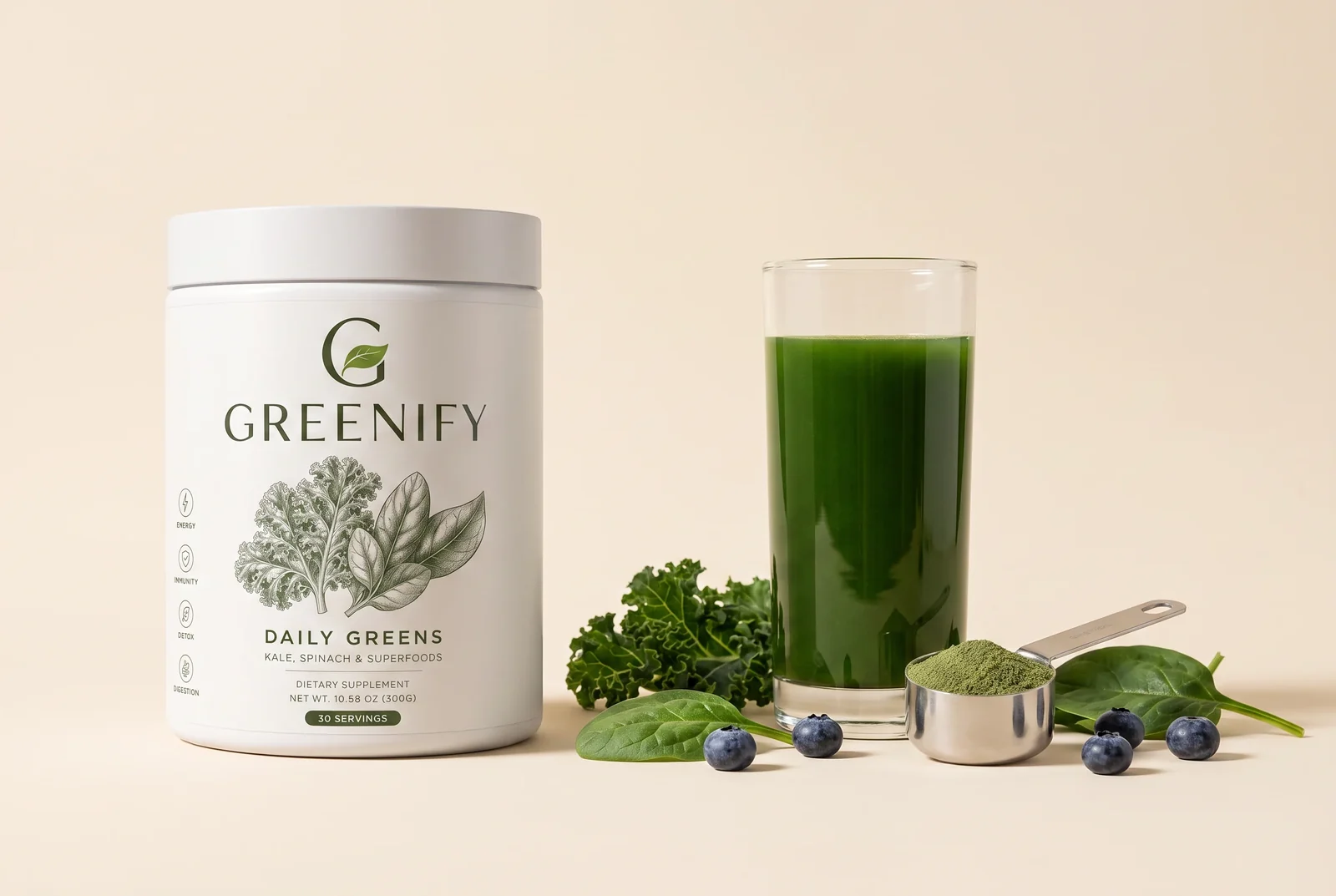
A 4.4g scoop with the blend weights printed on it
56 ingredients, 2.5B CFU across four named strains, five enzymes and three adaptogens — $1.40–$2.33 a day, no subscription, 60-day money-back guarantee.
Frequently asked questions
- Is Jocko Greens better than AG1?
- On dose transparency and price, yes — as of August 2026 Jocko discloses individual ingredient doses and sells 30 servings for $49.99, against AG1's proprietary blends at $79 a month or $99 one-time. AG1 is broader (75 ingredients including a vitamin and mineral base), has a slightly higher 10 billion CFU probiotic count, and offers a 90-day guarantee.
- Does Jocko Greens list its ingredient doses?
- Yes. Disclosing individual doses rather than hiding ingredients inside proprietary blends is Jocko's main point of difference from most of this category, including AG1.
- How much cheaper is Jocko Greens than AG1?
- About $29 a month against AG1's $79 subscription price, or about $49 a month against its $99 one-time price — roughly $350 to $590 a year depending on how you buy AG1.
- Which has more probiotics?
- AG1, marginally: 10 billion CFU in its Next Gen formula against 9 billion in Jocko Greens. Both are substantial for a greens powder, and strain selection and shelf-life viability matter as much as the count.