
Energy
Greens Powder for Energy and Immunity: What Actually Helps
Last updated: August 2026
Greens powders can support energy and immune function, but not the way coffee does. Here's the honest mechanism and the timeline to expect.
Greenify Editorial • August 8, 2026 • 10 min read
Written and fact-checked by the Greenify nutrition team against product labels and published nutrition guidance. Our editorial standards
- Energy
- Immunity
- B Vitamins
- Adaptogens
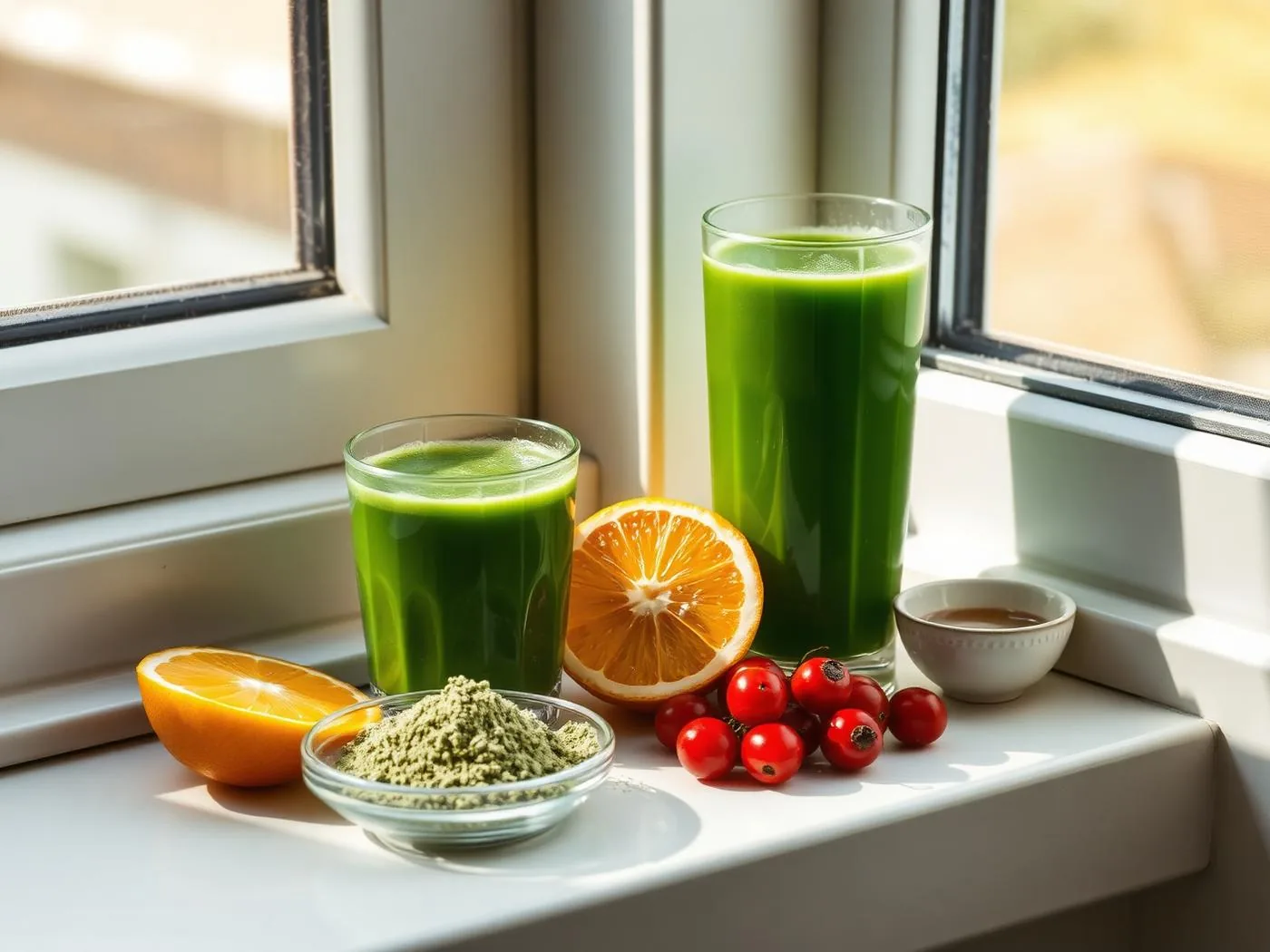
A greens powder can support energy and immunity by supplying B vitamins, Vitamin C, zinc and adaptogenic herbs that a lot of diets run short on — but it does this gradually, by improving nutrient status, not by delivering a stimulant hit. If a greens powder has no caffeine, it will not feel like a pre-workout or a coffee. The realistic timeline for noticing anything is one to a few weeks of consistent daily use, not one drink.
Will a greens powder give me energy like coffee does?
No — not if it's caffeine-free, and most all-in-one greens powders are. Coffee works fast because caffeine is a stimulant that blocks adenosine receptors within about 20–30 minutes. A greens powder without added caffeine has no equivalent mechanism, so it will not produce that same alert, jittery lift.
What it can plausibly do is support the metabolic pathways that turn food into usable energy. B vitamins, especially B12, B6 and folate, are cofactors in energy-yielding metabolism — meaning the body needs them to convert carbohydrates, fats and protein into ATP. If someone is running low on these (common in vegans, older adults, or anyone eating a limited diet), correcting that gap can support steadier energy over time. That's a nutrient-repletion story, not a stimulant story.
Some greens powders also include green tea leaf as a whole-food ingredient rather than an added stimulant. Whole green tea leaf carries a naturally occurring trace of caffeine — far less than a cup of brewed tea — which is worth knowing if you're caffeine-sensitive, but it's not enough to expect a coffee-like effect.
Which ingredients in a greens powder are actually tied to immune support?
Two nutrients carry most of the evidence-based immune-support language on supplement labels: Vitamin C and zinc. Both contribute to the normal function of the immune system, which is why regulators allow that specific claim on labels that meet the daily value threshold. A greens powder that pulls Vitamin C from whole-food sources like camu camu and acerola cherry — two of the most concentrated natural sources of Vitamin C — can deliver a meaningful percentage of daily value in a small scoop.
Beyond those two, mushroom ingredients like reishi, shiitake and maitake are commonly included for their beta-glucan content, compounds studied for their role in healthy immune signaling. The evidence base here is earlier-stage and more general than for Vitamin C or zinc, so it's fair to describe this as supportive rather than proven.
It's worth being blunt about what none of this means: no greens powder treats, prevents or cures an infection, and none of this is a substitute for sleep, vaccination status or seeing a doctor when you're actually sick. 'Supports immune function' is a nutrient-status claim, not a medical one.
Nutrient status, not a stimulant hit
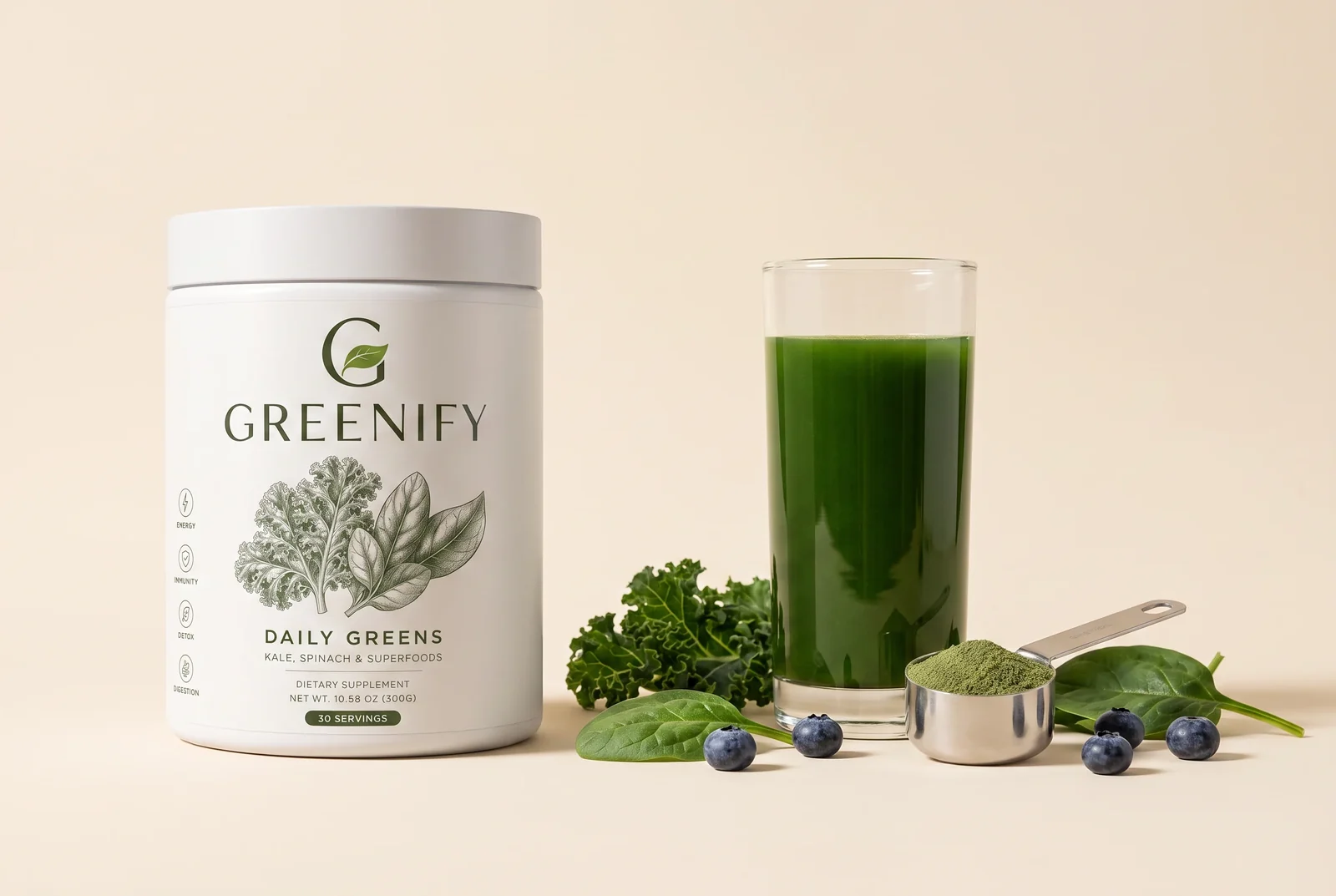
148% DV Vitamin C, 1042% DV B12, zero caffeine crash
Camu camu and acerola for Vitamin C, Korean ginseng and eleuthero for steady energy, reishi, shiitake and maitake for immune support — all in one 4.4g scoop with no stimulants.
What do adaptogens actually do for energy and stress?
Adaptogens are a category of herbs — ashwagandha, Korean ginseng and eleuthero (Siberian ginseng) are the most common in greens powders — traditionally used to help the body maintain balance under everyday stress. The honest, non-hyped version of this claim is that they're associated with supporting a steadier stress response and mental clarity, not that they eliminate stress or replace sleep.
Ginsenosides in Korean ginseng and the eleutherosides in eleuthero are the compounds most often studied, and both herbs have long traditional use for stamina and focus. As with the mushroom ingredients above, treat this as a supportive, cumulative effect rather than something you'll feel within an hour.
If a formula also contains ashwagandha, that's typically framed around stress balance rather than energy directly — the two overlap because feeling chronically stressed is one of the more common reasons people report feeling tired.
How long before I notice anything from a greens powder?
Realistically: one to two weeks for the first subtle signals — often steadier energy through the afternoon or slightly easier digestion — and 60 to 90 days of consistent daily use before nutrient-driven effects like immune resilience or skin support have a chance to show up. This is standard for any nutrition-based intervention, whether it's a supplement or a change in diet; the body doesn't rebuild nutrient stores overnight.
The habit matters more than the single serving. Taking a greens powder once and expecting a noticeable difference is setting yourself up to be underwhelmed, in the same way a single healthy meal doesn't change much on its own. Daily consistency over a couple of months is the fair test.
If you want a low-effort way to judge whether it's working, track something concrete rather than a vague feeling — afternoon energy dips, how often you get sick, or how your skin looks after eight weeks — rather than expecting to feel different the next morning.
Should I pick a greens powder with or without caffeine?
It depends on what you're trying to solve. If you already drink coffee and just want to fill nutritional gaps, a caffeine-free greens powder avoids stacking stimulants and won't disrupt sleep if you take it in the afternoon. If you're specifically looking to replace or reduce coffee, a greens powder alone won't do that job — you'd want a product built around caffeine plus L-theanine instead.
For most people, the more useful question isn't 'does it have caffeine' but 'does it have doses I can see.' A label that prints the milligram or gram weight of its B vitamins, Vitamin C and adaptogen blend lets you judge whether you're getting a meaningful amount, rather than guessing from an ingredient list buried inside a proprietary blend.
Frequently asked questions
- Does greens powder give you energy right away?
- No, not if it's free of added stimulants. Any energy support comes from correcting B-vitamin and nutrient gaps over days to weeks, not from an immediate stimulant effect like coffee.
- Can greens powder boost your immune system?
- It can support normal immune function through nutrients like Vitamin C and zinc, which have recognised roles in immune health. It doesn't prevent or treat illness, and it isn't a substitute for sleep, hygiene or medical care.
- What vitamin is best for energy in a greens powder?
- Vitamin B12 is the one most consistently tied to energy-yielding metabolism, alongside B6 and folate. Look for a label that states the percentage daily value rather than just listing 'B vitamins.'
- Do mushroom blends in greens powders really support immunity?
- Reishi, shiitake and maitake contain beta-glucans studied for supporting healthy immune signaling. The evidence is earlier-stage than for Vitamin C or zinc, so treat it as a supportive ingredient rather than a proven immune booster.
- Why doesn't my greens powder make me feel awake?
- Because it likely doesn't contain added caffeine. Most all-in-one greens powders are built around nutrient repletion rather than stimulation, so the effect is gradual and metabolic, not immediate and neurological.
- How much Vitamin C is in a typical greens powder scoop?
- It varies widely by brand and by source. Whole-food sources like camu camu and acerola cherry can deliver well over 100% of the daily value in a small scoop; check the supplement facts panel rather than assuming from the ingredient list alone.